India rejects Pakistan’s allegations regarding collision of Indian, Pak ships in Arabian Sea
Source Entity
India Latest News: Top National Headlines Today & Breaking News | The Hindu
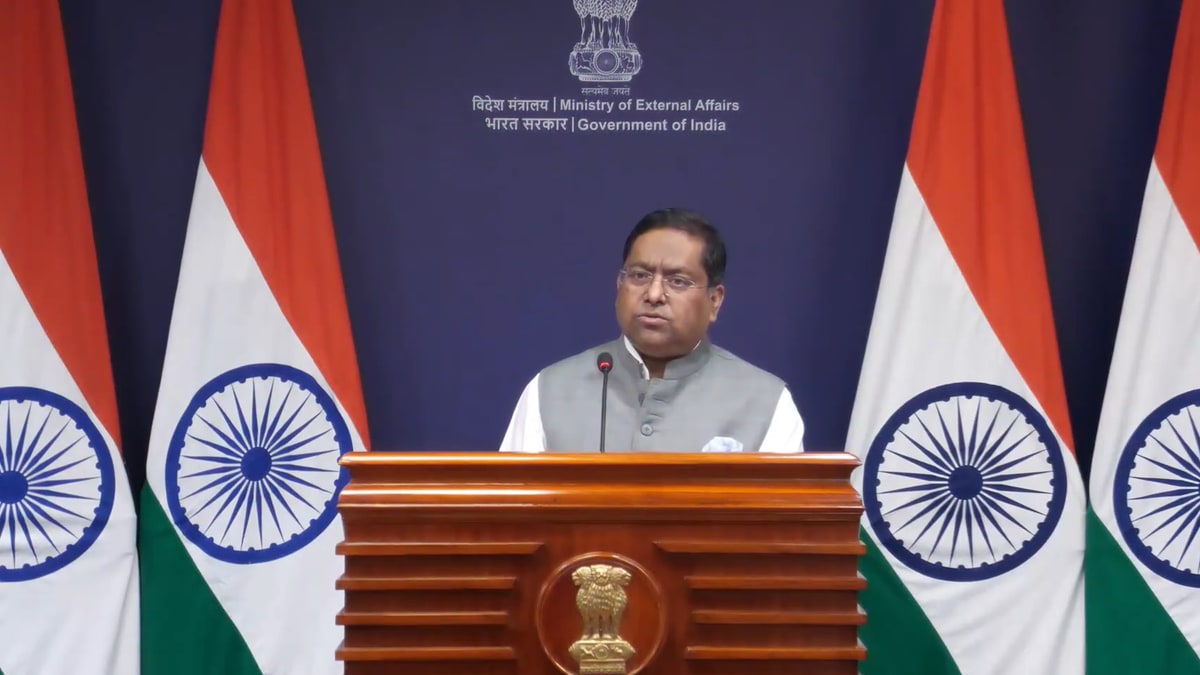
India has formally rejected Pakistan's allegations regarding a naval collision in the Arabian Sea, identifying the involved vessels as INS Kolkata and PNS Hunain. New Delhi asserts the incident was caused by the unprofessional maneuvering of the Pakistani ship during a routine Indian surveillance mission.
Naval Tensions in the North Arabian Sea: An Analysis of the INS Kolkata Incident
The Incident Overview
On the night of September 15, 2026, a maritime collision occurred in the north Arabian Sea involving the Indian Navy's frontline warship, INS Kolkata, and the Pakistani Naval Ship (PNS) Hunain. The incident, which took place in international waters, has sparked a diplomatic row between New Delhi and Islamabad. While Pakistan initially alleged that the Indian vessel engaged in provocative actions within its Exclusive Economic Zone (EEZ), the Indian Ministry of External Affairs (MEA) has categorically rejected these claims, labeling the Pakistani ship's conduct as both unacceptable and unprofessional.
India’s Diplomatic and Operational Stance
Following the event, the Indian government took swift diplomatic action by summoning the Pakistani Chargé d'Affaires in New Delhi to lodge a formal protest. The MEA, through spokesperson Randhir Jaiswal, clarified that INS Kolkata was engaged in a routine surveillance mission when the PNS Hunain performed a dangerous overtaking maneuver. India contends that this action was a direct violation of established maritime protocols, specifically citing Article 10 of the relevant maritime agreements governing conduct at sea.
The Geopolitics of the Arabian Sea
The Arabian Sea remains a critical theater for naval operations, serving as a vital artery for global energy transit and regional security. The presence of frontline warships from both nations in these waters underscores the persistent, high-stakes nature of the India-Pakistan maritime boundary and the broader security competition in the region. Routine surveillance missions are standard for both navies; however, the proximity required for a collision highlights the fragile nature of these operations and the potential for miscalculation to escalate into a significant diplomatic crisis.
Analyzing Maritime Conduct and Protocols
At the heart of the dispute lies the interpretation of international maritime law and safe navigation practices. By accusing the PNS Hunain of unprofessional behavior, India is emphasizing the importance of adherence to the 'International Regulations for Preventing Collisions at Sea' (COLREGs). When two naval vessels operate in close proximity, the burden of maintaining safe distance and predictable maneuvering falls on all parties involved. India’s insistence that the Pakistani vessel initiated a 'dangerous overtaking maneuver' suggests that the collision was not a result of navigation error, but a breach of professional seamanship.
Broader Implications for Bilateral Relations
This incident serves as a stark reminder of the underlying volatility in India-Pakistan relations. Beyond the technical aspects of the collision, the immediate diplomatic fallout—including the summoning of diplomats and the public exchange of accusations—demonstrates the lack of a de-escalation mechanism for maritime incidents. Such occurrences often reinforce entrenched narratives of 'provocation' and 'violation,' making it increasingly difficult for both nations to maintain a stable status quo in their naval interactions.
Future Trends and Security Outlook
Moving forward, it is likely that both nations will increase their naval footprint in the north Arabian Sea to assert their respective claims and monitor the other's activities. As maritime surveillance technology advances, the threshold for what constitutes 'provocative' behavior may become more subjective. Without a renewed, transparent dialogue regarding maritime safety and rules of engagement, the risk of future 'unprofessional' encounters remains high. The international community will likely continue to view these incidents as potential flashpoints that could jeopardize regional maritime stability.
Multiple Citing Sources
Verification Required?