Government terms arbitration award on Indus Waters Treaty ‘illegal’
Source Entity
TNN
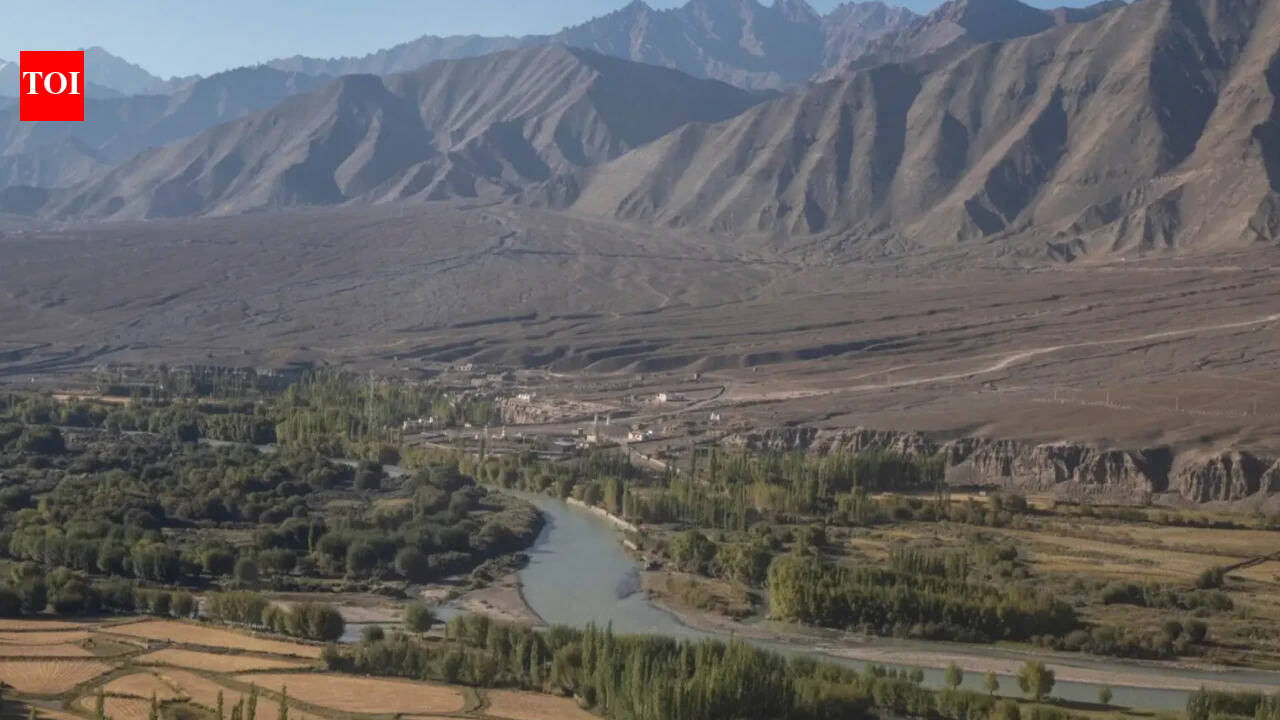
India has formally rejected a Permanent Court of Arbitration ruling regarding the Indus Waters Treaty, asserting the court lacks jurisdiction over sovereign matters. The dispute centers on hydroelectric projects in Jammu and Kashmir and India's refusal to recognize the court's authority.
The Indus Waters Treaty Dispute: A Sovereignty Standoff
The Indus Waters Treaty (IWT), brokered by the World Bank in 1960, has long been considered one of the most durable water-sharing agreements in the world. However, recent developments at the Permanent Court of Arbitration (PCA) in The Hague have brought the agreement under significant strain. The court recently issued a ruling asserting that the treaty remains fully in force, effectively rejecting India’s attempt to place the agreement in 'abeyance.'
India’s Stance on Jurisdictional Authority
India has responded with a firm dismissal of the court’s ruling, labeling the arbitration award 'illegal.' New Delhi’s position is rooted in the argument that the PCA lacks the necessary jurisdiction to adjudicate on matters involving sovereign territory and national development projects. By maintaining that it has never formally appeared before this body and refusing to recognize its prior pronouncements, India is signaling a rejection of the court's legitimacy in this specific context.
The Flashpoint: Ratle Hydro-Electric Plant
At the heart of the current friction is the construction of the Ratle hydro-electric plant in Jammu and Kashmir. The PCA has directed India to temporarily restrict certain construction activities, viewing them as potential violations of the treaty’s stringent water-sharing clauses. For India, these infrastructure projects are vital for regional development and energy security, leading to a direct clash between international legal oversight and domestic sovereign developmental goals.
Interpreting the 'Abeyance' Clause
The court's ruling specifically addressed India’s decision to hold the treaty in 'abeyance.' The tribunal concluded that the IWT does not provide any legal mechanism for a signatory to unilaterally suspend or terminate the treaty's operations. By attempting to place the treaty in abeyance, India sought to bypass existing dispute resolution protocols, a move the court has now formally challenged, insisting that both nations must strictly observe their existing obligations.
Broader Geopolitical Implications
This standoff highlights the fragility of bilateral agreements in an era of heightened geopolitical tension. Because the Indus Waters Treaty is critical to the agricultural and economic stability of both India and Pakistan, the breakdown of trust in established legal mechanisms could have long-term consequences. The refusal to engage with international arbitration suggests a shift toward more unilateral policy-making, which may complicate future diplomatic interactions regarding transboundary water resources.
Future Trends and Outlook
Moving forward, the impasse is likely to persist as both nations remain entrenched in their positions. India’s refusal to acknowledge the PCA’s jurisdiction suggests that any future rulings from this body will be similarly ignored by New Delhi. The international community, particularly the World Bank, faces the difficult challenge of maintaining the relevance of the IWT while navigating a situation where the primary stakeholders no longer agree on the legal framework governing their shared water resources.