India rejects UN rights body remarks on Delhi protests, cites ‘double standards’
Source Entity
Shubhajit Roy
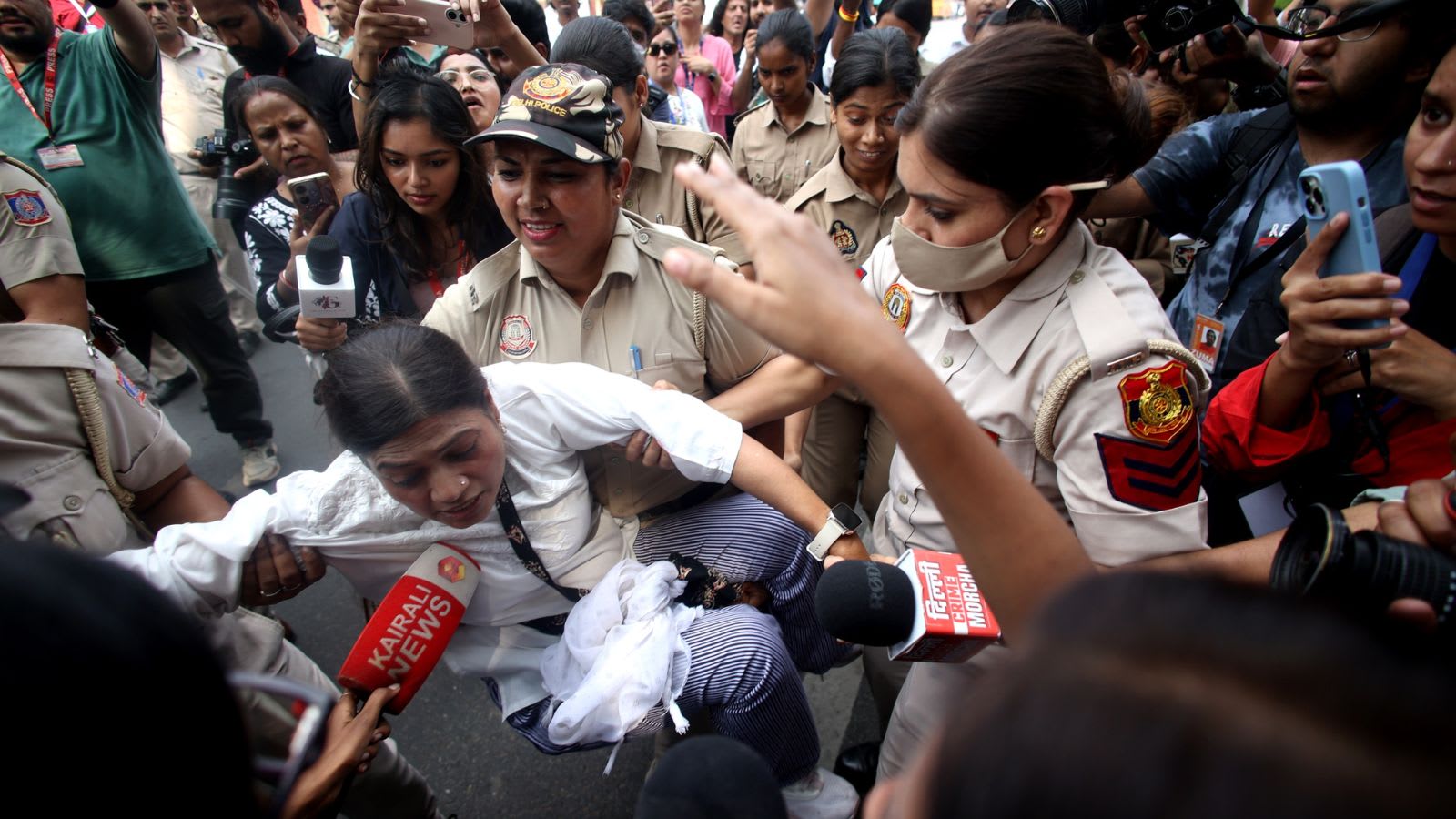
India has formally rejected concerns raised by the UN Human Rights Office regarding mass detentions during protests in New Delhi. The Indian government dismissed the UN's statement as unwarranted interference, asserting that peaceful assembly is constitutionally protected.
India Rejects UN Concerns Over New Delhi Protests
The Diplomatic Standoff
In a sharp diplomatic retort, the Indian government has formally rejected statements issued by the Office of the United Nations High Commissioner for Human Rights (OHCHR). The controversy centers on the police handling of protests in New Delhi, where the Cockroach Janta Party (CJP) had organized demonstrations against Chief Election Commissioner Gyanesh Kumar. The UN body raised alarms regarding 'mass detentions' and urged the immediate release of those held, sparking a robust defense of sovereignty from New Delhi.
Constitutional Protections vs. Public Order
The Indian Permanent Mission to the UN in Geneva utilized social media platform X to clarify the government's stance. The mission emphasized that the right to peaceful assembly is not an absolute, unregulated privilege but is constitutionally guaranteed, subject to 'reasonable restrictions' necessitated by public order. This framework reflects the balance India seeks to maintain between democratic expression and the maintenance of civil stability in a high-density urban environment.
Sovereignty and Non-Interference
By labeling the OHCHR’s remarks as 'misplaced' and 'unwarranted interference,' India is reinforcing its long-standing position regarding its internal judicial and administrative processes. The government maintains that its independent judiciary, free media, and constitutional institutions are fully equipped to address grievances and safeguard the rights of its citizens without external oversight or international 'lessons' on democratic norms.
The Context of Electoral Allegations
The protests specifically targeted the Chief Election Commissioner over alleged electoral roll irregularities. Such claims strike at the heart of the democratic process, making the government's reaction to the protests particularly sensitive. The detention of CJP leaders has led to ongoing uncertainty, with party members reporting a lack of information regarding the whereabouts of their leadership, further escalating tensions in the capital.
Future Implications and Democratic Discourse
As the CJP calls for continued protests at Jantar Mantar, the standoff highlights the evolving friction between political dissent and state security measures. The OHCHR’s insistence on the 'necessity and proportionality' test for restrictions serves as a reminder of the international scrutiny India faces as the world's largest democracy. Moving forward, the government will likely continue to defend its procedural handling of these protests as a matter of internal law enforcement rather than a human rights crisis.
Conclusion
The tension between the Indian government and the UN represents a broader trend of emerging nations asserting their autonomy against international bodies. While the OHCHR continues to advocate for the unconditional release of detainees, India’s firm stance suggests that it will prioritize domestic legal frameworks over international recommendations, signaling a likely continuation of this diplomatic impasse.
Multiple Citing Sources