India's big chip ambition: Can it become world's next semiconductor hub?
Source Entity
SMRITI JAIN
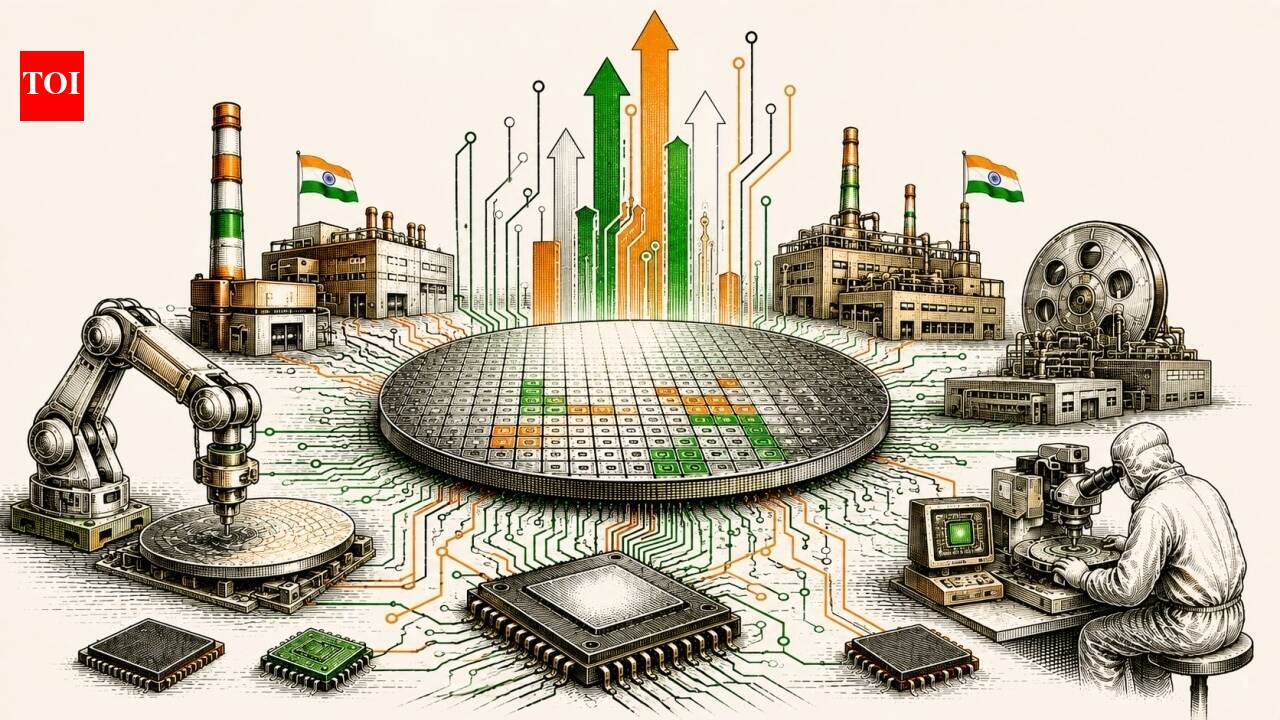
India is aggressively pursuing a self-reliant semiconductor ecosystem through a Rs 1.27 lakh crore investment program. This initiative aims to establish the nation as a critical global hub amid a worldwide semiconductor supercycle.
India's Strategic Pivot to Semiconductor Sovereignty
In an era defined by rapid technological evolution, semiconductors have transitioned from mere components to the foundational bedrock of modern civilization. From the complex architecture of Artificial Intelligence (AI) and data centers to the operational requirements of Electric Vehicles (EVs) and national defense systems, chips are the invisible engines of progress. Recognizing this, India has launched a massive, multi-faceted initiative to secure its place in the global semiconductor value chain, moving beyond its traditional role as an IT services provider to become a hardware manufacturing powerhouse.
The Necessity of a Self-Reliant Ecosystem
The global semiconductor market is currently navigating a period of profound uncertainty, driven by geopolitical tensions and supply chain vulnerabilities. As nations like the US, Taiwan, South Korea, and China dominate the landscape, India’s drive for self-reliance is not merely an economic ambition but a strategic necessity. By fostering a domestic ecosystem, India seeks to mitigate the risks associated with global reliance, ensuring that its critical infrastructure, telecom networks, and defense capabilities remain insulated from external supply shocks.
Financial Commitment and Program Expansion
The scale of India's ambition is reflected in its recent fiscal commitment. With an outlay exceeding Rs 1.27 lakh crore for the second phase of its semiconductor program, the government is signaling a long-term commitment to infrastructure development and industrial support. This capital is earmarked to facilitate the establishment of 12 approved semiconductor projects, which serve as the cornerstone for building a comprehensive domestic manufacturing capability that spans from design to fabrication.
Riding the Semiconductor Supercycle
Experts note that the world is currently witnessing a 'semiconductor supercycle,' a period of sustained high demand fueled by the AI revolution. Because semiconductors are the essential building blocks for AI, the shift in global boardroom priorities toward high-performance computing makes India's timing particularly auspicious. By positioning itself to capture a portion of this burgeoning market, India is not just reacting to current trends but attempting to integrate itself into the high-value manufacturing loops that define the future global economy.
Challenges and the Road Ahead
While the momentum is palpable, the road to becoming a global hub is fraught with technical and logistical hurdles. Building a semiconductor ecosystem requires not only massive capital but also a specialized workforce, high-purity utility infrastructure, and deep integration with global supply chains. The success of these 12 approved projects will be a litmus test for India’s industrial policy. The path forward requires sustained collaboration between the public sector and global industry leaders to ensure that India’s manufacturing output can meet the rigorous standards of the international tech market.
Conclusion: A Game-Changing Phase
India is undeniably entering a game-changing phase in its technological history. The transition from an importer of silicon to a potential manufacturer represents a fundamental shift in the nation's economic trajectory. If the current trajectory holds, the integration of these semiconductor initiatives into the broader national economy could redefine India's role in the 21st-century technological order, turning a strategic necessity into a significant engine of growth.