ISSF World C'ships: India’s men win pistol team gold, women’s rifle trio bags silver
Source Entity
HIJAM RAJU SINGH
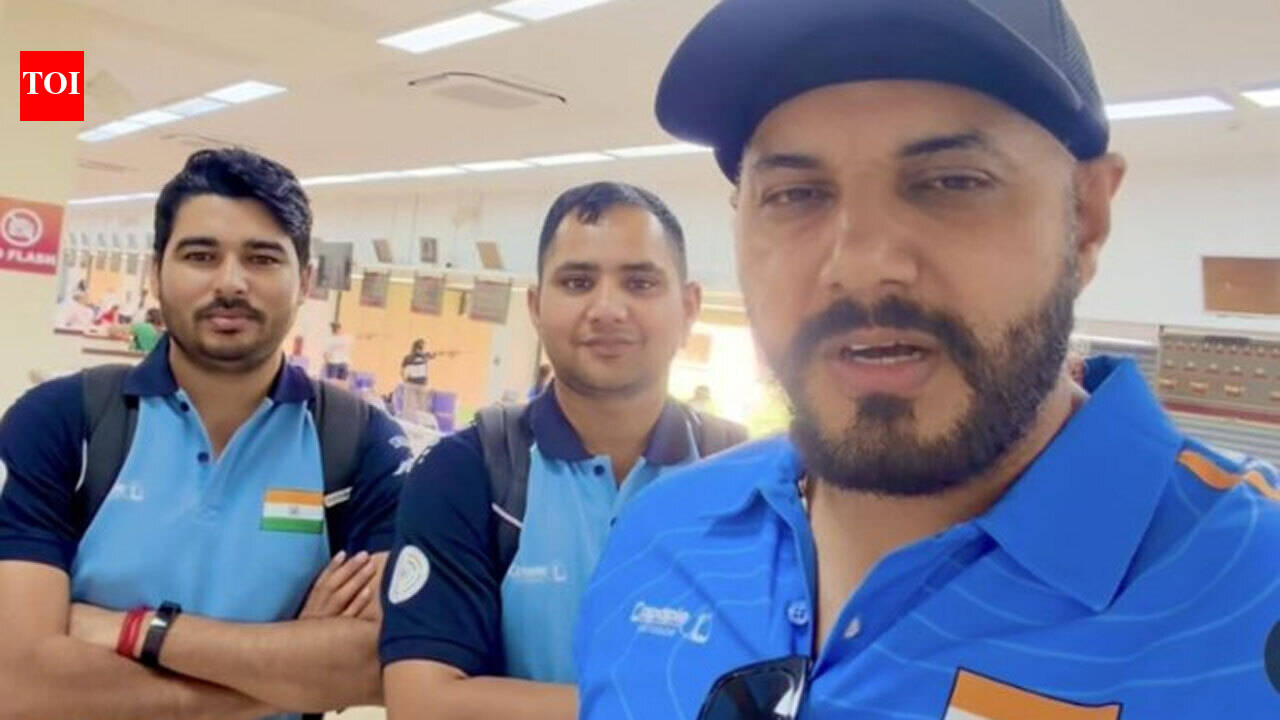
India's shooters experienced a mixed performance at the ISSF World Championships in Doha, securing team medals in pistol and rifle events. Despite these successes, the squad struggled to secure coveted Olympic quota places for the Los Angeles Games.
India's Mixed Fortunes at the ISSF World Championships
India’s participation in the recent ISSF World Championships in Doha has presented a complex narrative of team success juxtaposed against individual challenges in the pursuit of Olympic qualification. The Indian contingent showcased remarkable coordination in team events, notably clinching a gold medal in the men's 50m pistol competition with a combined score of 1,659. This victory, spearheaded by Ravinder Singh, Saurabh Chaudhary, and Amanpreet Singh, underscores the depth of talent within the Indian shooting program and highlights the effectiveness of collaborative training regimes in high-pressure environments.
The Contrast of Team Success and Individual Pressure
While the men’s 50m pistol team celebrated their gold, the women’s 10m air rifle team also contributed to the medal tally by securing silver with 1,894.4 points. However, these collective achievements mask the underlying tension surrounding the individual quest for Los Angeles Olympic quotas. The disparity between team performance and individual outcomes suggests that while Indian shooters are well-prepared for structured, multi-person events, the transition to high-stakes, individual-focused Olympic qualification remains a hurdle.
The Elavenil Valarivan Factor
Elavenil Valarivan, a stalwart of the Indian shooting circuit, provided a focal point for the competition. Having consistently reached medal rounds in major events like the Paris Olympics and the Aichi-Nagoya Asian Games, her performance in Doha was closely watched. Despite reaching the final eight, she finished sixth in a tightly contested match decided by mere decimals. Her inability to secure an Olympic quota highlights the razor-thin margins that define elite marksmanship, where mental fortitude and precision under pressure are tested to the absolute limit.
Struggles in the Rifle Arena
Compounding the difficulty for the Indian squad, other rifle competitors faced significant challenges. Six Indian rifle-wielders entered the tournament with the ambition of securing spots for Los Angeles, yet five failed to advance past the qualification stages. The men’s rifle trio, consisting of Parth Mane, Himanshu Dhillion, and Parth Makhija, struggled significantly against a field dominated by international powerhouses, most notably China’s Sheng Lihao. This performance indicates a need for increased consistency and tactical adaptation when competing against the world's elite.
Future Implications and Tactical Outlook
Looking ahead, the results from Doha serve as a critical diagnostic tool for the Indian shooting federation. The reliance on team events to demonstrate prowess is valuable, but the lack of individual quotas necessitates a shift in focus toward the specific psychological and technical requirements of individual finals. As the path to the Los Angeles Games continues, the Indian team must bridge the gap between their proven team-based reliability and the individual precision required to convert final-round appearances into Olympic qualifications. The experience in Doha will likely serve as a foundational lesson in managing the decimal-point pressure that defines modern competitive shooting.