Expert Explains | How India could solve its summertime power cuts problem
Source Entity
The Indian Express
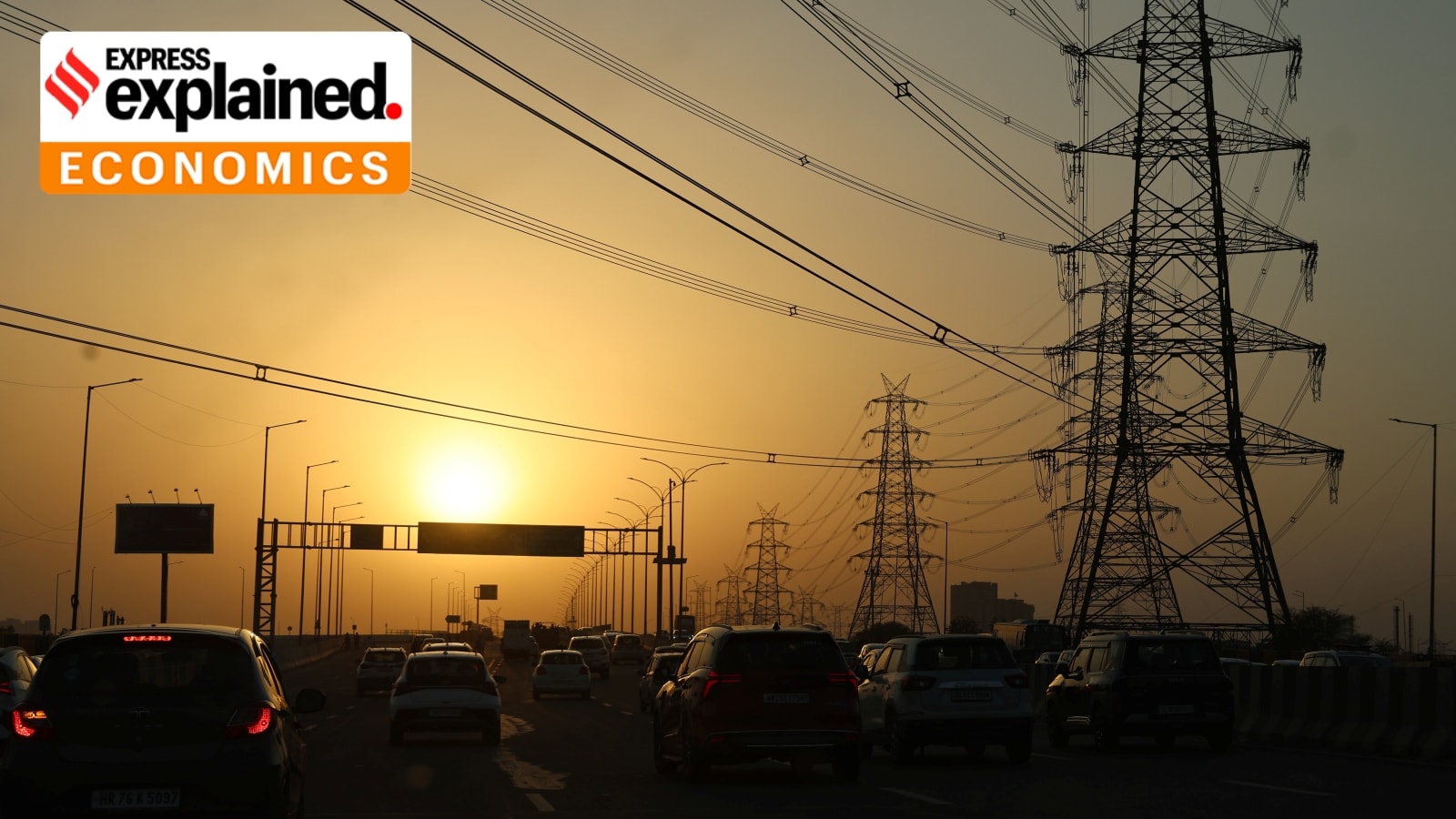
India's power sector faces a paradox where record national demand is met, yet localized distribution failures persist. Experts suggest that reforming the performance of discoms and increasing consumer choice are critical to ending reliance on polluting backup generators.
The Paradox of India's Power Grid: A Mid-Summer Analysis
Recent data indicates that India has successfully navigated record-breaking peak electricity demands during the summer months. While the national grid has demonstrated an impressive capacity to meet these soaring requirements, a significant disparity remains at the local distribution level. This phenomenon highlights a critical systemic friction: the ability of the national infrastructure to generate and transmit power does not always translate into reliable last-mile delivery for the end consumer.
The Discom Disconnect: Gurgaon vs. Delhi
The stark contrast between Gurgaon—where affluent residents frequently resort to diesel-powered generators—and Delhi, which remained largely free of outages, serves as a microcosm of India’s broader energy challenges. This divergence is not necessarily a failure of generation, but rather a reflection of the inconsistent performance of Distribution Companies (discoms). These entities act as the final bridge in the energy supply chain, and their operational efficiency varies wildly across adjacent geographical regions.
The Hidden Cost of Inefficiency
When discoms fail to provide consistent service, the economic and environmental costs are shifted directly onto the consumer. In high-density residential areas like Gurgaon, the reliance on diesel generators introduces significant local air and noise pollution. This 'shadow' power sector represents a failure of public utility management, forcing households to pay a premium for private, environmentally harmful energy solutions instead of benefiting from a stable, grid-connected supply.
Toward a Hard-Headed Diagnosis
To bridge the gap between national generation achievements and local reality, a rigorous assessment of discom management is required. The current model, which often lacks accountability for localized failures, necessitates structural reform. Experts argue that the solution lies in moving away from monopolistic distribution toward a more competitive framework that incentivizes efficiency and reliability at the household level.
The Path to Greater Consumer Choice
Increasing consumer choice is the ultimate mechanism to drive sector-wide improvement. By empowering consumers to choose their service providers, discoms would be forced to compete on the basis of reliability and service quality rather than relying on outdated, inefficient operational models. As India continues to urbanize and energy demand grows, the transition to a more flexible, consumer-centric distribution model will be the defining factor in whether the nation can sustain its development goals without sacrificing local air quality and quality of life.