India summons Iranian diplomats after sailor killed in attack on oil tankers
Source Entity
Latest News: Today's Latest News Headlines from India & World | Hindustan Times | Hindustan Times
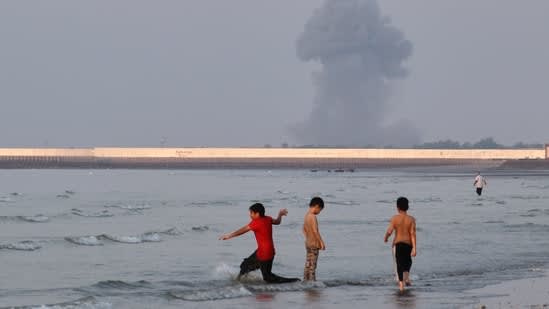
As per the Ministry of External Affairs, these summons were issued over the recent attacks on merchant vessels in the Strait of Hormuz.
Diplomatic Friction in the Strait of Hormuz: India's Response to Maritime Violence
In a significant diplomatic escalation, the Indian Ministry of External Affairs (MEA) has summoned Iranian diplomats to express grave concern and seek explanations regarding recent attacks on merchant vessels in the Strait of Hormuz. This move comes in the wake of a tragedy where an Indian sailor lost their life during an assault on oil tankers. The act of summoning diplomats is a formal and stern gesture in international relations, indicating that India views the safety of its citizens at sea as a non-negotiable priority and holds the regional authorities accountable for the security of the waters under their influence.
The Strategic Volatility of the Strait of Hormuz
To understand the gravity of this event, one must consider the geographical and economic importance of the Strait of Hormuz. As one of the world's most critical maritime chokepoints, it serves as the primary artery for the global transport of oil and liquefied natural gas. Historically, this region has been a flashpoint for geopolitical tensions, often seeing the seizure of tankers or harassment of commercial shipping as a means of political leverage. When attacks occur in this corridor, the repercussions are not merely local but global, impacting energy prices and the stability of international trade routes. The death of an Indian sailor in this context transforms a regional security issue into a direct bilateral concern between New Delhi and Tehran.
India's Commitment to Seafarer Safety
India is one of the largest providers of skilled manpower to the global merchant navy. Thousands of Indian seafarers operate across international waters, making them vulnerable to the spillover of regional conflicts. For the Indian government, the protection of these citizens is a critical domestic and foreign policy mandate. By summoning Iranian diplomats, India is sending a clear signal that it will not remain passive when its nationals are caught in the crossfire of regional power struggles. This incident highlights the inherent risks faced by crew members who often have little control over the political destinations or the security protocols of the vessels they man.
The Complex India-Iran Relationship
This diplomatic spat occurs against the backdrop of a complex strategic partnership. India has long viewed Iran as a gateway to Central Asia, most notably through the development of the Chabahar Port, which allows India to bypass Pakistan for trade. However, this economic cooperation exists in a delicate balance with India's security concerns and its relationship with other regional powers and the United States. The current tension demonstrates the friction between India's strategic economic interests in Iran and its imperative to ensure the safety of its citizens. It forces New Delhi to navigate a narrow path: maintaining a functional relationship with Tehran while firmly condemning actions that jeopardize Indian lives.
Broader Economic and Security Implications
Beyond the immediate diplomatic fallout, attacks on oil tankers in the Strait of Hormuz have systemic effects. Such incidents typically lead to a spike in maritime insurance premiums (war risk insurance), which increases the overall cost of shipping and, consequently, the price of fuel for the end consumer. Furthermore, these attacks undermine the concept of 'freedom of navigation,' a principle that India strongly supports as a major maritime power. The loss of life serves as a catalyst for India to perhaps reconsider its naval posture in the region, potentially increasing surveillance or participation in multilateral security coalitions to protect commercial shipping lanes.
Future Outlook and Predictions
Looking forward, it is likely that India will continue to press for more stringent security guarantees from regional actors to prevent further casualties. We can expect a period of heightened diplomatic scrutiny and perhaps a more cautious approach toward maritime ventures in the Persian Gulf. If instability persists, India may increase the deployment of its naval assets in the Arabian Sea to provide a deterrent or escort services for Indian-flagged vessels. The resolution of this specific crisis will depend on Iran's willingness to provide transparent answers and ensure that commercial vessels—and the crews operating them—are not targeted during political disputes.
Summary
India's decision to summon Iranian diplomats underscores a firm stance on the protection of its citizens and the necessity of maritime security in the Strait of Hormuz. By tying the loss of a sailor's life to the broader instability of a global oil chokepoint, India has transitioned from a passive observer to an active diplomatic claimant, emphasizing that economic partnerships cannot come at the cost of human life and regional safety.
Verification Required?