Jaishankar discusses global developments, including West Asia, Ukraine with UN Chief Guterres
Source Entity
India Latest News: Top National Headlines Today & Breaking News | The Hindu
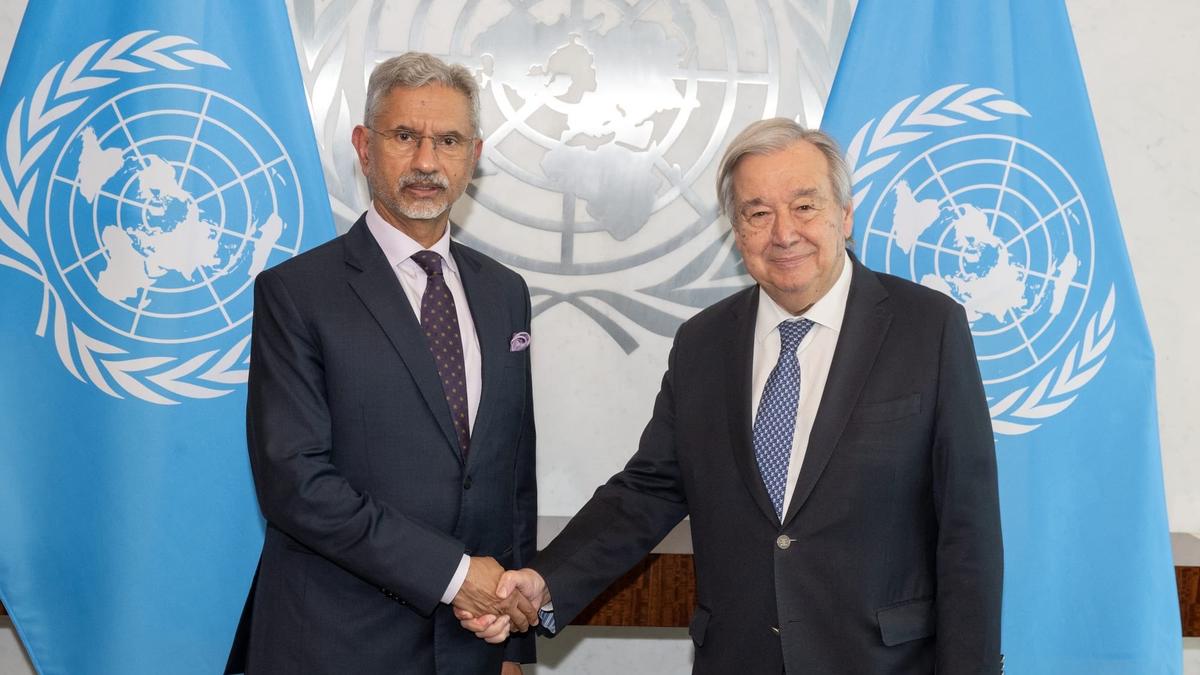
Mr. Jaishankar launched India’s official campaign for a non-permanent seat at the UN Security Council for 2028-29 at an event at the world body’s headquarters in the United Nations that was attended by UN ambassadors, diplomats and officials
India's Strategic Diplomatic Push: Jaishankar's Engagement at the UN
External Affairs Minister S. Jaishankar's recent visit to the United Nations headquarters marks a pivotal moment in India's ongoing effort to redefine its role within the global governance architecture. The dual-purpose nature of this visit—addressing immediate geopolitical crises while simultaneously launching a long-term bid for a non-permanent seat on the UN Security Council (UNSC) for 2028-29—underscores India's ambition to transition from a regional power to a primary architect of global stability. By engaging directly with UN Secretary-General António Guterres, India is signaling its readiness to take on greater responsibility in mediating international disputes.
Addressing Global Volatility: West Asia and Ukraine
The discussions between Minister Jaishankar and Secretary-General Guterres focused heavily on the escalating tensions in West Asia and the protracted conflict in Ukraine. India has consistently maintained a policy of 'strategic autonomy,' advocating for dialogue and diplomacy over unilateral sanctions or military escalation. In the context of Ukraine, India's stance has been one of cautious neutrality, emphasizing that the era of war is over. In West Asia, India's interests are multifaceted, involving the safety of its massive diaspora and the security of maritime trade routes. By discussing these issues with the UN Chief, India positions itself as a 'bridge power' capable of communicating across ideological divides to find pragmatic solutions to existential global threats.
The Quest for Global Governance: The UNSC 2028-29 Bid
The official launch of India's campaign for a non-permanent seat for the 2028-29 term is not merely a procedural move but a calculated diplomatic strategy. While India has long sought a permanent seat on the Security Council, the pursuit of a non-permanent seat allows New Delhi to demonstrate its capability to lead and legislate on the world stage in the immediate future. The event, attended by a wide array of UN ambassadors and diplomats, serves as a lobbying platform to secure the necessary votes. A seat on the UNSC would grant India a direct vote on resolutions regarding international peace and security, ensuring that the perspectives of the Global South are integrated into the highest levels of decision-making.
Historical Context and the Path to Permanent Membership
To understand the significance of this bid, one must look at the historical evolution of the UN. The current structure of the UNSC, established post-WWII, reflects a world order that no longer exists. India, as one of the world's most populous nations and a rapidly growing economy, argues that the Council's lack of representation for Africa, Latin America, and Asia renders it increasingly obsolete. By successfully securing and serving in non-permanent roles, India builds a track record of efficacy and leadership, creating an empirical argument that its eventual permanent membership is not just a matter of prestige, but a necessity for the UN's own legitimacy and survival.
Strengthening Ties with the Global South
This diplomatic offensive is deeply intertwined with India's self-appointed role as the 'Voice of the Global South.' By campaigning for a seat in 2028-29, India is leveraging its relationships with developing nations to build a coalition of support. The strategy involves presenting India as a champion for the concerns of the underrepresented—ranging from climate finance to sustainable development goals. This approach transforms the UNSC bid from a national ambition into a collective aspiration for the developing world, making it harder for established powers to dismiss India's claims to a seat at the table.
Future Outlook: Redefining Multilateralism
Looking forward, India's success in this bid will likely depend on its ability to navigate the complex rivalry between the US, China, and Russia. If India secures the seat for 2028-29, it is expected to push for comprehensive reforms of the UN Charter. We can predict a trend where India uses its tenure to advocate for a more democratic UN, pushing for the democratization of international law and a shift away from the veto-heavy deadlock that often paralyzes the Security Council during humanitarian crises. This move is a stepping stone toward a multipolar world where power is distributed more equitably.
Conclusion
In summary, Minister Jaishankar's engagement at the UN is a masterclass in multi-layered diplomacy. By balancing the urgent need for peace in Ukraine and West Asia with the long-term goal of UNSC membership, India is asserting its maturity as a global leader. The campaign for the 2028-29 seat is a clear indicator that India will not wait for the world order to change on its own, but will actively work to reshape it to reflect the contemporary realities of the 21st century.
Verification Required?