Lights out: How Iran quietly moved millions of barrels through Hormuz under America's nose
Source Entity
TOI BUSINESS DESK
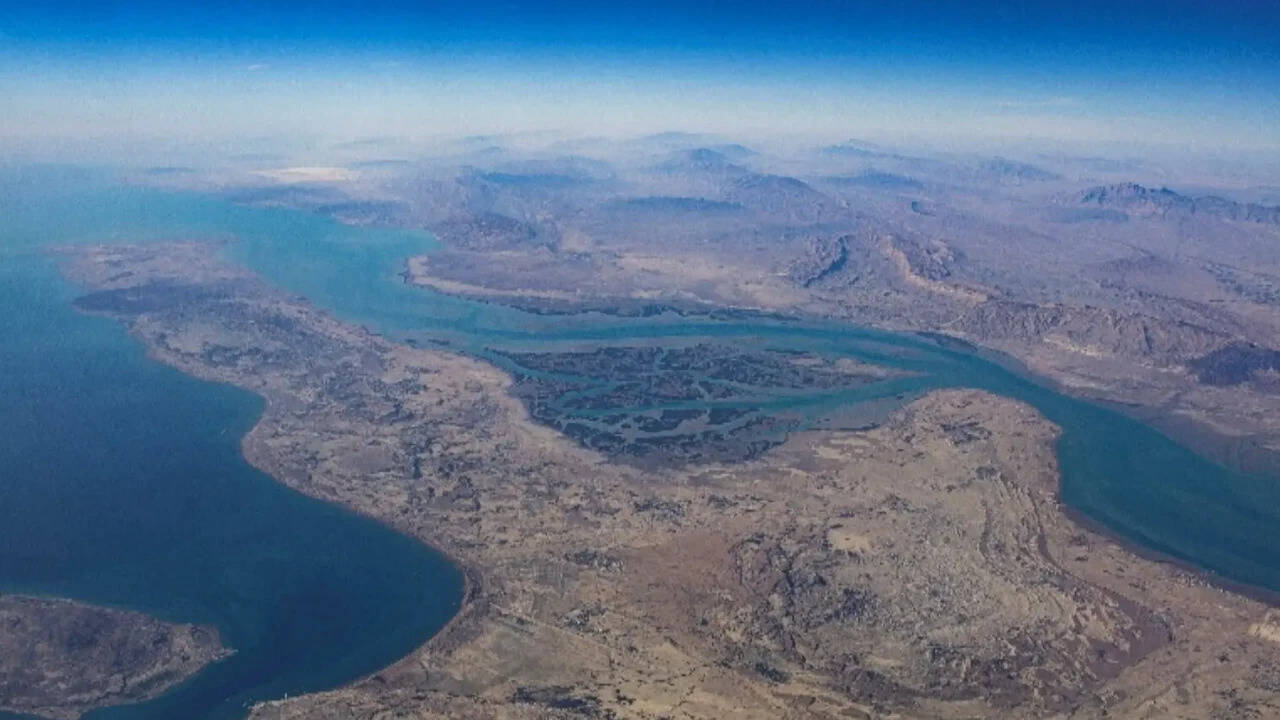
According to ship-tracking data, six US-sanctioned supertankers with a carrying capacity of 12 million barrels of crude combined have crossed the Strait of Hormuz into the Gulf of Oman over the past week while keeping their transponders switched off.
The Invisible Fleet: Iran's Strategic Evasion of US Oil Sanctions
In a bold demonstration of maritime subterfuge, Iran has successfully navigated six US-sanctioned supertankers through the Strait of Hormuz into the Gulf of Oman. These vessels, boasting a combined capacity of 12 million barrels of crude oil, managed to bypass American surveillance by employing a tactic known as "going dark." By disabling their Automatic Identification System (AIS) transponders, these ships effectively vanished from commercial tracking maps, allowing them to move massive quantities of energy resources despite stringent international sanctions.
The Mechanics of 'Dark Shipping'
To understand the gravity of this event, one must understand the role of the AIS. The AIS is a tracking system used by ships and vessel traffic services to identify and locate vessels by electronically exchanging data with other nearby ships and coastal stations. When a vessel switches off its transponder, it becomes a "dark ship." This practice is a cornerstone of the so-called "dark fleet"—a network of aging, often under-insured tankers that operate in the shadows to transport sanctioned oil. The coordination required to move six supertankers simultaneously suggests a highly organized logistical operation designed to overwhelm or outmaneuver US naval and satellite monitoring in one of the world's most congested waterways.
Geopolitical Significance of the Strait of Hormuz
The choice of the Strait of Hormuz as the transit point is deeply symbolic and strategic. As the world's most important oil chokepoint, the Strait is the primary artery for global energy supplies. By successfully moving 12 million barrels through this narrow passage "under America's nose," Iran is not only securing vital revenue but is also sending a geopolitical signal. It demonstrates that despite the "Maximum Pressure" campaigns and the threat of secondary sanctions, Iran maintains the capability to project its economic interests and maintain its oil exports to key buyers, likely in Asia, who are willing to overlook the sanctioned status of the cargo.
Undermining the Sanctions Regime
This event highlights a critical vulnerability in the US-led sanctions regime. Sanctions are only as effective as their enforcement. When tankers can simply flip a switch to evade detection, the deterrent effect of economic warfare is diminished. The scale of this specific movement—12 million barrels—represents a significant financial windfall for the Iranian government, providing the hard currency necessary to sustain its domestic economy and fund its regional activities. This creates a cycle where the US may feel compelled to increase naval presence or implement more aggressive interdiction strategies, which in turn raises the risk of military escalation in the Persian Gulf.
Historical Context and the Evolution of Evasion
Historically, Iran has evolved its export strategies in response to tightening US controls. From the initial sanctions of the early 2000s to the complex dynamics following the US withdrawal from the JCPOA (Joint Comprehensive Plan of Action), Tehran has transitioned from official state-led exports to a fragmented system of middlemen, shell companies, and ship-to-ship (STS) transfers. The current use of dark fleets is the apex of this evolution, combining technical evasion with a global network of "gray market" buyers who utilize obscured payment systems to avoid the US dollar-denominated financial system.
Future Trends: The Surveillance Arms Race
Looking forward, we can expect an intensifying "arms race" between maritime surveillance and evasion techniques. As Iran and other sanctioned nations refine their dark fleet operations, the US and its allies will likely lean more heavily on synthetic aperture radar (SAR) satellites and AI-driven behavioral analysis to identify "dark" ships based on their wake and movement patterns rather than their transponders. However, as long as there is a global demand for discounted crude and a willingness by certain nations to ignore sanctions, the shadow trade in oil will likely persist and expand, further complicating the intersection of global energy security and international diplomacy.
Summary
The movement of 12 million barrels of oil via six dark tankers is more than a logistical feat; it is a calculated challenge to US hegemony in the Middle East. By exploiting the limitations of AIS tracking, Iran has reaffirmed its ability to monetize its primary resource despite intense diplomatic and economic pressure, ensuring that the Strait of Hormuz remains a focal point of global geopolitical tension.