‘God is punishing the politicians’: anger at earthquake response grows in Venezuela
Source Entity
Tom Phillips in Caracas
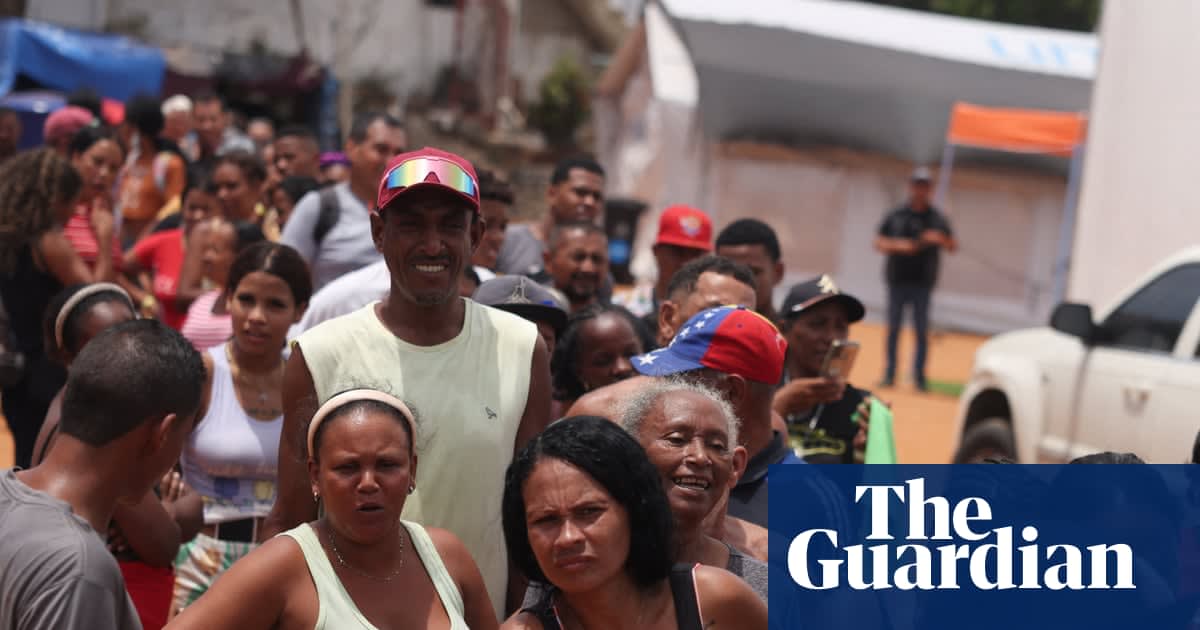
<p>Threat of social unrest rises as public indignation at lack of disaster aid comes on top of fallout from US military intervention</p><p>• <a href="https://www.theguardian.com/news/ng-interactive/2026/jul/12/a-revolution-in-ruins-fury-amid-the-rubble-of-a-housing-project-in-quake-hit-venezuela">A revolution in ruins: fury amid the rubble of a housing project in quake-hit Venezuela</a></p><p>Public anger at what many perceive as <a href="https://www.theguardian.com/news/ng-interactive/2026/jul/12/a-revolution-in-ruins-fury-amid-the-rubble-of-a-housing-project-in-quake-hit-venezuela">the Venezuelan government’s botched response</a> to twin earthquakes that killed nearly 4,500 people is growing, with one grieving mother caught on camera berating the son of former president Nicolás Maduro.</p><p>Maduro’s politician son received a hostile reception while visiting a semi-destroyed social housing project named after his father’s late mentor Hugo Chávez.</p> <a href="https://www.theguardian.com/world/2026/jul/14/anger-earthquake-response-venezuela">Continue reading...</a>
Crisis in the Rubble: The Intersection of Natural Disaster and Political Failure in Venezuela
Venezuela is currently facing a catastrophic convergence of natural disaster and systemic political collapse. The occurrence of twin earthquakes, which have claimed nearly 4,500 lives, has stripped away the veneer of state stability, exposing a government unable or unwilling to provide basic humanitarian relief to its citizens. This tragedy has evolved from a natural disaster into a political crisis, as public indignation transforms into open hostility toward the ruling elite.
The Collapse of Social Infrastructure
One of the most poignant symbols of this failure is the destruction of social housing projects. These developments, often named after the late Hugo Chávez, were marketed as the crowning achievements of the "Bolivarian Revolution," designed to provide dignity and security to the poor. However, the reports of "a revolution in ruins" suggest that these structures may have been built with substandard materials or lacked the necessary seismic reinforcements. The fact that these specific projects became death traps during the earthquakes highlights a systemic failure in urban planning and construction oversight, turning symbols of socialist progress into monuments of negligence.
A Symbol of Public Fury
The visceral anger of the populace was epitomized by the hostile reception received by the son of former president Nicolás Maduro. In a moment of raw emotional intensity, a grieving mother was recorded berating the politician, signaling a breakdown in the fear-based social contract that often sustains authoritarian regimes. This encounter is significant because it moves the conflict from anonymous protests to direct, personal confrontations with the Maduro family. When the children of the political elite are targeted, it indicates that the public no longer views the government as a protector, but as an obstacle to survival.
The Geopolitical Pressure Cooker
This internal collapse is occurring against a backdrop of extreme geopolitical tension, specifically the fallout from US military intervention. The presence or influence of foreign military action typically creates a polarized environment; however, in this instance, the internal failure to manage a disaster has likely unified disparate groups in their anger toward the state. The government's inability to provide aid suggests a state of paralysis, where the administration is perhaps too focused on external threats and survival to manage the basic needs of its dying population.
Systemic Failure in Disaster Management
The "botched response" cited by citizens suggests more than just a lack of resources; it points to a logistical and administrative failure. In the wake of nearly 4,500 deaths, the absence of efficient search-and-rescue operations and the slow distribution of aid indicate a breakdown in the chain of command. For a government that frequently touts its organizational capacity and loyalty to the masses, the failure to execute a basic disaster response is a devastating blow to its remaining legitimacy.
Potential for Escalation and Future Trends
Looking forward, the threat of social unrest is likely to escalate. Natural disasters often act as catalysts for political upheaval when the state fails to provide the most basic function of government: protection of life. As the death toll remains high and the rubble of housing projects continues to serve as a reminder of state neglect, the government may resort to further crackdowns to maintain order. However, the shift from political disagreement to survival-based rage is a volatile transition that often leads to widespread civil disobedience or regime instability.
Summary: The twin earthquakes in Venezuela have acted as a stress test that the government has decisively failed. By failing to protect its most vulnerable citizens in the very housing projects meant to empower them, the administration has fueled a fire of public indignation that, combined with external geopolitical pressures, may lead to an unprecedented wave of social unrest.