How the Iran war turned deadly for Indian sailors: List of seafarers killed since US-Israeli attacks
Source Entity
Latest News: Today's Latest News Headlines from India & World | Hindustan Times | Hindustan Times
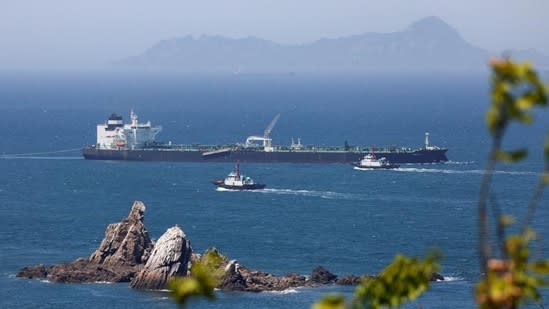
An Indian sailor was killed after Iranian missiles hit two UAE oil tankers. India has now summoned Iran's deputy chief of mission Mohammad Javad Hosseini.
Diplomatic Crisis and Maritime Tragedy: The Death of an Indian Sailor in Regional Conflict
The recent escalation of hostilities involving Iran has taken a tragic turn for India, following the death of an Indian sailor during a missile attack on two UAE-flagged oil tankers. This incident marks a critical inflection point where regional geopolitical tensions between Iran, the US, and Israel have directly resulted in the loss of an Indian national. In a swift diplomatic response, the Indian government has summoned Iran's deputy chief of mission, Mohammad Javad Hosseini, signaling a stern stance against the targeting of civilian maritime assets and the resulting loss of life.
The Anatomy of the Attack and Immediate Fallout
The attack, characterized by the launch of Iranian missiles targeting UAE oil tankers, underscores the extreme volatility of the Persian Gulf and the Gulf of Oman. For the crew members on these vessels, who are often third-country nationals, the risk of becoming collateral damage in state-level conflicts is a constant threat. The death of the Indian sailor is not merely a casualty of war but a failure of maritime security protocols intended to protect non-combatants. The summoning of Mohammad Javad Hosseini serves as a formal diplomatic protest, indicating that India views this event not as an accidental byproduct of war, but as a grave security breach that requires an official explanation from Tehran.
Geopolitical Context: The US-Israeli-Iranian Triangle
To understand why UAE tankers became targets, one must look at the broader conflict involving the United States and Israel. Iran has frequently used maritime disruption as a strategic lever to signal its displeasure with Western sanctions or Israeli military actions. By targeting tankers, Iran seeks to demonstrate its ability to choke global energy supplies and pressure international actors. However, when such actions result in the death of citizens from neutral nations like India, the strategic calculus shifts from regional deterrence to international liability. This incident highlights the dangerous 'spillover effect' where proxy conflicts evolve into direct threats to global commerce.
The Vulnerability of Indian Seafarers
India is one of the largest providers of skilled manpower for the global shipping industry. Thousands of Indian seafarers man tankers and cargo ships traversing the world's most dangerous chokepoints. This reliance makes India uniquely vulnerable to maritime instability. Historically, Indian sailors have often found themselves caught in the crossfire of Middle Eastern conflicts, necessitating complex evacuation operations and high-level diplomatic negotiations. This latest tragedy reinforces the urgent need for enhanced protection mechanisms and clearer 'safe passage' guarantees for merchant mariners during periods of heightened state aggression.
Economic and Strategic Implications for India
India maintains a delicate balancing act in the Middle East, sustaining strong strategic ties with the UAE and maintaining a pragmatic relationship with Iran to ensure energy security and regional stability. The killing of a citizen in an attack on a UAE vessel places India in a difficult position. It must support its partner, the UAE, while managing its relationship with Iran. Furthermore, any disruption in the flow of oil tankers through the Strait of Hormuz has immediate inflationary pressures on the Indian economy, making the security of these shipping lanes a matter of national economic interest.
Future Trends and Predictions
Looking forward, this event is likely to push India toward more active participation in international maritime security coalitions. We can expect India to increase its naval presence in the region to provide escort services or surveillance for merchant vessels. Diplomatically, India will likely demand stricter adherence to international maritime laws that prohibit the targeting of civilian crews. If tensions between Iran and the US-Israeli axis continue to rise, the risk to Indian nationals will increase, potentially leading to a push for alternative trade routes or more stringent insurance requirements for ships entering the Persian Gulf.
Summary
The death of an Indian sailor due to Iranian missile strikes on UAE tankers is a stark reminder of the human cost of geopolitical instability. By summoning the Iranian deputy chief of mission, India has signaled that the safety of its citizens abroad is a non-negotiable priority. As regional tensions persist, the intersection of global trade, national security, and human life remains precarious, requiring a concerted diplomatic effort to prevent further civilian casualties.
Verification Required?