India launches campaign for UN Security Council non-permanent seat for 2028-29 term
Source Entity
Latest News: Today's Latest News Headlines from India & World | Hindustan Times | Hindustan Times
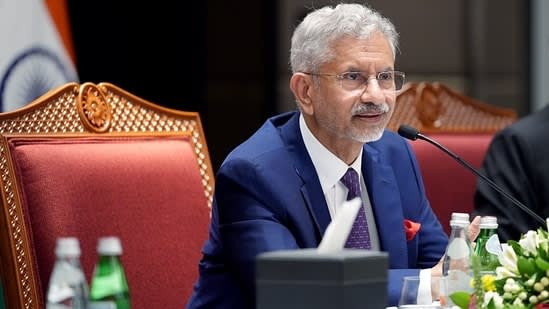
EAM Jaishankar launches India’s UNSC campaign for 2028-29 term
India's Strategic Bid for the UNSC 2028-29 Term
India has formally embarked on its diplomatic journey to secure a non-permanent seat on the United Nations Security Council (UNSC) for the 2028-29 term. The campaign, launched by External Affairs Minister (EAM) S. Jaishankar, signals New Delhi's continued commitment to playing a pivotal role in maintaining international peace and security. This move is not merely a routine application but a strategic assertion of India's status as a leading global power capable of mediating complex geopolitical conflicts and contributing to the stability of the international order.
Historical Context and the Quest for Reform
To understand the significance of this bid, one must look at India's historical relationship with the UNSC. India has served as a non-permanent member multiple times, consistently advocating for the democratization of the council. For decades, India has argued that the current structure of the UNSC—established in the aftermath of World War II—is anachronistic and fails to reflect the contemporary geopolitical realities of the 21st century. While the ultimate goal remains a permanent seat among the P5 (Permanent Five), these non-permanent terms allow India to demonstrate its leadership, diplomatic agility, and operational capability within the council's inner sanctum.
Positioning as the Voice of the Global South
Central to EAM Jaishankar's campaign will likely be India's positioning as the "Vishwa Mitra" (friend to the world) and the primary voice of the Global South. By leveraging its rapid economic growth and expansive diplomatic outreach, India aims to present itself as a bridge between the developed West and the developing world. The campaign for the 2028-29 term is expected to highlight India's contributions to global public goods, its leadership in digital public infrastructure, and its role in providing humanitarian aid during global crises, thereby justifying its presence in the decision-making body of the UN.
The Diplomatic Mechanics of the Bid
The path to a non-permanent seat is an intensive diplomatic exercise requiring a two-thirds majority in the UN General Assembly. India will need to engage in extensive bilateral negotiations and build coalitions across various regional blocs, including Africa, Latin America, and Southeast Asia. The strategy will involve aligning with the interests of smaller nations and addressing regional security concerns, ensuring that New Delhi's candidacy is seen as a benefit to the collective security architecture rather than just a national ambition.
Implications for Global Governance and Security
If successful, India's tenure in 2028-29 will coincide with a period of extreme global volatility. From the evolving dynamics of the Indo-Pacific to the ongoing challenges of cross-border terrorism and climate-induced instability, India's presence on the council will be crucial. New Delhi is likely to push for reforms in peacekeeping operations and advocate for more inclusive approaches to conflict resolution, ensuring that the concerns of emerging economies are not sidelined by the interests of the permanent members.
Future Trends and the Path to Permanency
Looking forward, this campaign serves as a litmus test for India's diplomatic influence. A successful bid for the 2028-29 term will reinforce India's claim for a permanent seat by proving its consistency and reliability as a global stakeholder. It will also signal to the world that India is not merely a passive participant in global governance but an active architect of the new international order. The outcome of this campaign will reflect the extent to which the global community recognizes India's rise as a stabilizing force in an increasingly multipolar world.
Conclusion
In summary, the launch of the campaign for the 2028-29 UNSC non-permanent seat is a calculated step in India's broader foreign policy strategy. By utilizing the diplomatic expertise of EAM Jaishankar, India is positioning itself to lead on the world stage. The success of this bid will not only grant India a seat at the table for two years but will further legitimize its long-term pursuit of a permanent role in shaping the future of global peace and security.
Verification Required?