Amid concerns over Russia sanctions law, Foreign Secretary meets U.S. delegation
Source Entity
India Latest News: Top National Headlines Today & Breaking News | The Hindu
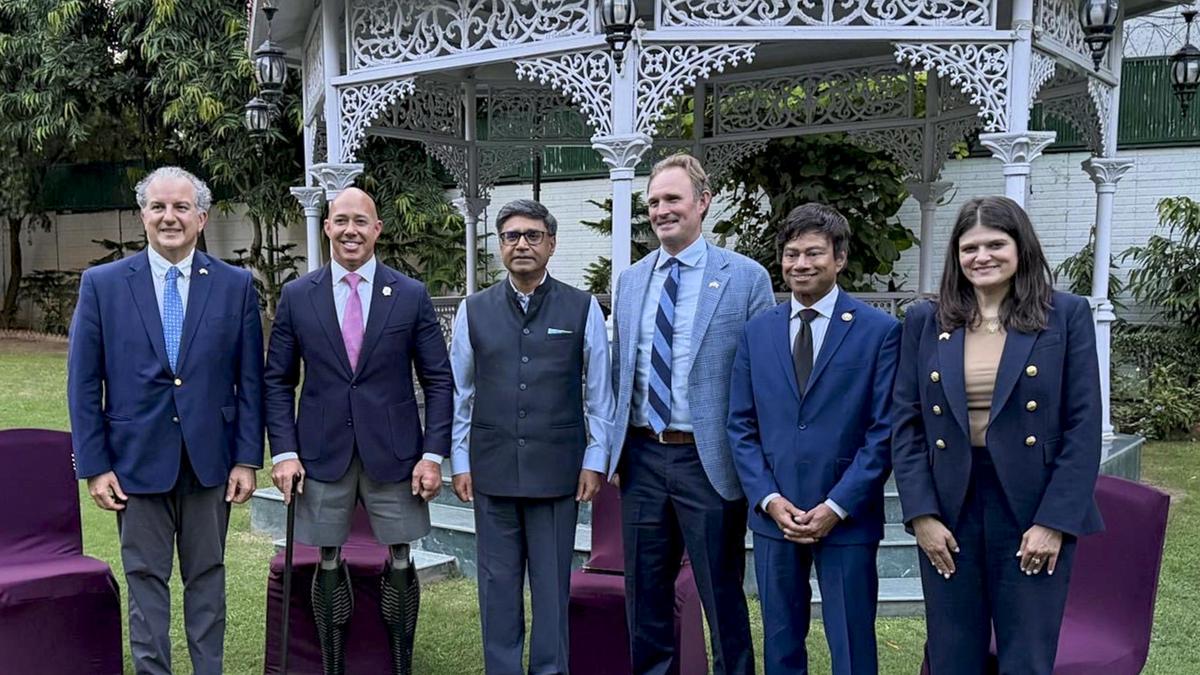
Foreign Secretary Vikram Misri has engaged a U.S. Congressional delegation to address concerns over new sanctions targeting India's Russian crude imports. Simultaneously, the Russian envoy has characterized these U.S. legislative actions as part of a broader strategy to contain India's rising global influence.
Diplomatic Friction: India-U.S. Relations and the Shadow of Sanctions
The Sanctions Impasse
Recent legislative developments in the United States have introduced a significant strain on the strategic partnership between Washington and New Delhi. The passage of a new Russia sanctions law, specifically targeting nations that continue to import Russian crude oil, has prompted an immediate diplomatic response from the Indian government. Foreign Secretary Vikram Misri’s meeting with a five-member U.S. Congressional delegation—led by House Foreign Affairs Committee Chair Brian Mast—serves as a critical venue for India to articulate its concerns regarding the potential economic and geopolitical fallout of these punitive measures.
The Congressional Dynamics
The composition of the U.S. delegation underscores the complexity of the legislative environment surrounding this bill. The presence of key supporters of the legislation, such as Bill co-sponsor Jimmy Patronis and representatives James Gallagher and Hailey Stevens, provided the Foreign Secretary with a direct opportunity to engage with those responsible for the policy. Conversely, the inclusion of Indian-born lawmaker Shri Thanedar, who notably voted against the measure, highlights the internal diversity of opinion within the U.S. political establishment regarding the balancing act of maintaining the Russia sanctions regime while preserving the integrity of the U.S.-India strategic alignment.
Geopolitical Interpretations and the 'Graham Act'
Beyond the immediate economic concerns, the discourse surrounding the 'Graham Act' has ignited a broader debate about the underlying motivations of U.S. foreign policy. Russian Ambassador to India, Denis Alipov, has characterized the legislative pressure as a calculated effort by Washington to contain India’s growth. Referencing a purported 'Freudian slip' made by a U.S. official during the Raisina Dialogue, Alipov suggested that the U.S. is wary of India’s trajectory and is utilizing instruments like the Graham Act to prevent India from emerging as a peer competitor, drawing parallels to the containment strategies historically applied to China.
Strategic Autonomy and Energy Security
At the core of this tension is India’s policy of strategic autonomy, which has guided its energy procurement decisions since the onset of the conflict in Ukraine. By maintaining access to Russian crude oil, New Delhi has sought to insulate its domestic economy from global price volatility. The U.S. sanctions law attempts to force a pivot away from this practice, creating a fundamental friction point between India's national security interests and the U.S. mandate for global compliance with its foreign policy objectives.
Future Implications and Diplomatic Outlook
Looking ahead, the resolution of this standoff will require a delicate recalibration of expectations on both sides. As External Affairs Minister S. Jaishankar has previously engaged with Secretary of State Marco [Rubio/Official] on this matter, the ongoing dialogue signifies that both nations are prioritizing high-level communication to prevent a localized legislative dispute from undermining the broader bilateral relationship. The challenge for both administrations will be to reconcile the U.S. commitment to its sanctions framework with the reality of India’s economic requirements and its growing role as a vital geopolitical partner in the Indo-Pacific region.
Verification Required?