Co-host Netherlands wear blue on blue turf, India play in saffron in Hockey WC
Source Entity
TOI SPORTS DESK
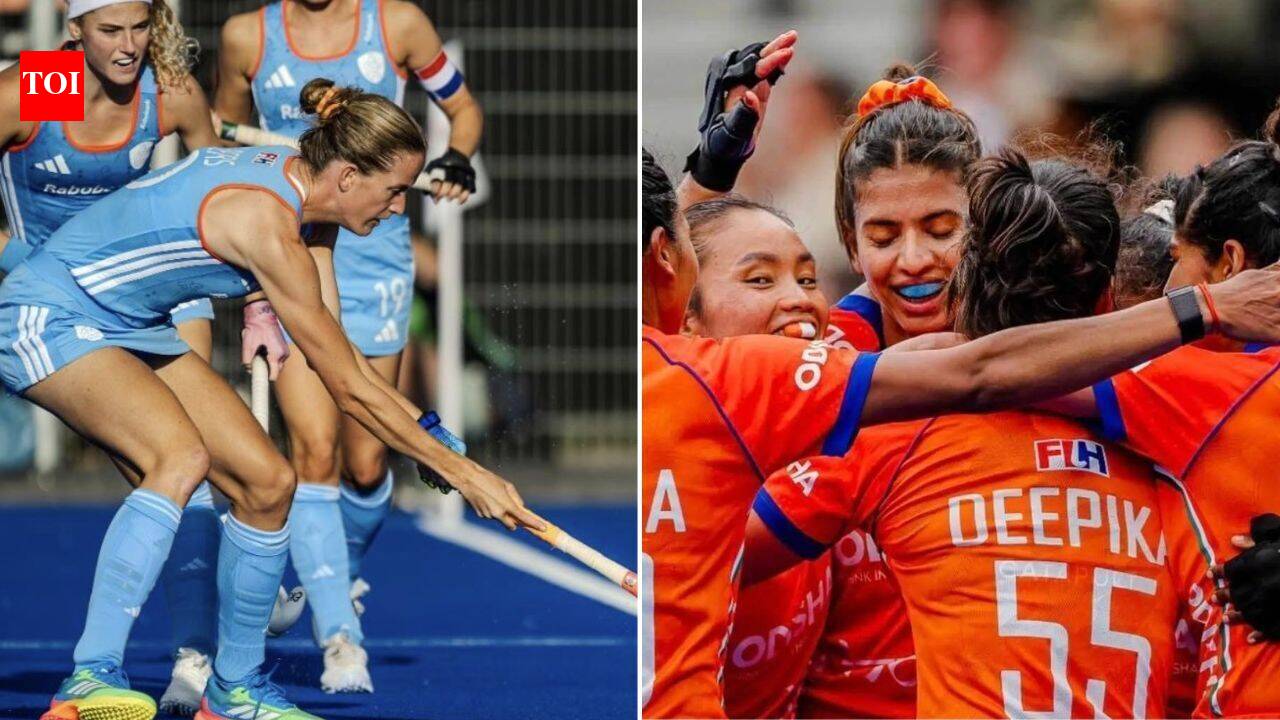
The Indian women's hockey team faced a 2-0 defeat against the top-ranked Netherlands in the 2026 Women’s Hockey World Cup. Despite the loss, India's resilient defensive performance highlighted significant tactical growth since their previous encounter at the Tokyo Olympics.
A Tactical Stand at Wagener Stadium
The 2026 Women’s Hockey World Cup witnessed a high-stakes encounter between the Indian women’s hockey team and the formidable Netherlands at the Wagener Stadium in Amstelveen. Entering the match as the World No. 1, the Netherlands showcased their dominance early, with Yibbi Jansen scoring in the second minute. Despite an early deficit, India’s defensive unit displayed remarkable tenacity, repeatedly blocking shots and obstructing passing lanes that the Dutch side typically exploits to manufacture scoring opportunities.
Overcoming Pre-Tournament Skepticism
India arrived at the tournament with tempered expectations, having faced a period of instability and a lack of clear strategic direction leading up to the competition. Defying these external doubts, the squad demonstrated significant character by finishing the first round of the tournament unbeaten. This momentum provided the necessary confidence to challenge the hosts, even if the final scoreline favored the Dutch powerhouse.
Historical Context and Progress
To understand the magnitude of this performance, one must look at the historical trajectory of the rivalry. When these two teams met at the delayed Tokyo Olympics in 2021, the result was a lopsided 5-1 victory for the Netherlands. The 2-0 scoreline in this 2026 fixture serves as a testament to the tactical evolution of the Indian side. The gap between the teams has visibly narrowed, signaling that the Indian program is on an upward trajectory despite the current loss.
The Role of Leadership and Transition
The current campaign has been defined by a successful transition to a younger roster. Under the guidance of Sjoerd Marijne, who returned to the coaching helm earlier this year, the team has managed to blend youthful energy with structural discipline. Marijne, who previously led the team during the Tokyo cycle, has instilled a level of defensive grit that was on full display throughout the match, even as India struggled to maintain possession against the relentless Dutch press.
Future Implications and Outlook
While the 2-0 defeat places India's semifinal aspirations in a precarious position, the team remains focused on their upcoming clash against Australia. The ability to hold the World No. 1 team to just two goals—a significant improvement from past drubbings—suggests that India is becoming a more tactically sound opponent on the global stage. The team's ability to pivot from this loss will be the defining factor in their pursuit of a semifinal berth in this World Cup cycle.
Summary of the Encounter
Ultimately, the match at the Wagener Stadium was a tale of two different narratives: the established dominance of the Dutch and the rising resilience of the Indian side. By holding their own against a superior opponent, India has proven that their growth is not merely anecdotal but grounded in improved defensive systems and effective leadership. As the tournament progresses, the lessons learned from this match will be critical for their survival in the competition.
Multiple Citing Sources