Indian Economy Is Growing Fast. Why Aren't Stock Market Returns Keeping Up?
Source Entity
NDTV News Search Records Found 1000
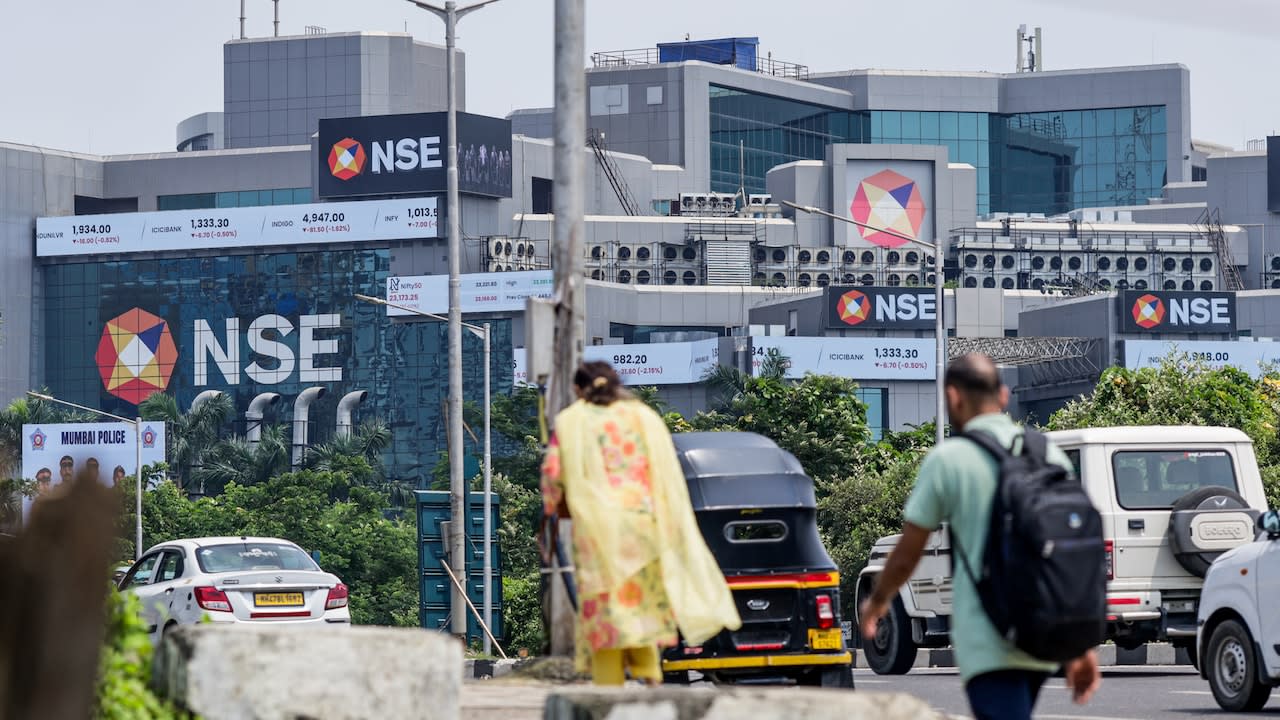
Strong GDP growth does not automatically guarantee equivalent stock market returns. Investors must differentiate between macroeconomic expansion and corporate earnings performance.
The Disconnect Between GDP and Market Valuations
Recent observations highlight a recurring phenomenon in the Indian financial landscape: the decoupling of robust GDP growth from stock market performance. While India remains one of the fastest-growing major economies globally, investors often find that equity indices do not mirror these macroeconomic gains in a linear fashion. This discrepancy serves as a vital reminder that national economic output is a broad measure, while stock markets are specific mechanisms for pricing future corporate earnings.
Why GDP is Not a Proxy for Stock Returns
It is a common misconception that a rising GDP automatically translates into bullish equity markets. GDP represents the total value of goods and services produced within a country, including government spending, private consumption, and net exports. In contrast, the stock market represents a specific subset of the economy—primarily large, publicly traded corporations. Many sectors that contribute significantly to GDP, such as small-scale agriculture or the informal sector, are not represented on the stock exchange, leading to a structural mismatch between the two metrics.
The Role of Corporate Earnings and Profitability
Stock prices are fundamentally driven by corporate profitability and the expectation of future cash flows. Even in a high-growth economy, if corporations are squeezed by high input costs, rising interest rates, or compressed profit margins, stock prices may stagnate or decline. Investors often overlook that economic growth can sometimes be driven by capital-intensive projects that do not immediately yield high returns for shareholders, thereby decoupling economic expansion from equity valuation growth.
Valuation and Market Sentiment
Market performance is also heavily influenced by valuation levels and investor sentiment. If the market has already 'priced in' the expected growth, any deviation from high expectations can lead to volatility. Furthermore, the Indian market is sensitive to global liquidity flows, foreign institutional investor (FII) sentiment, and currency fluctuations. These external factors can often override domestic growth narratives, causing the market to move independently of local GDP data.
Structural Challenges and Future Trends
Looking ahead, the relationship between India’s GDP and the stock market will likely remain complex. As the economy formalizes, the correlation between the two may strengthen, but investors must look beyond headline numbers. Future trends suggest that investors should focus on sector-specific growth, balance sheet strength, and the quality of earnings rather than relying on macroeconomic growth as a singular indicator of equity performance.
Conclusion: A Nuanced Approach for Investors
Ultimately, while a strong economy creates a favorable environment for business, it is not a sufficient condition for immediate market outperformance. Discerning investors must recognize that the stock market is a forward-looking discounting mechanism, not a real-time mirror of economic output. By focusing on fundamental business health rather than macroeconomic proxies, investors can better navigate the realities of the Indian financial landscape.
Verification Required?