Naveen Patnaik lambasts BJP government for changing Indian Hockey jersey colour from blue to saffron
Source Entity
India Latest News: Top National Headlines Today & Breaking News | The Hindu
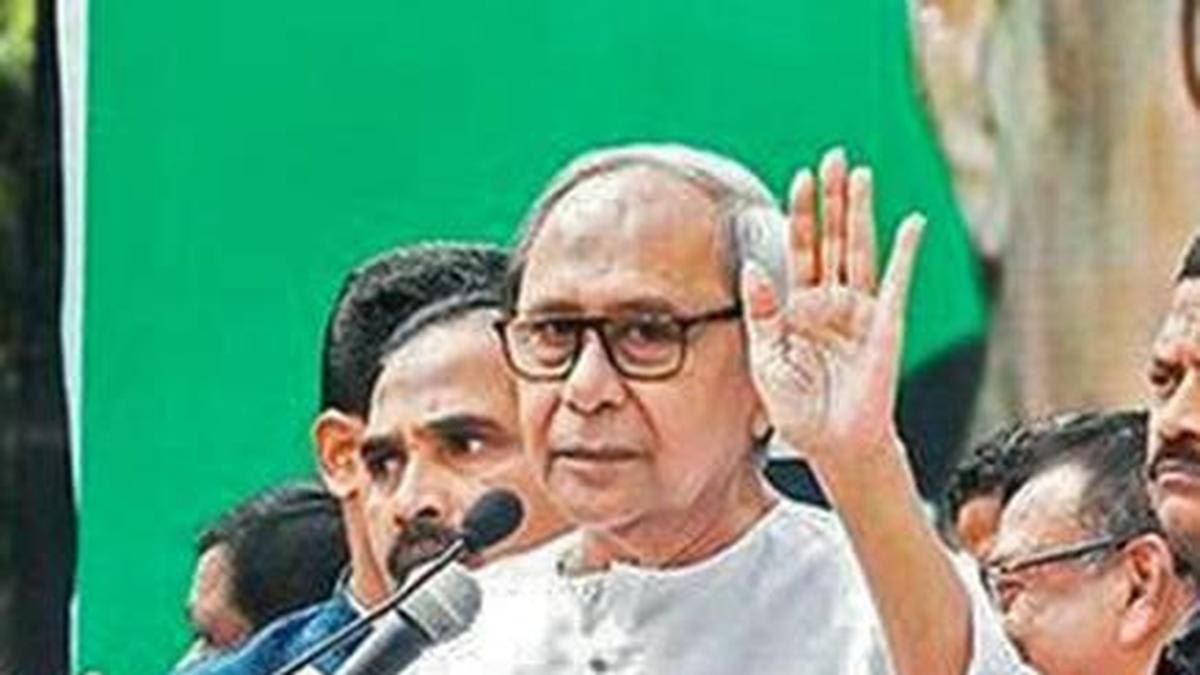
Hockey India has introduced a saffron jersey for the 2026 World Cup, citing visibility issues on blue turf. This decision has ignited a fierce political debate, with opposition leaders accusing the government of politicizing a national symbol.
The Saffron Shift: A Technical Necessity or Political Statement?
Indian hockey, a sport deeply ingrained in the nation's sporting consciousness, finds itself at a crossroads. As the team prepares for the 2026 World Cup in the Netherlands and Belgium, Hockey India (HI) has announced a significant transition: the adoption of a saffron-dominated jersey. While the federation maintains that this change is a strategic response to the modern technical requirements of the game, the decision has triggered a firestorm of controversy that has transcended the sports arena and entered the halls of Parliament.
The Technical Argument: Visibility and Performance
At the core of Hockey India's justification is a practical concern regarding visibility. Modern international hockey is predominantly played on blue artificial turf, which, according to the federation, often causes the traditional blue kits to blend into the playing surface. This visual camouflage can hinder split-second decision-making and teammate recognition during high-intensity matches. By moving to a vibrant saffron palette, HI claims that players will have a clearer visual contrast, thereby improving on-field communication and tactical execution. This explanation highlights the evolving nature of elite sports where marginal gains in equipment are often treated with the same scrutiny as physical training.
Symbolism and Cultural Identity
Beyond the functional aspects, the new design is heavily laden with symbolic intent. According to Hockey India, the choice of saffron is meant to evoke themes of courage, sacrifice, and victory. The integration of deep navy blue accents—inspired by the Ashoka Chakra—is designed to represent peace and progress, while the inclusion of Mandala-inspired patterns and a Sudarshan Chakra-themed chest graphic aims to celebrate India’s rich cultural heritage. The use of Devanagari script for 'INDIA' further emphasizes a desire to lean into national identity, positioning the jersey not merely as sportswear, but as a cultural statement.
The Political Fallout and Legacy Concerns
However, the transition has not been met with universal acclaim. Former Odisha Chief Minister Naveen Patnaik, a pivotal figure in the recent resurgence of Indian hockey, has voiced strong opposition. Patnaik, who was instrumental in Odisha’s long-standing sponsorship of the national team, has characterized the move as a politicization of a national asset. His criticism reflects a broader sentiment among those who view the 'India Blue' as an indelible part of the nation's sporting history, spanning from the golden era of Dhyan Chand to the recent Olympic successes. For these critics, the shift is not a technical upgrade but a departure from a century-old tradition.
The Future of National Branding in Sports
This controversy serves as a microcosm of the tension between modernizing sports infrastructure and preserving historical legacy. As the debate reaches the gates of Parliament, it becomes clear that national team kits are rarely seen as mere fabric. They are powerful symbols of national identity that carry immense emotional weight. Whether the saffron kit will be remembered as a successful technical innovation that led to a World Cup triumph, or as a controversial political episode, will likely depend on the team's performance on the pitch in the coming month.
Conclusion
Ultimately, the Indian hockey team stands at a juncture where tradition meets modern technical necessity. While Hockey India emphasizes the functional benefits of the new kit for the 2026 World Cup, the backlash underscores the deep-seated public attachment to established icons. As the team takes to the field this August, the focus will inevitably shift from the color of the jersey to the capability of the players, yet the debate over this design change is likely to remain a significant topic in the discourse on Indian sports administration for some time.
Verification Required?