Back from Germany, Indian hit with familiar question: What was your JEE rank?
Source Entity
The Indian Express
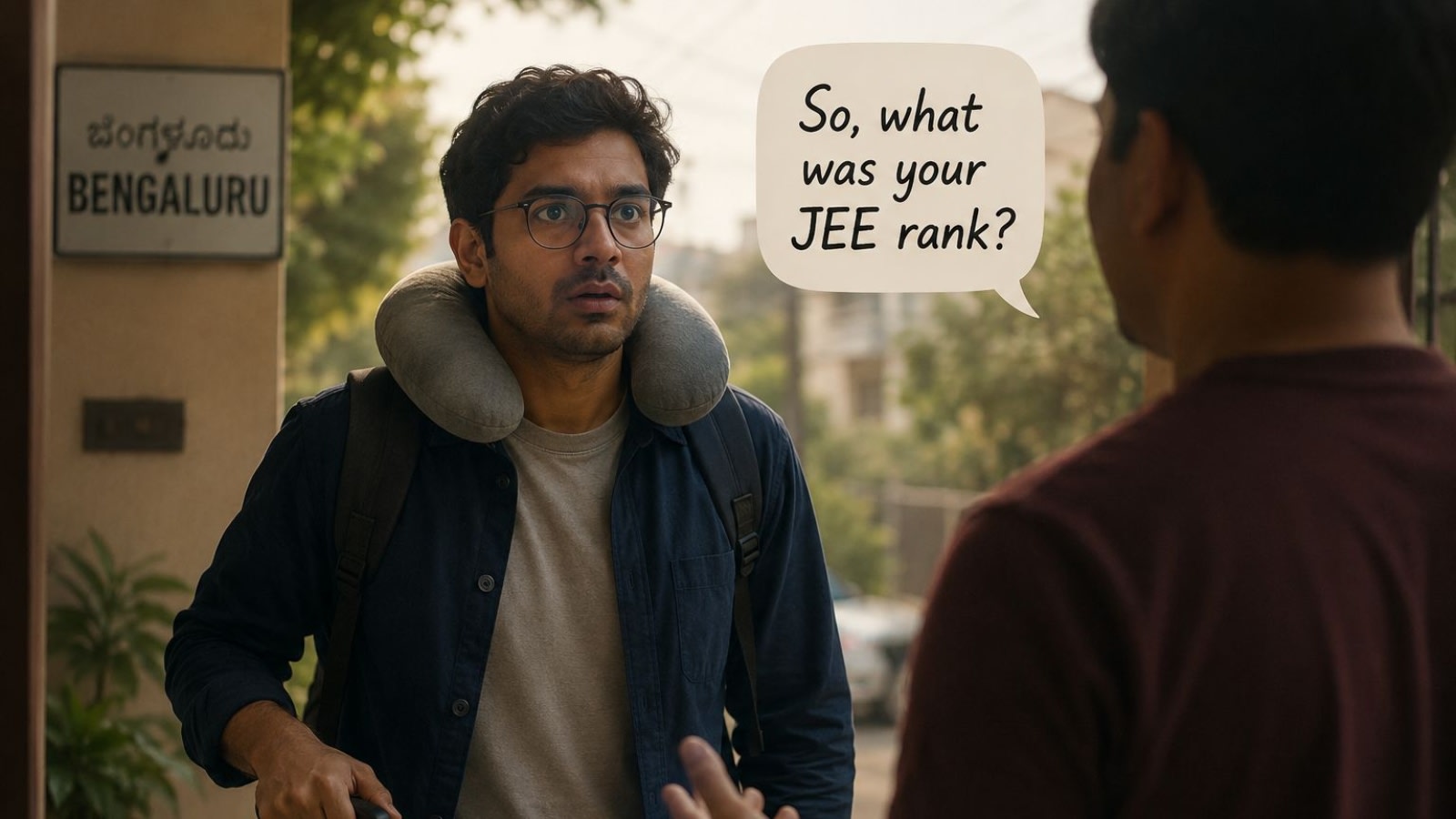
An Indian professional returning from Germany highlights the persistent cultural obsession with JEE ranks and college pedigree in India. His experience underscores a stark contrast between the global professional landscape and the academic-centric identity often found in the Indian job market.
The Persistence of Academic Pedigree in India
Returning to Bengaluru after nearly a decade in Germany, a professional named Mayukh found himself confronted with a phenomenon that many Indians abroad quickly outgrow: the reflexive interrogation regarding one’s Joint Entrance Examination (JEE) rank and undergraduate college. This interaction serves as a poignant case study on the divergence between the global professional environment and the hyper-competitive academic culture that continues to define the social and professional strata within India.
The Global Perspective vs. The Indian Reality
During his tenure in Germany, Mayukh noted that his colleagues and peers rarely prioritized or even recognized the prestige of Indian institutions like the IITs or NITs. In international research circles, professional identity is fundamentally tied to one's contributions, research output, and collaborative expertise rather than the entrance examinations taken in early adulthood. This shift reflects a broader global trend where lifelong learning and professional adaptability supersede the 'tag' of one's alma mater.
The Transition from Engineering to Pure Science
Mayukh’s personal journey—transitioning from engineering to pure science—further illustrates the limitations of the JEE-centric worldview. By engaging with a diverse array of global researchers, he moved away from the narrow confines of undergraduate prestige. His story highlights that as individuals mature in their careers, the importance of foundational academic milestones diminishes in favor of actualized professional impact, a reality that the domestic Indian market is often slow to embrace.
Cultural Implications of the JEE Obsession
The fact that a returnee is immediately met with questions about their JEE rank suggests that for many in India, the competitive exam remains a primary shorthand for intellectual capability. This cultural obsession creates a rigid social hierarchy, where one’s early academic performance is treated as a permanent marker of status. This can be detrimental, as it discourages lateral career moves and reinforces a system where pedigree is valued over evolving skills.
Future Trends and Professional Evolution
As more Indians return from international environments, the clash between these two perspectives—merit-based professional identity and pedigree-based social identity—is likely to intensify. If India’s professional ecosystem aims to remain globally competitive, it may need to pivot away from these outdated metrics. A transition toward valuing professional experience and research output over historical test scores is essential for fostering a more dynamic and inclusive labor market.
Conclusion
Mayukh’s experience acts as a mirror for the Indian middle class, reflecting an entrenched obsession with early-life academic achievements. While the global professional community has moved toward a model of continuous assessment and competency, the domestic focus on JEE ranks remains a stubborn vestige of a rigid education system. Bridging this gap will be crucial for the next generation of Indian professionals who operate in an increasingly borderless world.