Indian Railways approves Rs 990-crore projects in Maharashtra to boost train operations
Source Entity
Anish Mondal
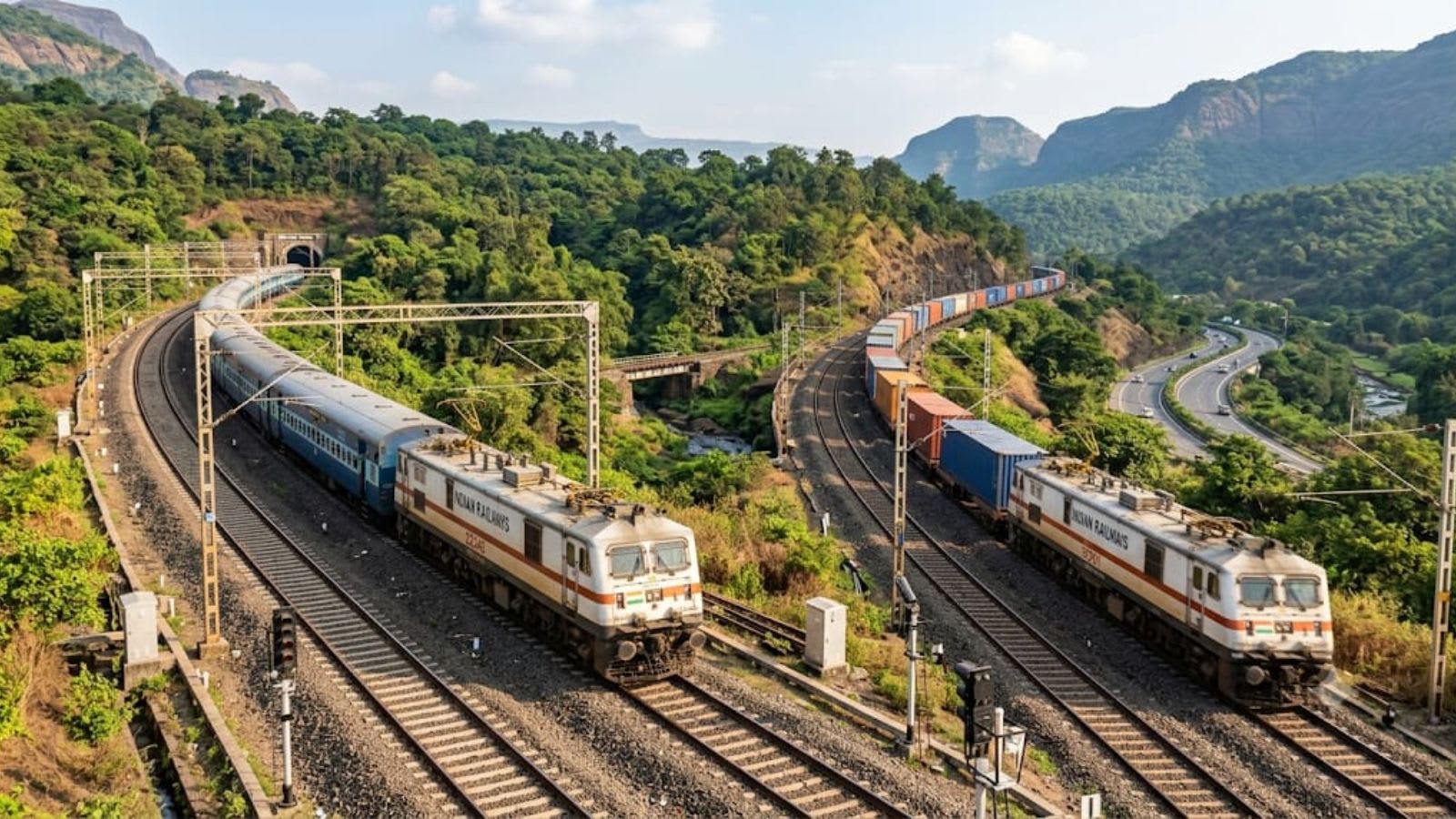
Indian Railways is undertaking massive infrastructure expansion, including a Rs 990-crore project in Maharashtra and a Rs 50,000-crore initiative across Telangana, Karnataka, and Maharashtra. Simultaneously, BHEL and Titagarh have formed a joint venture to manage the long-term maintenance of 80 Vande Bharat sleeper trains.
Transforming Indian Rail Infrastructure: A Multi-Pronged Strategy
Indian Railways is currently undergoing a period of unprecedented capital expenditure, aimed at modernizing its aging network to meet the demands of a rapidly growing economy. Recent approvals for infrastructure projects in Maharashtra, alongside broader regional initiatives, underscore a strategic shift toward increasing track capacity. By prioritizing the doubling of existing lines—such as the 10.86-km Chouk-Karjat section—the railways are directly addressing historical bottlenecks that have long hindered the efficient flow of both passenger and freight traffic.
Expanding Capacity in Maharashtra and Beyond
The Rs 990-crore allocation for Maharashtra projects is a microcosm of a much larger national vision. By converting single-line stretches into double lines, the system can significantly reduce transit times and increase the frequency of services. The Chouk-Karjat project, specifically, is designed to accommodate five additional passenger trains in each direction, demonstrating how targeted infrastructure investment provides immediate utility to commuters while simultaneously easing the burden on freight logistics.
The Scale of Regional Connectivity
Beyond Maharashtra, the South Central Railway (SCR) is spearheading a massive Rs 50,000-crore development plan. This initiative, spanning Telangana, Karnataka, and Maharashtra, focuses on long-term capacity enhancement. The proposed 781.6-km Balharshah-Kazipet-Vijayawada-Gudur quadrupling corridor is particularly noteworthy. As one of the busiest arteries for freight and passenger movement in India, quadrupling this route is essential for maintaining the operational efficiency required to support India's industrial growth.
Modernization through the Vande Bharat Initiative
The technological upgrade of the Indian railway fleet is best exemplified by the induction of Vande Bharat sleeper trainsets. The recent formation of a 50:50 joint venture between Bharat Heavy Electricals Limited (BHEL) and Titagarh Rail Systems Limited highlights a new model of public-private partnership. By securing a 35-year maintenance contract for 80 trainsets, the consortium ensures that these high-speed assets remain operational and safe, moving away from reactive repairs toward a standardized, long-term lifecycle management approach.
Future Trends and Economic Implications
The convergence of massive civil engineering works and advanced rolling stock maintenance signals a maturing railway ecosystem. Future trends suggest that as the Railway Board continues to approve Detailed Project Reports (DPRs) for corridors like the Balharshah-Vijayawada line, the rail network will increasingly act as the backbone of India’s logistics sector. The shift toward high-capacity corridors and long-term maintenance partnerships indicates that Indian Railways is prioritizing sustainability and reliability, which are critical for attracting higher volumes of freight and improving the overall passenger experience.
Conclusion
In summary, the combined impact of regional doubling projects, massive inter-state quadrupling corridors, and sustainable maintenance agreements for new-age trainsets represents a cohesive strategy. While the capital outlay is significant, the long-term benefits—ranging from reduced congestion to improved safety and operational speed—are vital for the nation's economic progress. These developments confirm that Indian Railways is aggressively modernizing to bridge the gap between current infrastructure capacity and the future requirements of an emerging global power.