Railways responds after expired products, non-permitted colours found in food at Karnataka stations
Source Entity
Anish Mondal
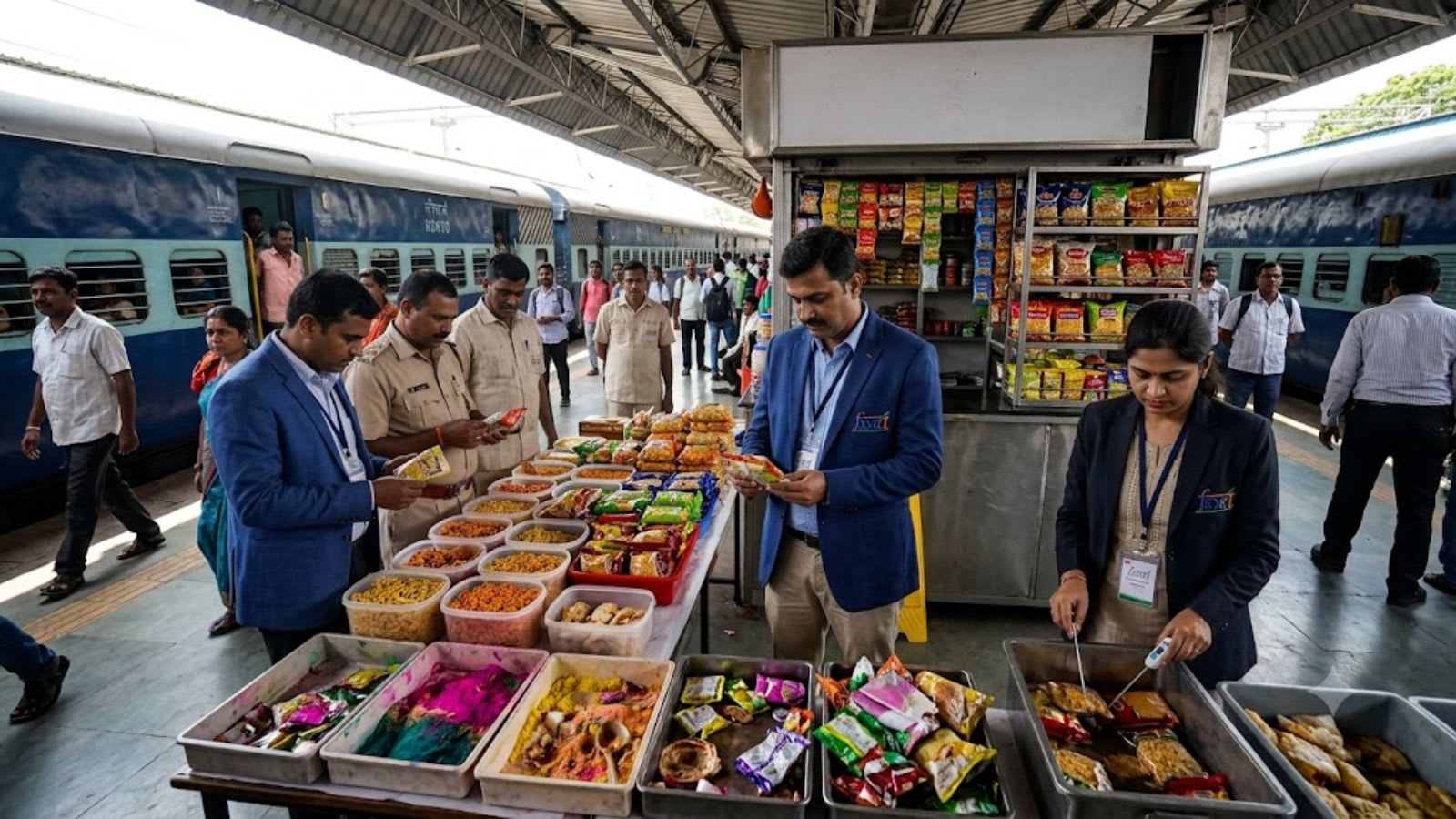
Indian Railways is balancing infrastructure modernization with safety accountability, highlighted by a new speed milestone on the Chenab Bridge and high-speed freight trials. Meanwhile, authorities are conducting a 14-day food safety drive in Karnataka following reports of expired products at stations.
Modernization and Accountability in Indian Railways
Indian Railways is currently navigating a dual-track strategy: aggressively upgrading its technological infrastructure while simultaneously addressing critical concerns regarding passenger welfare and food safety standards. Recent developments, ranging from record-breaking high-speed trials to rigorous health inspections, underscore the massive scale of operational challenges faced by the national transporter as it modernizes its network.
Advancements in Speed and Engineering
The engineering prowess of Indian Railways was recently highlighted as the Vande Bharat Express achieved a speed of nearly 100 km/h on the world’s highest railway bridge, the Chenab Bridge in Jammu and Kashmir. This achievement follows the railway ministry’s decision to increase the maximum permissible speed on the 111-km Katra-Banihal stretch. Such milestones are not merely symbolic; they represent the successful implementation of complex engineering on challenging terrain, significantly reducing transit times for passengers in the region.
The Future of Logistics: Vande Bharat Freight
Beyond passenger services, the focus on speed has extended to freight logistics. The recent trial run of India’s first Vande Bharat freight train, which reached 145 km/h on the West Central Railway’s Chaumahla-Shamgarh-Gurla section, signals a shift toward high-speed cargo movement. Developed by the Integral Coach Factory (ICF) and monitored by the Research Designs and Standards Organisation (RDSO), these trials are critical for future supply chain efficiency in India.
Addressing Food Safety Concerns
While technological strides are being made, the fundamental issue of passenger health remains a priority. Following reports of expired products and non-permitted food dyes at railway stations in Karnataka, the South Western Railway (SWR) has initiated a 14-day intensive food safety drive. This intervention, prompted by findings from the Karnataka Food Safety and Drug Administration (FSDA), covers 428 catering establishments, including base kitchens and pantry cars.
Systematic Oversight and Compliance
The ongoing safety drive is a comprehensive effort to ensure compliance with FSSAI standards. By auditing hygiene, cleanliness, and the validity of food licenses, the SWR is attempting to standardize the quality of food services across the Bengaluru, Mysuru, and Hubballi divisions. This systematic approach is essential for maintaining public trust as the railway network continues to expand its reach and service capacity.
Conclusion: A Balanced Trajectory
The trajectory of Indian Railways is defined by this tension between rapid technological innovation—such as 145 km/h freight capabilities—and the necessity of maintaining basic safety protocols at the platform level. As the network continues to integrate modern rolling stock like the Vande Bharat series, the long-term success of these initiatives will depend as much on the rigorous enforcement of food and safety regulations as it does on the speed of its trains.