‘So different from Reels’: Indian woman says New York’s Times Square failed to meet her expectations
Source Entity
Latest News: Today's Latest News Headlines from India & World | Hindustan Times | Hindustan Times
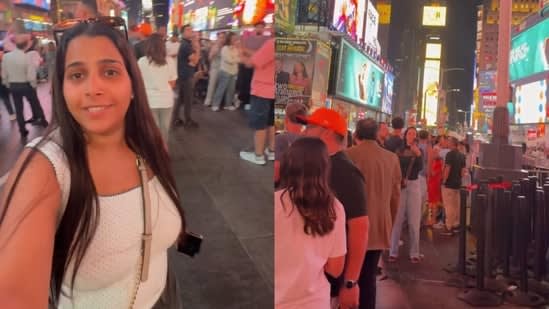
An Indian woman was disappointed after Times Square looked far more crowded and different from what she had seen in Reels.
The Gap Between Digital Curation and Physical Reality: The Times Square Experience
In a recent viral account, an Indian woman shared her profound disappointment after visiting one of the world's most iconic landmarks: New York City's Times Square. Her experience serves as a poignant case study in the growing divide between digital perception and physical reality. The visitor noted that the actual environment was starkly different from the polished, high-energy, and often empty-looking vistas presented in short-form video content, specifically Instagram Reels. This disconnect highlights a broader cultural phenomenon where the 'Instagrammability' of a destination begins to outweigh the actual experience of the place.
The Illusion of the 'Perfect Shot'
The disappointment experienced by the traveler is rooted in the mechanics of modern content creation. Short-form videos like Reels utilize strategic framing, high-speed editing, and specific timing to erase the 'noise' of a location. In the case of Times Square, a creator can film a five-second clip from a specific angle that excludes the thousands of tourists, street performers, and traffic congestion that define the area's daily existence. By stripping away the sensory overload—the noise, the smell, and the claustrophobia—social media creates a sanitized version of New York City that is virtually impossible to encounter in real life. For the traveler, the shock was not just the crowd, but the realization that the digital narrative had omitted the most defining characteristic of the location.
The 'Disneyfication' of Global Landmarks
This event reflects a trend often described as the 'Disneyfication' of travel, where global landmarks are viewed not as historical or cultural sites, but as backdrops for personal branding. When travelers visit locations based on viral trends, they are often seeking to recreate a specific digital aesthetic rather than explore the destination's authentic essence. Times Square, known as the 'Crossroads of the World,' is designed for spectacle and consumption, making it the epicenter of this trend. When the physical reality fails to mirror the filtered digital image, the resulting 'expectation gap' leads to a sense of letdown, as the traveler feels they have been sold a curated lie.
Psychological Impacts of Curated Travel
From a psychological perspective, the reliance on social media for travel expectations can lead to a diminished capacity for serendipity. When a visitor arrives at a destination with a pre-defined image of how it 'should' look, they may miss the genuine, unplanned moments that make travel rewarding. In this instance, the Indian woman's focus on the lack of similarity to Reels suggests a shift in the travel objective: the goal shifted from experiencing New York to verifying a digital image. This shift often results in dissatisfaction because reality is inherently messy, unpredictable, and unedited, whereas a Reel is a carefully constructed product.
Future Trends in Tourism and Content Consumption
Looking forward, this incident predicts a potential pivot toward 'de-influencing' in the travel industry. As more travelers experience the disparity between viral clips and reality, there may be a growing demand for 'authentic' or 'raw' travel guides that highlight the challenges of visiting popular sites, including crowd management and logistical hurdles. We are likely to see a rise in content that emphasizes 'expectation vs. reality,' as users seek transparency over perfection. This movement could encourage a more sustainable form of tourism, where visitors choose destinations based on personal interest rather than algorithmic popularity.
Summary
Ultimately, the disappointment of the Indian tourist in Times Square is a symptom of a digital age where the map (the Reel) is often mistaken for the territory (the city). While social media remains a powerful tool for discovery, this event underscores the necessity of managing expectations and embracing the chaotic, unfiltered nature of global travel. The contrast between the curated screen and the crowded street serves as a reminder that the true value of travel lies in the authentic experience, regardless of how it compares to a filtered video.
Verification Required?