Hormuz war escalates: Are 148 Indian seafarers now trapped in the world's most dangerous waterway?
Source Entity
Latest News: Today's Latest News Headlines from India & World | Hindustan Times | Hindustan Times
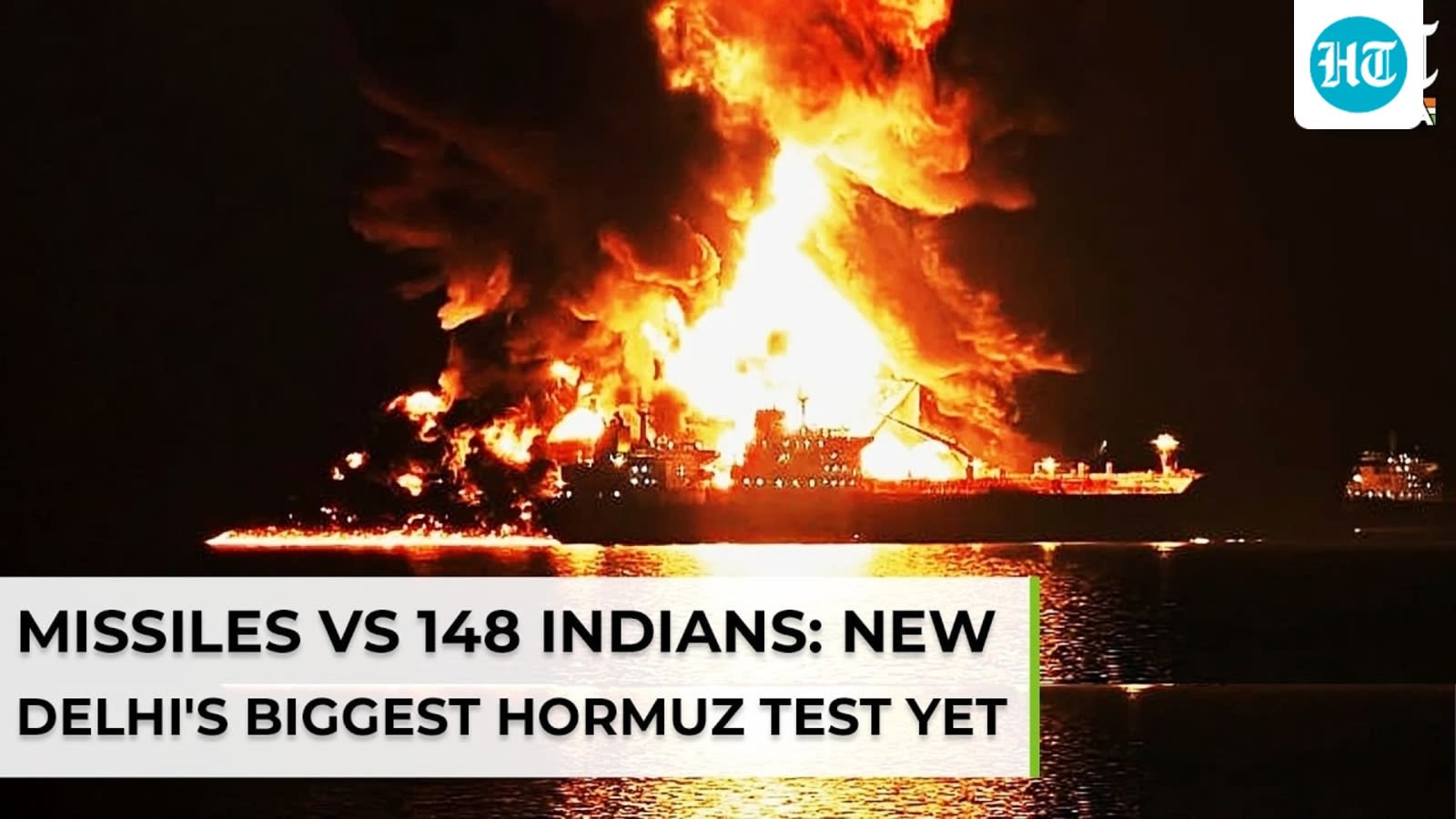
An Indian seafarer was killed and six others injured after missiles struck two Emirati oil tankers transiting the Strait of Hormuz, escalating concerns over the widening Iran-U.S. conflict. The UAE said the tankers were hit in Omani territorial waters, while Iran's IRGC claimed the vessels ignored repeated warnings. The attack came days after another strike on the Cyprus-flagged GFS Galaxy, where one Indian sailor remains missing. With Indian casualties rising, concerns are growing over the safety of commercial shipping and Indian seafarers in the Gulf. Watch the latest updates and key developments.
Escalation in the Strait of Hormuz: A Growing Crisis for Global Shipping
The recent missile attacks on two Emirati oil tankers in the Strait of Hormuz mark a perilous escalation in an already volatile region. The Strait, a narrow waterway connecting the Persian Gulf to the Gulf of Oman, serves as the world's most critical oil chokepoint. The strike, which occurred in Omani territorial waters according to the UAE, has resulted in immediate human casualties, including the death of one Indian seafarer and injuries to six others. This event is not an isolated incident but part of a widening conflict involving the United States and Iran, where commercial vessels are increasingly being used as pawns in geopolitical signaling.
The Human Cost and the Vulnerability of Indian Seafarers
India's maritime workforce is heavily represented in the Gulf's shipping lanes, making the nation disproportionately vulnerable to regional instability. The current crisis is compounded by the previous strike on the Cyprus-flagged GFS Galaxy, where an Indian sailor remains missing. The report that 148 Indian seafarers may now be trapped in the waterway adds a layer of humanitarian urgency to the diplomatic crisis. For these crew members, the Strait has transformed from a routine transit route into a high-risk zone where the distinction between military targets and civilian commercial vessels has become dangerously blurred.
Geopolitical Friction: The IRGC and the U.S.-Iran Conflict
The conflicting narratives surrounding the attack highlight the deep-seated tensions in the region. While the UAE emphasizes the violation of territorial waters, the Islamic Revolutionary Guard Corps (IRGC) of Iran claims the vessels ignored repeated warnings. This pattern of 'warning' followed by kinetic action is a known tactic used by the IRGC to assert dominance over the waterway and pressure international actors, particularly the United States. As the Iran-U.S. conflict widens, the Strait of Hormuz becomes the primary theater for asymmetric warfare, where the threat of closure or targeted attacks serves as a strategic lever for Tehran.
Strategic Implications for Global Energy and Trade
Beyond the immediate casualties, these attacks send shockwaves through the global energy market. Because a significant portion of the world's liquefied natural gas (LNG) and crude oil passes through this narrow corridor, any perceived increase in risk leads to a spike in maritime insurance premiums (war risk surcharges) and potential volatility in global oil prices. The targeting of Emirati tankers specifically suggests that the conflict is expanding beyond a binary U.S.-Iran struggle to involve other regional powers, thereby threatening the stability of the entire Arabian Peninsula's trade infrastructure.
Future Outlook and the Necessity of Diplomatic De-escalation
Looking forward, the safety of the remaining 148 Indian seafarers depends on rapid diplomatic intervention and the establishment of secure corridors for commercial transit. If the IRGC continues to target vessels based on disputed warnings, the international community may be forced to increase naval escorts, which could ironically further provoke Iran and lead to a direct military confrontation. The priority for the Indian government must be the safe evacuation of its citizens, while the global community must address the underlying U.S.-Iran tensions to prevent the Strait of Hormuz from becoming a permanent war zone.
Summary
The missile strikes on Emirati tankers have transitioned the Iran-U.S. conflict from a diplomatic and economic shadow war into a kinetic threat to civilian life. With Indian seafarers bearing the brunt of the casualties, the event underscores the fragility of global energy security and the urgent need for a maritime security framework that protects non-combatant crews from geopolitical volatility.
Verification Required?