India’s lunar ambitions and the growing competition in space
Source Entity
The Indian Express
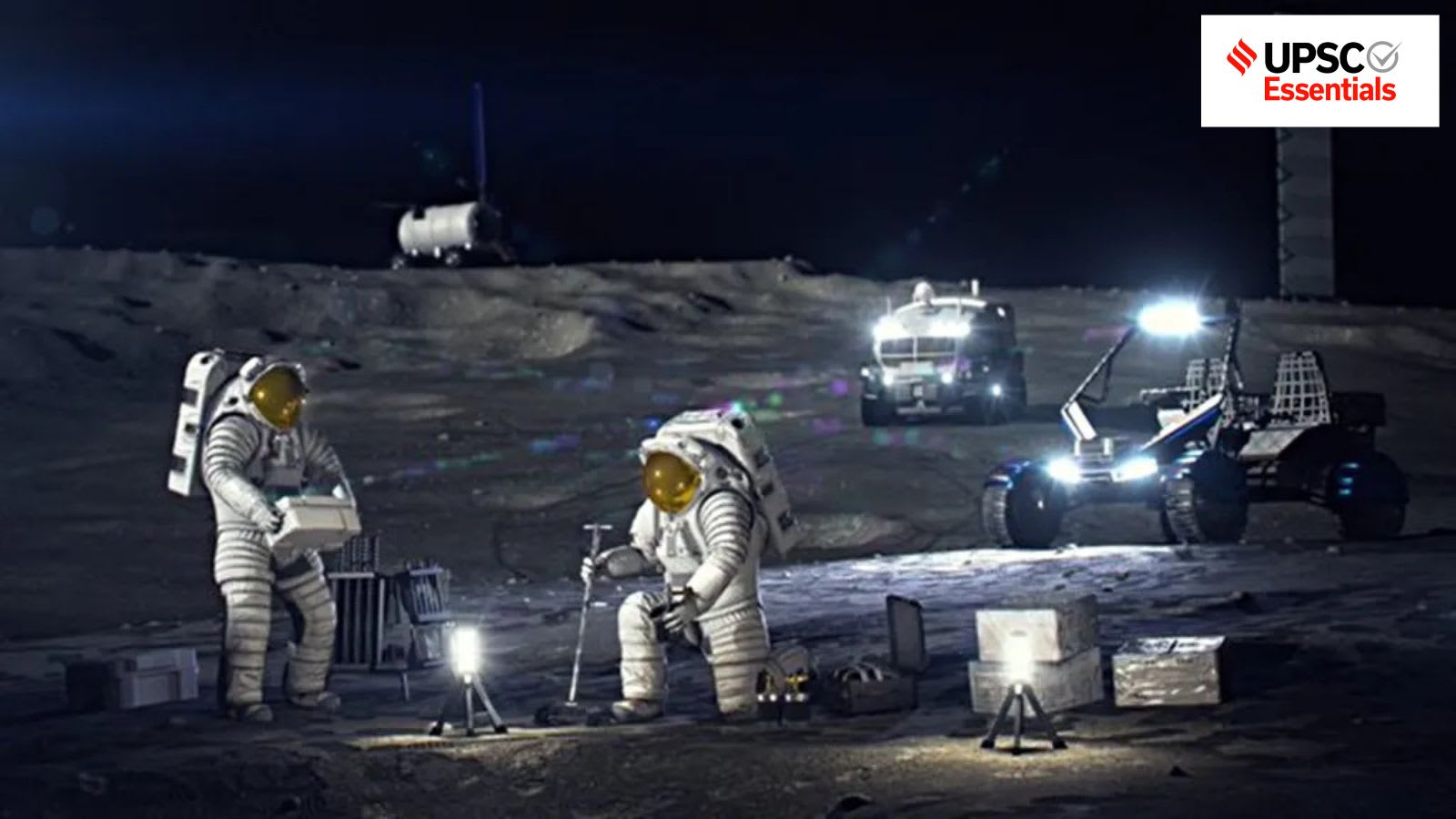
India is advancing its space program with ambitious goals for a 2035 space station and a 2040 lunar mission. Prime Minister Modi has emphasized the necessity of global collaboration to ensure sustainable lunar exploration amidst rising international competition.
The New Era of Lunar Exploration
The global race to establish a permanent human presence on the Moon has shifted from a symbolic endeavor to a strategic imperative. As nations target the lunar South Pole—a region prized for its potential resources—the focus has moved toward long-term sustainability and industrial capacity. India, through the vision of its space agency, has positioned itself as a pivotal player in this landscape, balancing national pride with the necessity of international cooperation.
Strategic Motivations and Resource Potential
The intensified interest in the Moon is not merely scientific; it is deeply rooted in the pursuit of technological sovereignty. The lunar South Pole is considered a critical location due to the presence of water ice, which could be harvested to support life-sustaining systems and fuel production for deeper space missions. By securing a foothold in these regions, countries are effectively building the infrastructure for a future lunar economy, marking a significant evolution in how humanity approaches celestial bodies.
India’s Roadmap: From Earth Orbit to the Moon
India has outlined a bold trajectory for its space program, aiming to establish an indigenous space station by 2035 and achieving a human landing on the Moon by 2040. These targets represent a significant leap in India's industrial and engineering capabilities. By transitioning from robotic explorers to human-centric missions, India is signaling its intent to move beyond experimental research into the realm of complex, multi-year space operations.
The Need for Global Governance
Addressing the International Space Summit in Paris, Prime Minister Narendra Modi highlighted the risks inherent in an increasingly crowded orbital environment. With more actors entering the space domain and technology becoming more powerful, the potential for conflict or debris-related accidents grows. Modi’s call for global partnerships emphasizes that the sustainability of space exploration depends on collaborative frameworks that prioritize long-term stability over the competitive race for short-term achievements.
Navigating Future Space Competition
As the number of state and private actors in space continues to rise, the challenge lies in balancing national ambition with international norms. The transition toward a more congested space environment necessitates new protocols for traffic management and resource extraction. India’s proactive stance in advocating for sustainable exploration suggests a strategy that seeks to leverage global expertise while maintaining its sovereign technological growth.
Conclusion: A Sustainable Path Forward
India’s lunar ambitions are reflective of a broader global trend where space is viewed as the next frontier for economic and strategic advancement. By aligning its 2035 and 2040 milestones with a commitment to sustainable international cooperation, India is attempting to secure its place as a responsible and capable leader in the new space age. The success of these initiatives will likely depend on the country's ability to maintain technological momentum while navigating the complex geopolitical dynamics of the modern era.