Infantino apologises to Fifa Council - but told he's still not fit to lead
Source Entity
BBC News
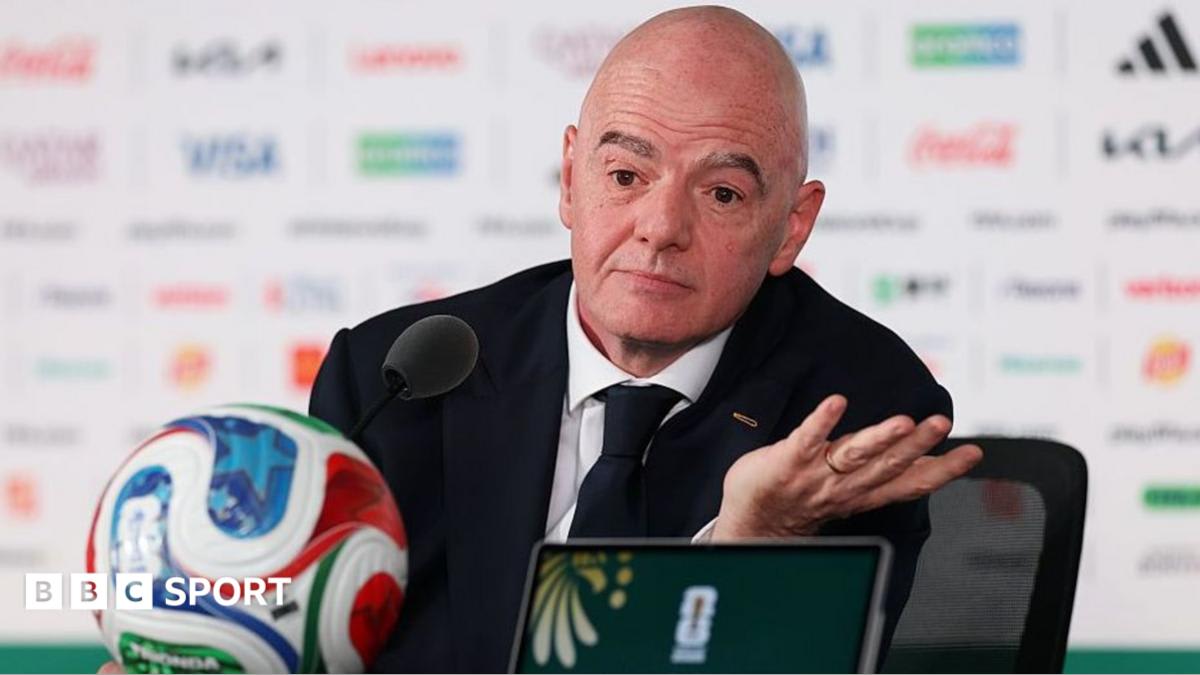
FIFA President Gianni Infantino issued an apology to the FIFA Council regarding the scrapped 'Fifa Forward Enterprise' proposal. Despite the apology, critics remain skeptical of his leadership, demanding further transparency and the release of key documents.
The FIFA Council Crisis: Transparency and Accountability Under Scrutiny
Recent meetings at the FIFA headquarters in Zurich have thrust President Gianni Infantino into a precarious position, as he faced a grilling from the FIFA Council regarding his controversial 'Fifa Forward Enterprise' (FFE) proposal. The plan, which would have offloaded a portion of the governing body's commercial rights to a private investment firm, sparked immediate backlash, forcing Infantino to scrap the initiative within days. While the apology offered by Infantino serves as a formal acknowledgment of the misstep, it has failed to quell the deeper concerns regarding his governance style.
The 'Fifa Forward Enterprise' Controversy
The core of the current unrest stems from the FFE proposal, which represented a significant shift in how FIFA manages its commercial assets. By attempting to privatize parts of the organization's revenue streams, Infantino opened himself to accusations of prioritizing external investment interests over the long-term integrity of football's governing body. The fact that this proposal was developed in relative secrecy before being presented to the Council highlights a recurring friction point between the President and the broader leadership regarding executive oversight.
A Lack of Transparency
The situation escalated during a three-and-a-half-hour meeting in Zurich, where critics did not settle for a mere apology. Led by figures such as Football Association chair and FIFA vice-president Debbie Hewitt, Council members have demanded full disclosure of all related documents. The refusal—or inability—of Infantino to provide these documents during the meeting has fueled a narrative that he is not currently fit to lead. For an organization already seeking to rebuild its reputation after historical corruption scandals, the perceived lack of transparency is a critical vulnerability.
Broader Governance Challenges
Beyond the FFE debacle, the Council meeting served as a flashpoint for several other contentious issues. Infantino faced rigorous questioning on diverse topics, including the handling of US striker Folarin Balogun’s suspended red-card ban, the administration of the FIFA Peace Prize, and the complex mechanisms governing funding for national associations. These inquiries suggest that the Council’s dissatisfaction is not isolated to a single proposal but reflects a broader concern about the centralization of power and the consistency of decision-making under Infantino.
Future Implications for FIFA
The path forward for FIFA remains uncertain. The pressure on Infantino to prove his fitness for leadership is mounting, and the demand for accountability is unlikely to dissipate until the requested documents are made public. Moving forward, the Council will likely exert greater pressure on the executive office to ensure that major commercial decisions are subjected to democratic oversight. The outcome of this internal struggle will ultimately determine whether FIFA can successfully navigate its current governance crisis or if it faces a deeper period of institutional instability.