INS Mahendragiri set to be commissioned at Visakhapatnam’s Eastern Naval Command
Source Entity
India Latest News: Top National Headlines Today & Breaking News | The Hindu
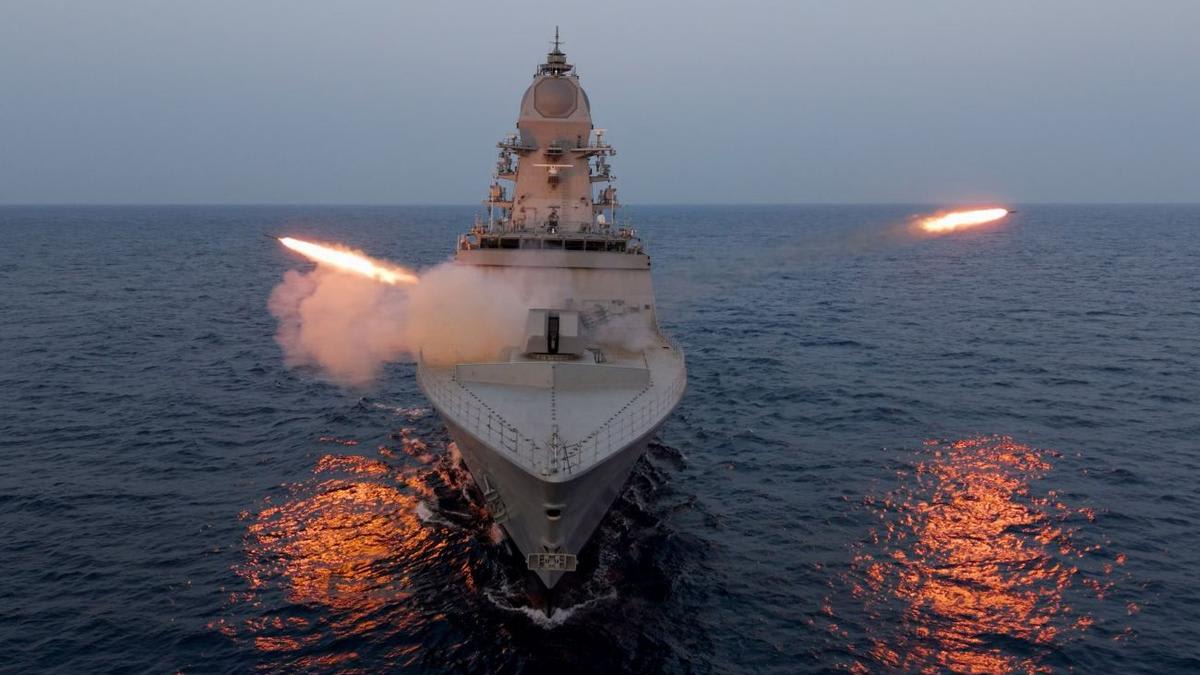
The commissioning ceremony is on Saturday being presided over by Union Defence Minister Rajnath Singh, who arrived in the city on July 10—coinciding with his 75th birthday—for a two-day visit.
Strengthening the Seas: The Commissioning of INS Mahendragiri
The commissioning of the INS Mahendragiri at the Eastern Naval Command in Visakhapatnam represents a pivotal moment for the Indian Navy's operational readiness. Presided over by Union Defence Minister Rajnath Singh, the event is not merely a ceremonial addition to the fleet but a strategic manifestation of India's commitment to maritime dominance in the Indian Ocean Region (IOR). The timing of the visit, coinciding with the Defence Minister's 75th birthday on July 10, adds a layer of personal and political significance to the event, highlighting the government's prioritized focus on national defense infrastructure.
A Milestone for Project 15B and Self-Reliance
INS Mahendragiri is a critical component of the Project 15B class of stealth guided-missile destroyers. This project is a cornerstone of the 'Atmanirbhar Bharat' (Self-Reliant India) initiative, emphasizing the indigenous design and construction of high-tech warships. By reducing dependence on foreign shipyards, India is enhancing its strategic autonomy. The integration of advanced stealth technology, sophisticated weapon systems, and indigenous sensors into the Mahendragiri ensures that the Indian Navy can operate with a lower radar cross-section, making it more elusive to enemy detection while maintaining lethal strike capabilities.
Strategic Importance of the Eastern Naval Command
The deployment of such a powerful asset to Visakhapatnam’s Eastern Naval Command is a calculated move. The Bay of Bengal and the wider Indo-Pacific region have become hotspots of geopolitical competition. With the increasing presence of foreign naval assets in these waters, the Eastern Naval Command serves as the primary gateway for monitoring maritime traffic and countering potential threats. The INS Mahendragiri provides the command with enhanced surveillance and offensive capabilities, ensuring that India can project power effectively to protect its trade routes and sovereign interests.
Enhanced Combat Capabilities and Deterrence
Technologically, the INS Mahendragiri is equipped to handle multi-dimensional warfare, including anti-air, anti-surface, and anti-submarine operations. Its ability to launch guided missiles with precision makes it a formidable deterrent against regional adversaries. In an era of asymmetric warfare and evolving naval tactics, having a stealth destroyer allows the Indian Navy to execute complex maneuvers and maintain a high state of readiness. This addition ensures that the navy can transition from a 'brown water' force to a true 'blue water' navy, capable of operating across deep oceans for extended periods.
Broader Geopolitical Implications
Beyond the immediate technical gains, the commissioning of the INS Mahendragiri sends a clear signal to the global community regarding India's naval ambitions. As the primary security provider in the Indian Ocean, India's ability to deploy advanced destroyers ensures stability and freedom of navigation. This move aligns with the broader strategy of maintaining a balance of power in Asia, particularly in response to the expanding naval footprints of other regional powers. The ship's entry into active service reinforces India's role as a net security provider in the region.
Conclusion and Future Outlook
In summary, the induction of INS Mahendragiri is a landmark achievement for the Indian Navy and the Ministry of Defence. By combining indigenous engineering with strategic deployment at the Eastern Naval Command, India has significantly fortified its maritime shield. Looking forward, the continued commissioning of Project 15B vessels will likely lead to a more integrated and lethal naval fleet, ensuring that India remains a dominant force in the Indo-Pacific. The event underscores a trajectory of growth where technological innovation and strategic foresight converge to secure the nation's maritime frontiers.
Verification Required?