A mothership for drones, a testbed for weapons: What INS Samarthak brings to Indian Navy
Source Entity
DHRUV YADAV
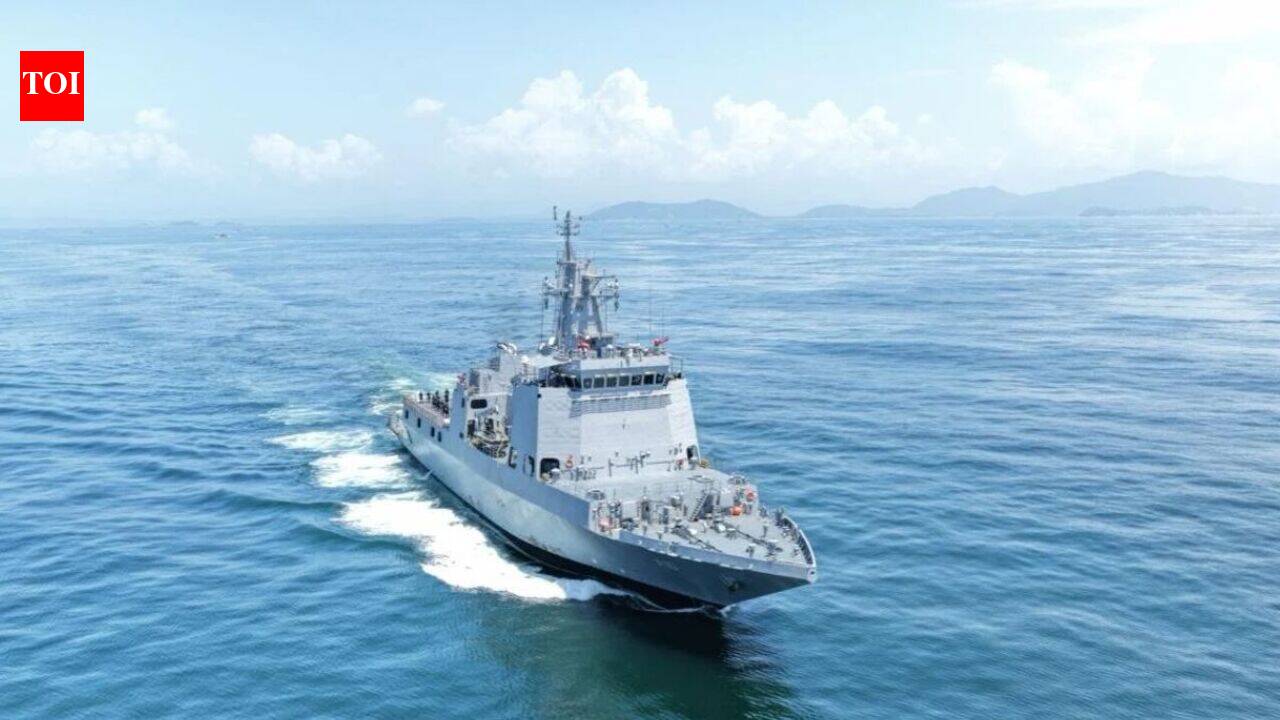
The Indian Navy has commissioned INS Samarthak, the first of four multi-purpose vessels built by L&T with over 75% indigenous content. This versatile ship serves as a critical testbed for domestic sensors and weapons while supporting humanitarian and surveillance missions.
Strengthening Maritime Sovereignty: The Commissioning of INS Samarthak
The commissioning of INS Samarthak at the Karwar naval base marks a pivotal moment for the Indian Navy, signaling a strategic shift toward versatile, indigenous maritime platforms. As the first of four multi-purpose vessels to be inducted, INS Samarthak is designed to serve as a high-tech laboratory for the sea, bridging the gap between theoretical defense research and real-world operational deployment.
A Hub for Indigenous Innovation
Developed by Larsen & Toubro (L&T), the vessel boasts over 75% indigenous content, reflecting the success of the 'Make in India' initiative within the defense sector. By providing a dedicated platform to test indigenously developed sensors and weapons, the Navy is accelerating its transition away from reliance on foreign military hardware. This capability is essential for maintaining technological superiority in the evolving security landscape of the Indian Ocean Region.
Versatility in Operational Deployment
Beyond its role as a weapon and sensor testbed, the INS Samarthak is engineered for multifaceted utility. The vessel is equipped to handle diverse mission profiles, ranging from maritime surveillance—vital for monitoring regional chokepoints—to environmental protection and humanitarian assistance. This flexibility ensures that the Navy can deploy the ship not only for combat-readiness but also for disaster relief and regional maritime stability operations.
The Role of the Private Sector
The involvement of L&T in the construction of this vessel underscores the growing maturity of India’s private defense industry. By successfully delivering a complex multi-purpose vessel, private shipyards are proving their capability to meet the stringent requirements of the armed forces. This partnership is expected to reduce procurement timelines and foster a more robust domestic defense ecosystem.
Strategic Implications for Future Missions
As a 'mothership for drones' and a mobile testbed, INS Samarthak represents the future of naval warfare, where unmanned systems and integrated digital sensors will define the battlefield. By embedding these capabilities into a single hull, the Indian Navy is future-proofing its fleet against emerging asymmetric threats and ensuring that its maritime doctrine remains agile and responsive to 21st-century challenges.
Conclusion
The induction of INS Samarthak is more than just the addition of a new hull to the fleet; it is a statement of India’s technological self-reliance. With three more vessels of this class slated for induction, the Navy is systematically building a specialized force capable of testing, refining, and deploying cutting-edge technology, ensuring that India remains a dominant and responsible maritime power in the Indo-Pacific.
Multiple Citing Sources