Nvidia gets $500bn from major banks to develop AI data centres
Source Entity
BBC News
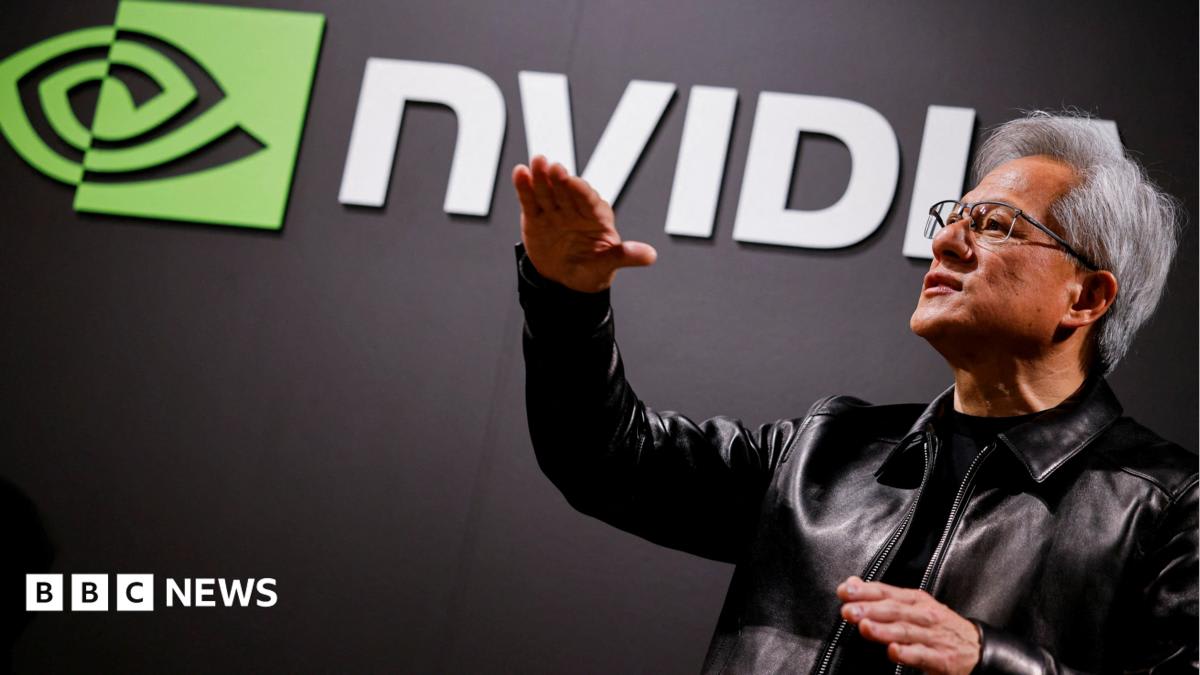
Intel is raising $15 billion through a stock offering to fund AI-driven growth, while Meta's CEO Mark Zuckerberg has outlined a decentralized vision for AI development. Both companies face market volatility as investors react to shifts in the AI infrastructure landscape.
The Shifting Landscape of Big Tech and AI Investment
Monday’s trading session saw a notable downturn in tech stocks, driven by a convergence of strategic announcements from two industry titans: Meta and Intel. While Meta focused on the philosophical and technical direction of its AI roadmap, Intel’s move was primarily financial, signaling a massive capital injection into its own infrastructure. These developments highlight the dual pressures of market volatility and the relentless, capital-intensive pursuit of dominance in the artificial intelligence sector.
Meta’s Decentralized Vision for AI
Mark Zuckerberg’s latest manifesto marks a significant pivot in how Meta positions itself within the AI ecosystem. By explicitly rejecting the idea of a centralized, expert-led superintelligence, Zuckerberg is championing a more democratic, open-access model. The introduction of 'Muse Glimmer,' an open-weight model designed for local device execution, serves as a direct implementation of this philosophy. By allowing users to run models on their own hardware, Meta is attempting to lower the barrier to entry for AI while simultaneously fostering a developer ecosystem that bypasses the restrictive control of competitors.
Intel’s $15 Billion Capital Play
Contrasting Meta’s focus on software democratization, Intel is addressing the raw physical requirements of the AI era. The announcement of a $15 billion common stock offering—capitalizing on a 400% surge in its share price over the past year—demonstrates the company's urgent need for liquidity. As demand for AI computing power skyrockets, Intel is positioning itself to capture market share through specialized growth opportunities, specifically targeting physical AI, purpose-built silicon, and advanced packaging technologies.
The Cost of Infrastructure
Intel’s decision to raise capital reflects a broader trend across the tech industry, where companies have collectively spent trillions to build the necessary infrastructure for modern AI. This relentless build-out of compute capacity is no longer just a trend; it is a fundamental requirement for survival. By securing this $15 billion, Intel aims to bolster its working capital and fund the massive capital expenditures required to keep pace with an industry that demands constant, high-performance innovation.
Market Reaction and Future Outlook
Despite the strategic logic behind these moves, the market response was immediate, with Intel shares falling 4% in early trading. This reaction underscores the inherent skepticism investors feel toward massive share dilutions, even when framed as a growth opportunity. As the AI arms race continues, the ability of companies like Intel to convert these capital investments into sustainable, 'strong' customer demand will be the primary metric for long-term viability.
Conclusion
Ultimately, the events of this Monday illustrate two distinct but complementary paths in the AI race: Meta’s push for accessible, decentralized software, and Intel’s commitment to the foundational hardware and physical infrastructure that makes AI possible. As these companies navigate the high costs and intense competitive pressures of the current era, their success will likely define the trajectory of the next decade of technological advancement.
Multiple Citing Sources