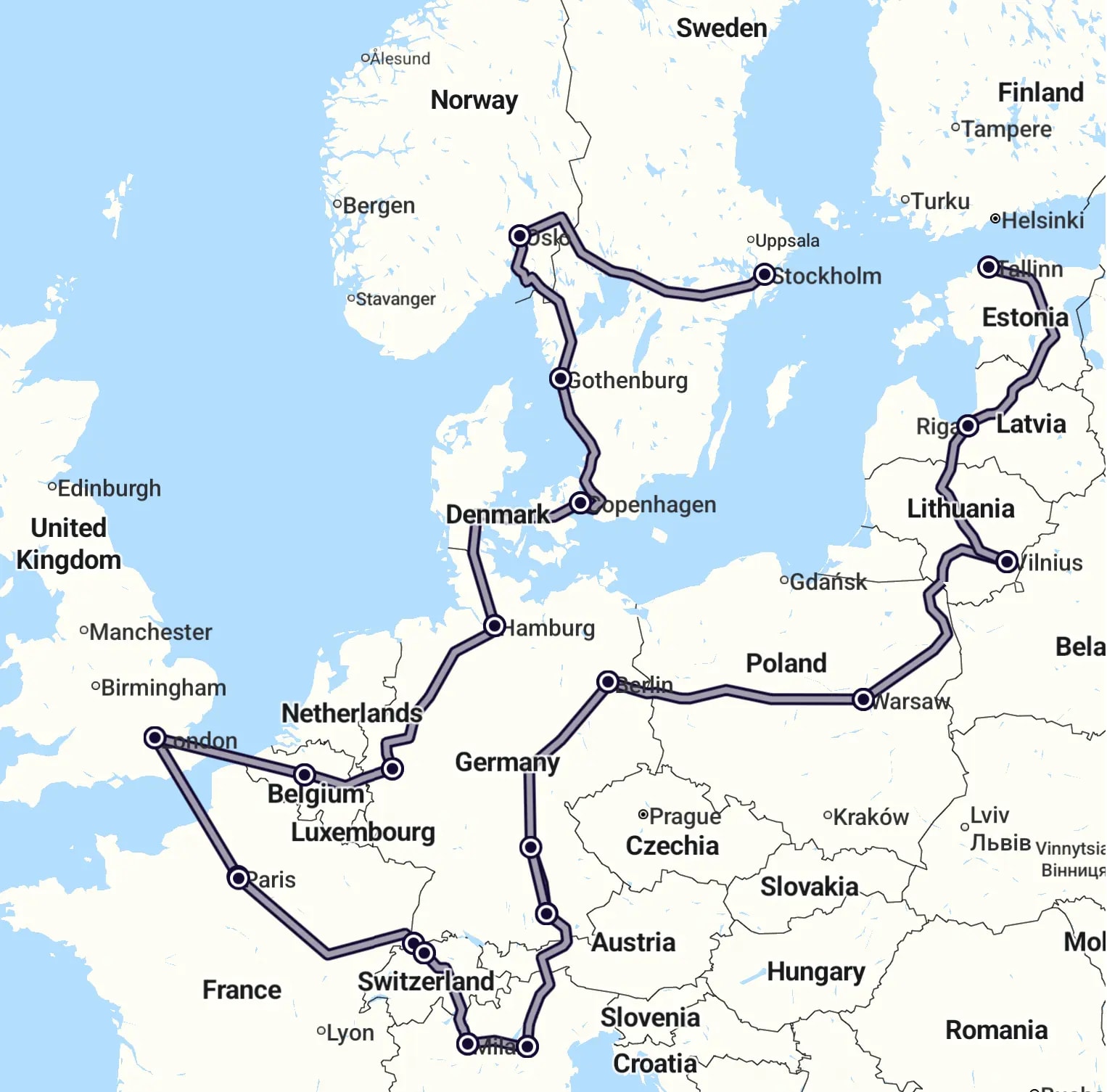
Interrail: 6,379Km and 13 Countries over 7 weeks
Source Entity
Hacker News
<a href="https://news.ycombinator.com/item?id=48889350">Comments</a>
The Epic Scale of Modern Interrail Travel
Across the diverse landscapes of Europe, the Interrail experience remains a quintessential rite of passage for adventurers and travel enthusiasts. The reported journey—spanning 6,379 kilometers and crossing 13 countries over seven weeks—represents a significant logistical undertaking and a deep dive into the geographical and cultural tapestry of the continent. This specific itinerary highlights the enduring appeal of rail travel as a means of exploration, emphasizing a preference for the journey itself over the mere destination.
The Logistical Feat of 6,379 Kilometers
Covering over 6,000 kilometers in 49 days requires meticulous planning and a high tolerance for the unpredictability of transit. Averaging roughly 130 kilometers per day, the journey suggests a balanced pace that allows for both significant movement and periods of stationary exploration. Traversing 13 countries implies a complex navigation of various national rail networks, each with its own ticketing systems, language barriers, and scheduling quirks. The scale of this trip underscores the efficiency of the Interrail pass system, which simplifies cross-border movement by consolidating access to multiple national carriers into a single framework.
Cultural Integration and the Schengen Influence
Such a journey is only possible due to the unique political and social infrastructure of Europe, specifically the Schengen Agreement. The ability to move seamlessly across 13 borders without the friction of traditional customs and immigration checkpoints transforms the travel experience from a series of isolated visits into a fluid, continuous narrative. This fluidity allows travelers to witness the gradual transition of languages, architecture, and culinary traditions, providing a first-hand lesson in European integration and the shared history that binds these diverse nations together.
The Rise of 'Slow Travel' and Sustainability
In an era dominated by low-cost budget airlines, a seven-week rail odyssey is a deliberate choice in favor of 'slow travel.' By opting for trains over planes, the traveler significantly reduces their carbon footprint, aligning with a growing global trend toward sustainable tourism. Rail travel encourages a more mindful engagement with the environment, as passengers observe the changing terrain—from the Alps to the Mediterranean coast or the plains of Central Europe—rather than bypassing them at 30,000 feet. This shift reflects a broader societal movement toward valuing experience and environmental stewardship over speed and convenience.
Future Trends in European Rail Infrastructure
The success of such extensive trips is bolstered by the ongoing evolution of European rail. The resurgence of night trains (sleeper services) and the expansion of high-speed rail networks (like the TGV and ICE) are making these long-distance journeys more viable for the modern traveler. As Europe continues to invest in rail to meet climate goals, we can expect an increase in these 'grand tours,' with improved digital integration for booking and real-time tracking making the process even more accessible for international tourists.
Conclusion
Ultimately, the journey of 6,379km across 13 countries is more than a travel statistic; it is a testament to the accessibility and connectivity of the European continent. By blending logistical precision with a spirit of adventure, this trip exemplifies the transformative power of rail travel, offering a comprehensive perspective on the cultural and physical landscape of Europe while championing a more sustainable way to see the world.