BRICS leaders call for stronger cooperation in disease surveillance, medical product regulation
Source Entity
India Latest News: Top National Headlines Today & Breaking News | The Hindu
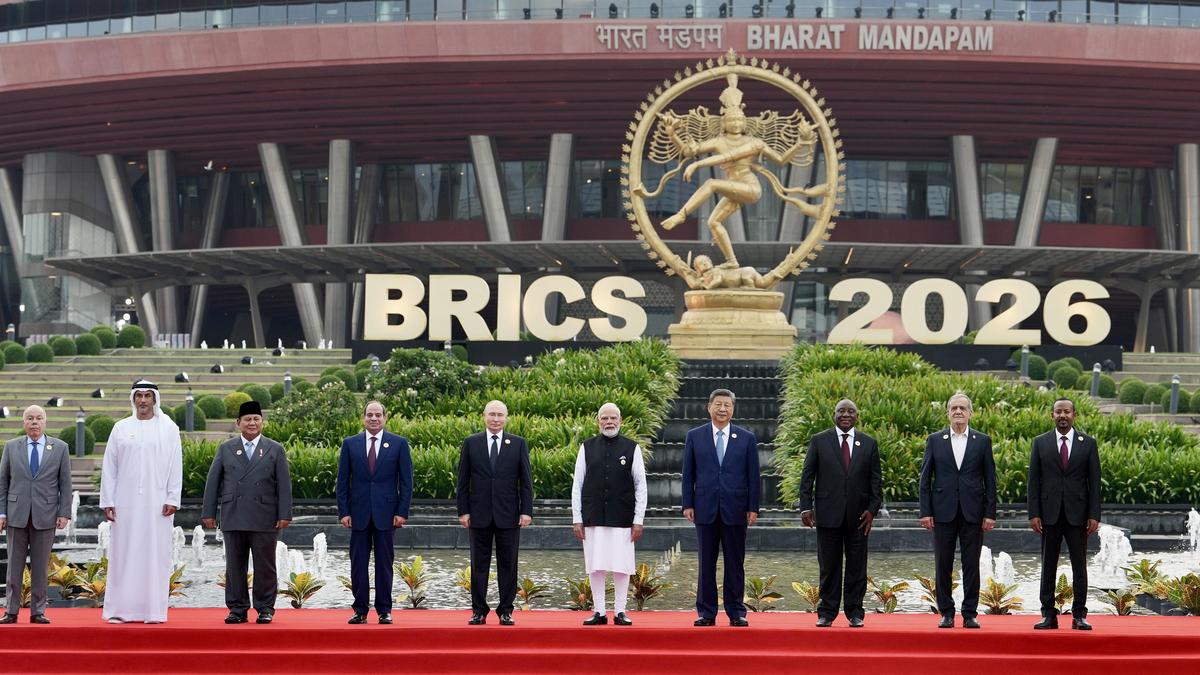
Iranian President Masoud Pezeshkian arrived in New Delhi for the BRICS summit, highlighting the severe impact of US and Israeli economic aggression. Prime Minister Modi urged for diplomatic resolutions to protect critical global energy supply chains and regional stability.
The Geopolitical Stakes of the BRICS Summit 2026
As Iranian President Masoud Pezeshkian arrived in New Delhi for the 18th BRICS summit on September 12, 2026, the global stage was defined by a stark intersection of economic instability and military escalation. His presence at the Leaders' Session of the BRICS Business Forum served as a platform to articulate Iran's stance against what he characterized as 'active aggression' by the United States and Israel. This visit occurs during a period where Iran is grappling with intensified economic pressures that, according to the President, have entered a significantly more dangerous phase in recent months.
The Nexus of Security and Economics
President Pezeshkian’s rhetoric underscored a fundamental tenet of contemporary Iranian policy: the inextricable link between national economic security and regional stability. By labeling the U.S. and Israel as 'bullies' and condemning the 'extensive' sanctions imposed upon his nation, Pezeshkian signaled that Iran views its current economic isolation not merely as a fiscal challenge, but as a direct existential threat. The escalation of these pressures, following the coalition actions on February 28, has forced Iran to leverage forums like BRICS to find alternative economic lifelines and international support.
India’s Strategic Balancing Act
Prime Minister Narendra Modi’s meeting with President Pezeshkian highlighted India’s role as a mediator in an increasingly volatile West Asian landscape. Modi’s call for 'dialogue and diplomacy' reflects India’s broader foreign policy doctrine, which seeks to maintain neutrality while protecting its own national interests. For India, the stability of the region is not just a diplomatic concern but a logistical necessity, particularly regarding energy security and the maintenance of open trade routes.
The Chokehold on Global Energy
Central to the discussions was the disruption of energy supply chains, specifically the vulnerability of the Strait of Hormuz. Since the February 28 attacks by the U.S.-Israel coalition, this vital maritime artery has been in a 'chokehold,' threatening the flow of oil and gas to global markets. PM Modi’s emphasis on 'secure sea lanes' and the safety of seafarers highlights the urgent need to mitigate the risks posed to global energy markets by the ongoing military friction in the region.
Future Trends and Diplomatic Outlook
Looking forward, the rhetoric from the New Delhi summit suggests that the divide between the Iran-led bloc and the U.S.-Israel coalition is unlikely to narrow in the short term. President Pezeshkian’s firm declaration that 'Iran will not be bullied' indicates a hardened stance, suggesting that Tehran will likely lean further into its relationships with BRICS partners to circumvent Western economic measures. The success of these diplomatic efforts will depend on whether the international community can foster a de-escalation framework that addresses both the security concerns of the U.S.-Israel coalition and the economic stability of the Iranian state.
Multiple Citing Sources
Verification Required?