We can revive relations together, says Pezeshkian after meeting Modi
Source Entity
Shubhajit Roy
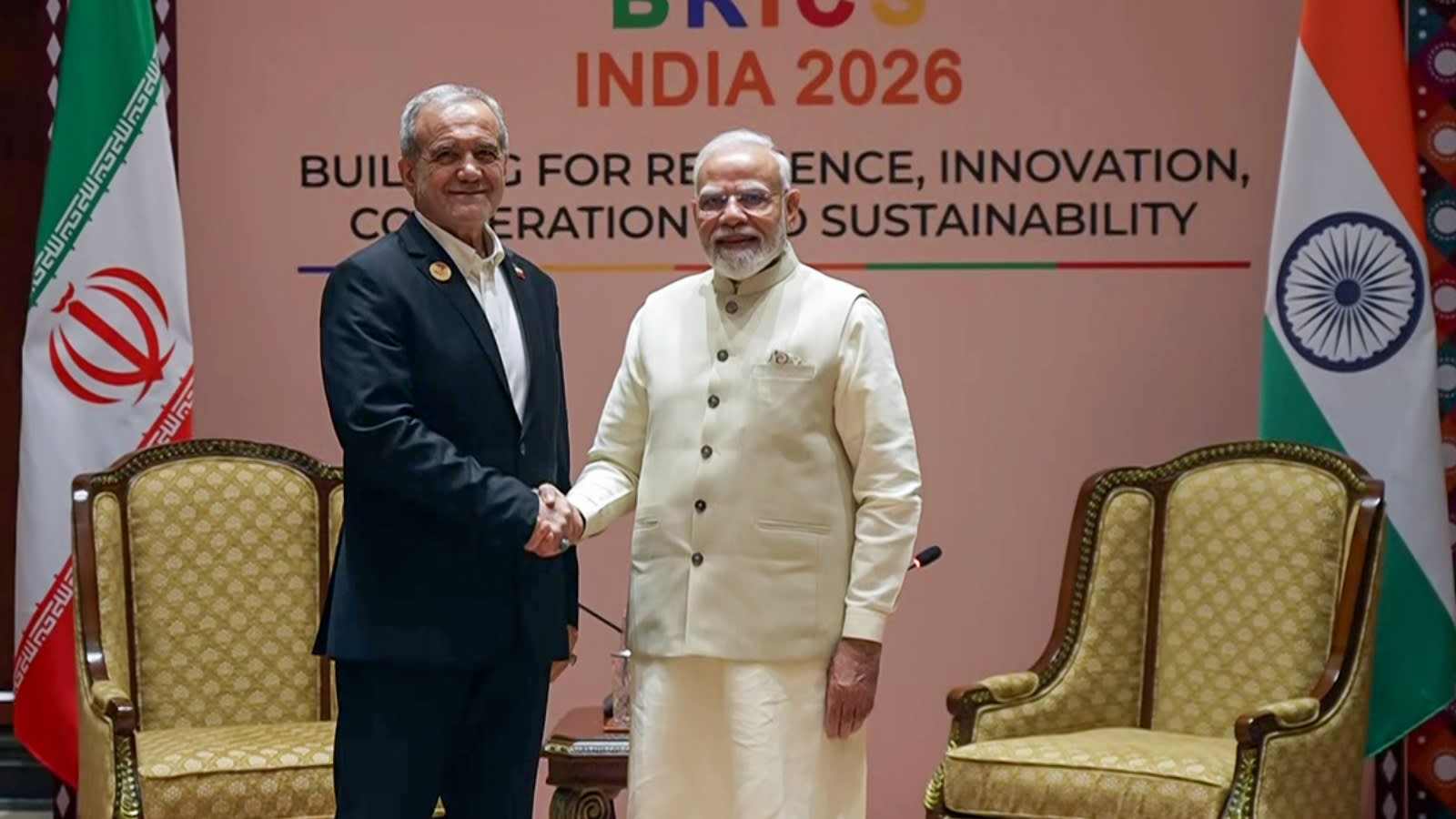
Iranian President Masoud Pezeshkian is in New Delhi for the 18th BRICS summit, where he criticized US-Israel aggression and intensifying economic sanctions. Prime Minister Modi urged for de-escalation and highlighted the critical importance of secure energy supply chains in the Strait of Hormuz.
Escalating Tensions: The BRICS Summit and Iran's Economic Crisis
Iranian President Masoud Pezeshkian’s arrival in New Delhi for the 18th BRICS summit, held on September 12-13, 2026, marks a pivotal moment in global geopolitics. Amid a backdrop of heightened instability in West Asia, President Pezeshkian utilized the platform of the BRICS Business Forum to condemn what he describes as an 'active aggression' by the United States and Israel. This rhetoric underscores the profound strain on Iran’s economy, which has been severely hampered by long-standing sanctions that the President claims have entered a 'far more dangerous phase' in recent months.
The Nexus of Economic and National Security
President Pezeshkian’s core argument at the summit is that economic security is intrinsically linked to national and regional stability. By framing the 'extensive' sanctions as a component of a broader military and political assault, he is attempting to rally support from fellow BRICS nations. The Iranian administration views the punitive economic measures not merely as trade barriers, but as tools of geopolitical coercion, leading the President to label the U.S. and Israel as 'bullies' while asserting that Iran will resist such pressure.
The Strait of Hormuz and Global Energy Chains
Prime Minister Narendra Modi’s meeting with President Pezeshkian highlighted the significant global consequences of this conflict. Central to these discussions was the security of the Strait of Hormuz, a vital maritime artery that has been effectively placed in a 'chokehold' since the coalition military actions on February 28. Prime Minister Modi emphasized that the disruption of energy supply chains is a matter of urgent international concern, advocating for the freedom of navigation to ensure global energy stability.
Diplomatic Efforts Amidst Conflict
In his bilateral engagement with President Pezeshkian, Prime Minister Modi reiterated the necessity of 'dialogue and diplomacy' to address the ongoing West Asian conflict. This stance reflects India's traditional policy of maintaining balanced relationships while advocating for peaceful resolution. For India, the stability of the region is not just a diplomatic preference but a strategic necessity, given the country's reliance on energy imports and the need to protect its commercial ties with Iran.
Future Implications and Regional Stability
As the BRICS summit concludes, the divide between the Western coalition’s punitive measures and the Iranian government’s resistance remains stark. The rhetoric used by President Pezeshkian suggests that Iran is unlikely to soften its stance under current economic pressure. Looking ahead, the ability of BRICS nations to facilitate meaningful dialogue between these polarized parties will be a significant test of the bloc's influence in global conflict resolution. The coming months will likely see either a further intensification of these economic and military friction points or a fragile movement toward the de-escalation that Prime Minister Modi has called for.
Multiple Citing Sources