India hopes Iran and UAE will show flexibility, allow Brics declaration
Source Entity
SACHIN PARASHAR
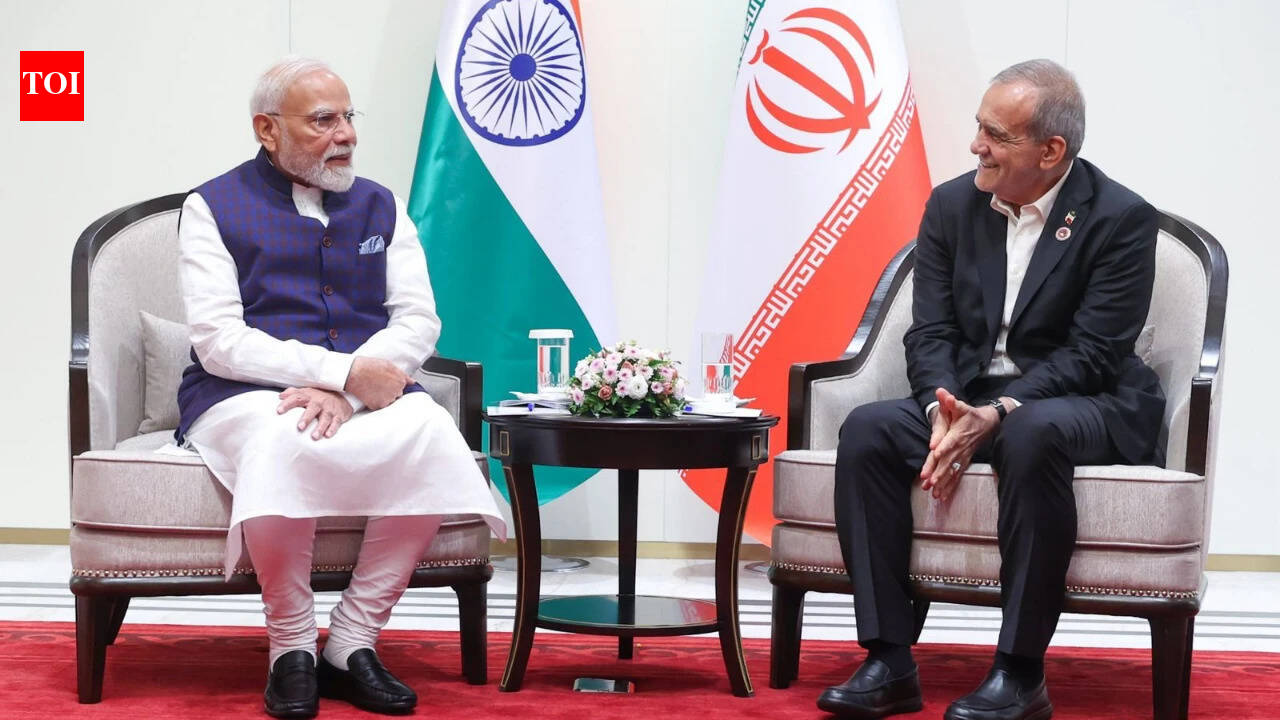
Iranian President Masoud Pezeshkian visited New Delhi for the 18th BRICS summit, highlighting the severe impact of US and Israeli sanctions on Iran. Prime Minister Modi urged for diplomatic resolutions and emphasized the critical need to maintain secure energy supply chains through the Strait of Hormuz.
The Geopolitical Stakes of the 18th BRICS Summit
The arrival of Iranian President Masoud Pezeshkian in New Delhi for the 18th BRICS summit marks a pivotal moment in contemporary international relations. As global powers gather to discuss economic integration, the shadow of the ongoing conflict in West Asia looms large. President Pezeshkian’s presence at the forum underscores Iran's attempt to leverage the BRICS platform to mitigate the impact of extensive international sanctions and voice its grievances against what it terms 'active aggression' by the United States and Israel.
The Escalation of Economic Warfare
President Pezeshkian’s remarks at the BRICS Business Forum highlight a transition in the nature of economic pressure exerted on Tehran. By characterizing the current situation as a 'far more dangerous phase,' the President is signaling that traditional sanctions have evolved into a more aggressive posture. The Iranian leadership links this directly to the military actions initiated on February 28, which have created a volatile environment for both the Iranian economy and regional stability.
The Strait of Hormuz: A Global Chokehold
Prime Minister Narendra Modi’s intervention regarding the security of maritime routes is of paramount global concern. The Strait of Hormuz remains the world’s most critical oil chokepoint, and its effective closure or restriction threatens global energy security. PM Modi’s emphasis on the 'freedom of navigation' highlights the broader implications of the U.S.-Israel coalition’s actions, which have disrupted supply chains and increased the risk of a wider regional conflict.
The Role of Diplomacy in a Polarized Climate
In his bilateral meeting with President Pezeshkian, Prime Minister Modi advocated for 'dialogue and diplomacy' as the primary tools for resolution. This stance reflects India's traditional foreign policy of maintaining strategic autonomy while acting as a bridge between competing global interests. For Iran, engaging with India through the BRICS framework is a vital diplomatic lifeline, allowing it to frame the ongoing conflict not just as a regional dispute, but as a challenge to the economic security of the entire Global South.
Future Trends and Regional Stability
Looking ahead, the tension between Iran and the U.S.-Israel coalition is likely to remain a central theme in future BRICS deliberations. As long as the Strait of Hormuz remains a contested zone, global markets will continue to face volatility. The success of future diplomatic efforts will depend on whether the involved parties can move beyond the current rhetoric of 'bullying' and 'aggression' toward a framework that ensures both the security of international trade routes and the stabilization of energy markets.
Conclusion
The 18th BRICS summit serves as a critical stage for addressing the intersection of national security and economic viability. While President Pezeshkian maintains a defiant posture against external pressures, the call from leaders like Prime Minister Modi for a diplomatic path forward represents the only viable alternative to sustained regional instability. The coming months will be decisive in determining whether these diplomatic overtures can effectively de-escalate the tensions currently threatening the global energy supply chain.
Multiple Citing Sources