Watch: Iranian women run Tehran race event without hijab, defying compulsory rules
Source Entity
RAJEEV SINGH
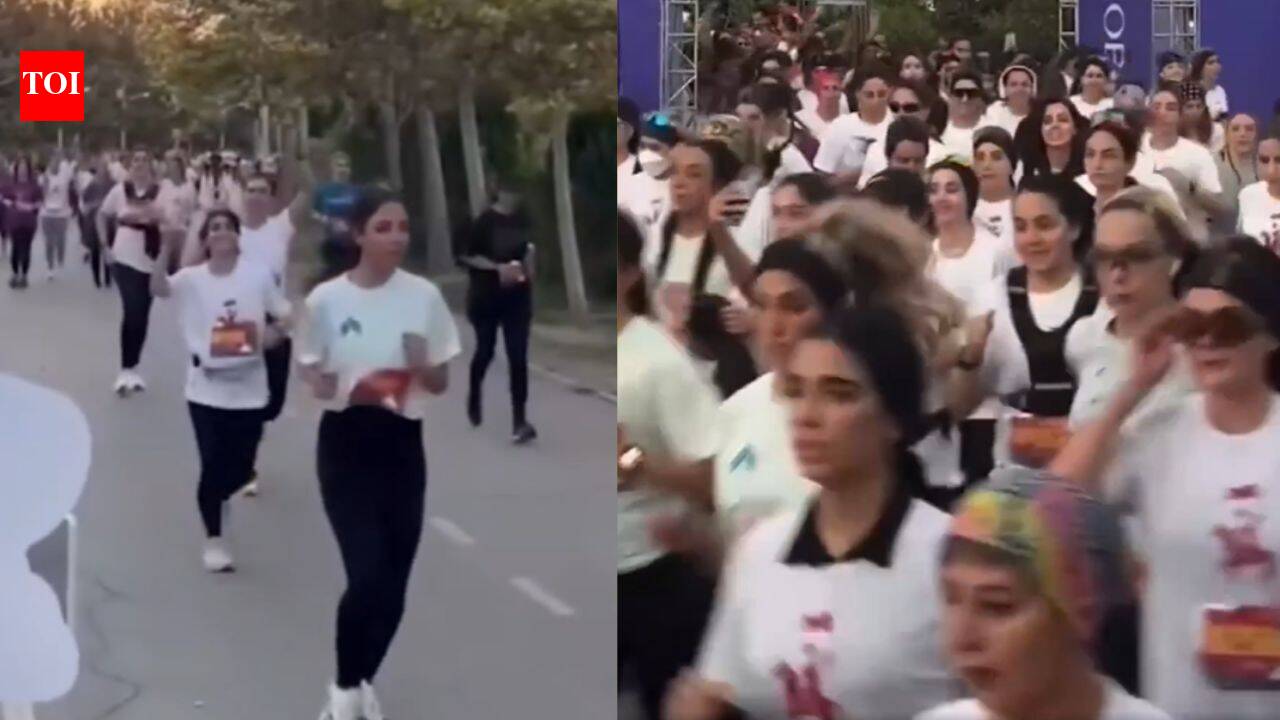
Women in Tehran participated in a 10K road race without wearing hijabs, highlighting ongoing civil defiance of compulsory dress codes. Despite strict state laws, this act underscores the persistent cultural shift following the 2022 'Woman, Life, Freedom' movement.
The Resilient Defiance of Iranian Women in Public Spaces
Recent footage emerging from Tehran captures a significant moment of civil disobedience as women participated in a 10-kilometre road race at Velayat Park without wearing the mandatory hijab. This act of defiance occurred in a public setting despite the Iranian government’s continued enforcement of strict dress codes. The imagery of these runners, with their hair uncovered, serves as a poignant reminder of the persistent tension between the state's legal framework and the evolving social norms of the Iranian populace.
The Legacy of the 2022 Protests
To understand the significance of this event, one must look back to the 'Woman, Life, Freedom' protests of 2022. Triggered by the tragic death of Mahsa 'Jina' Amini while in the custody of the morality police, those protests catalyzed a nationwide movement challenging systemic restrictions on women. While the state has maintained its legal stance on the compulsory hijab, the post-protest era has seen a steady increase in women choosing to appear in public without headscarves, marking a fundamental shift in daily resistance that continues to permeate public life.
Navigating a Divided Public Sphere
The Tehran 10K took place on the same day as the Janfadayan-e Iran rally, an event characterized by the presence of Revolutionary Guards and Basij members. While the sporting event and the state-backed rally were unrelated, the juxtaposition highlights the dual reality of modern Iran: a country where official state ideology is displayed alongside an increasingly visible and defiant secular presence. The fact that footage of the uncovered runners circulated even on some state-affiliated X accounts suggests a complex, perhaps unintentional, acknowledgment of this new reality.
Legal Enforcement vs. Social Reality
Despite the increasing visibility of uncovered women on the streets of Tehran and other major cities, the compulsory hijab remains firmly entrenched in Iranian law. The state continues to grapple with how to reconcile these rigid legal requirements with a population that is increasingly demonstrating a rejection of such mandates. This ongoing friction suggests that the government faces a long-term challenge in maintaining the status quo as public defiance becomes normalized through everyday activities like athletic competition.
Future Trends and Implications
The incident at Velayat Park is indicative of a broader trend where civil resistance is no longer confined to protest marches but is integrated into social and recreational life. As women continue to assert their autonomy in public spaces, the Iranian authorities are faced with a dilemma: either increase enforcement, which carries the risk of further unrest, or continue to tolerate a gradual erosion of the dress code. The future of this issue will likely depend on whether the state can maintain its authority in the face of a population that is increasingly willing to ignore restrictive social laws in favor of personal expression.