Israel accused of weaponising archaeology at ancient West Bank sites
Source Entity
BBC News
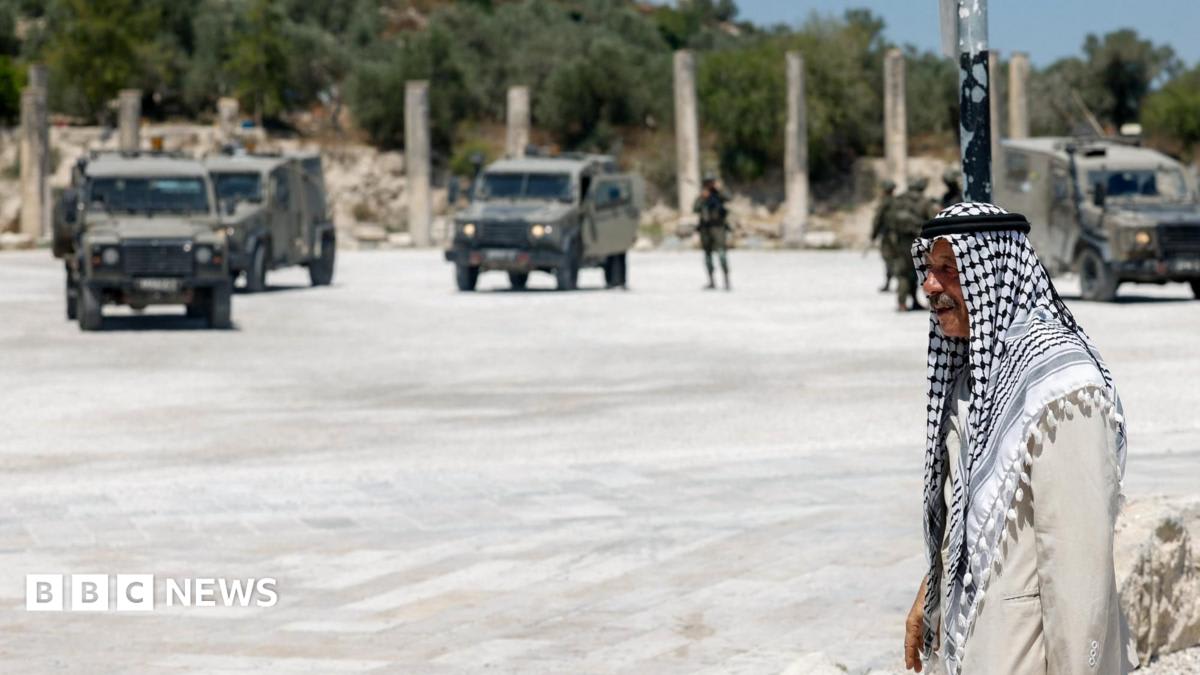
Israel is planning to expropriate 450 acres of Palestinian land near the ancient site of Sebastia to develop a national park. Local landowners view this as a weaponization of archaeology that strips them of their ancestral property and heritage.
The Geopolitics of Archaeology in the West Bank
The recent announcement regarding the expropriation of 450 acres of land surrounding the ancient site of Sebastia in the occupied West Bank marks a significant escalation in the intersection of archaeology and territorial control. By designating these areas—historically cultivated by Palestinian families for generations—as part of a new national park, Israeli authorities are effectively leveraging historical preservation as a tool for administrative and physical expansion. This move has drawn sharp criticism from landowners like Abu Mudif, who view the project not as a genuine effort to protect cultural heritage, but as a systematic attempt to dispossess Palestinians of their ancestral patrimony.
The Mechanics of Land Expropriation
Under the current framework, the Israeli government justifies these land seizures through the lens of site development and protection. However, the process is fraught with complications, particularly regarding compensation. Reports indicate that Palestinian landowners are frequently offered little to no payment, and even when compensation is presented, many refuse to accept it. Their refusal is a symbolic act of resistance, as accepting payment would be seen as an implicit recognition and legitimization of the state's claim to their land. This creates a cycle of legal and moral deadlock where the preservation of the past is used to dictate the ownership of the present.
Cultural Heritage as a Contested Space
Archaeology has long been a sensitive subject in the Israeli-Palestinian conflict, often serving as a proxy for broader claims of historical legitimacy. Sebastia, with its prominent Roman columns and deep historical roots, serves as a focal point for these competing narratives. By asserting control over such a site, the occupying authority is able to curate the historical narrative presented to the public, often sidelining the contemporary Palestinian presence that has existed on these lands for centuries. This 'weaponization' of archaeology transforms neutral historical sites into active fronts of territorial conflict.
Economic and Social Disruption
For residents like Abu Mudif, the loss of these lands is not merely a legal dispute; it is an existential threat to their livelihoods. These olive fields represent more than just agricultural output; they are intergenerational assets that sustain the economic stability of local families. The expropriation of 450 acres threatens to sever these ties, displacing families from the land they have cultivated for generations. The economic impact is compounded by the loss of cultural identity, as the landscape itself is inextricably linked to the history and heritage of the local population.
Broader Implications and Future Trends
Looking forward, this policy suggests a trend toward the increased use of 'national park' and 'heritage site' designations to solidify control over contested areas in the West Bank. If this pattern continues, we can expect further friction between local communities and state authorities as more sites are brought under similar management. This strategy effectively bypasses traditional land-use disputes by wrapping territorial acquisition in the rhetoric of environmental and historical preservation, making it increasingly difficult for international observers to intervene without addressing the underlying complexities of the occupation itself. The case of Sebastia stands as a testament to how the past is being actively reshaped to influence the future status of the occupied territories.