Eisenkot gets first shot at forming Israel’s government: The next possible scenarios
Source Entity
Latest News: Todays Latest News Headlines from India & World | Hindustan Times
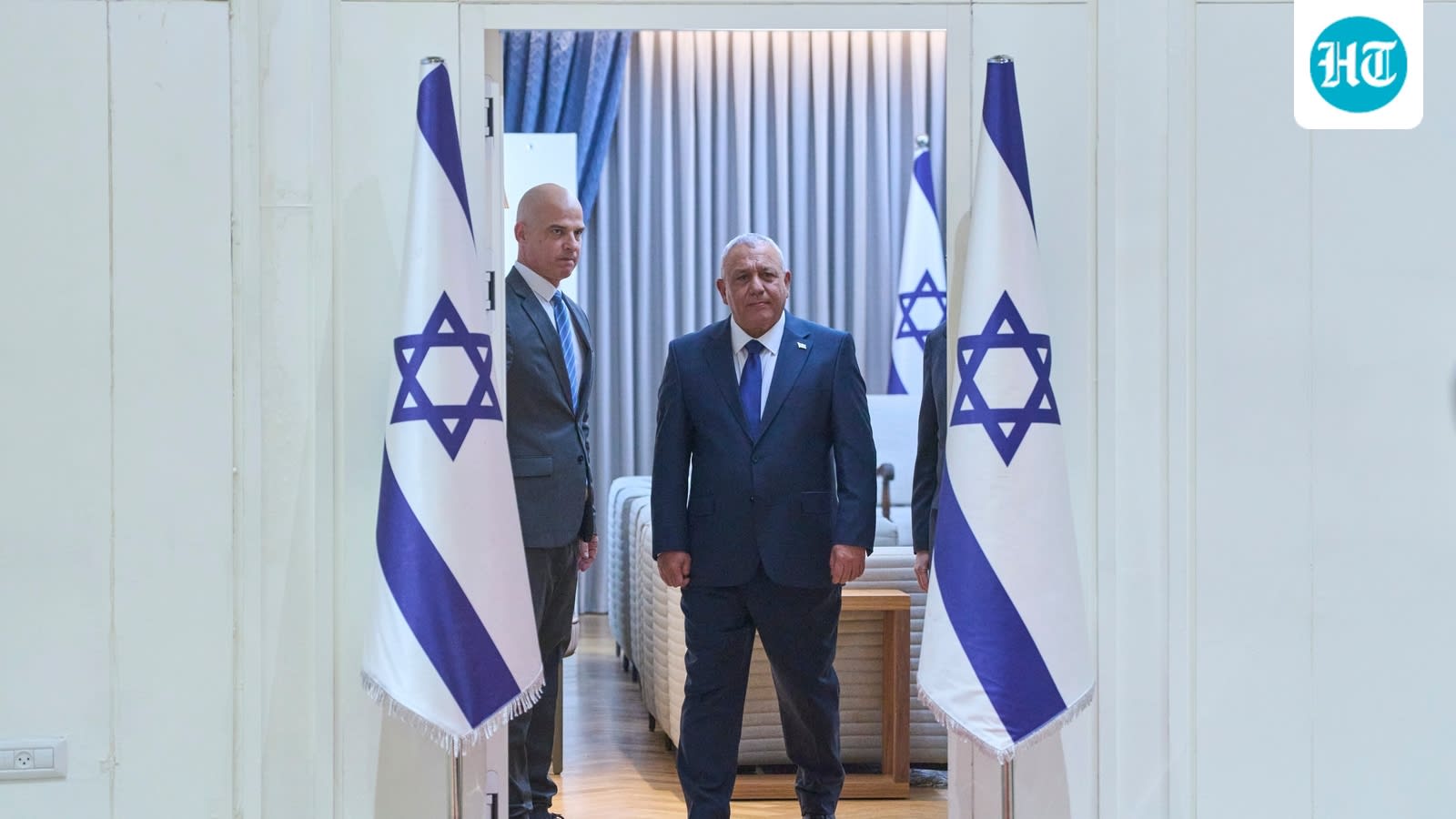
Gadi Eisenkot is navigating the complex task of forming an Israeli government after securing 67 initial recommendations. Should he fail within the 42-day window, Benjamin Netanyahu remains a key contender, potentially leading to a national unity government or further elections.
The Fragile Path to Power: Eisenkot and the Israeli Coalition Crisis
Following a turbulent election cycle, Israeli politics has entered a period of intense uncertainty. President Isaac Herzog has officially tasked former army chief Gadi Eisenkot with the responsibility of forming a new government. Despite securing the backing of 67 lawmakers, Eisenkot faces a precarious path to establishing a stable majority. The coalition-building process is fraught with ideological friction, as potential partners remain divided over the inclusion of Arab and ultra-Orthodox factions.
The Arithmetic of Coalition Building
Eisenkot’s mandate is constrained by a 42-day window to finalize a government. The difficulty lies in the disparate interests of the parties involved. While the support of 67 lawmakers provides a mathematical starting point, translating this into a functioning cabinet requires navigating the sensitive issue of cooperation with Arab parties. Conversely, the ultra-Orthodox factions represent an alternative, albeit equally complex, route to securing the necessary majority. Eisenkot has proposed a national emergency government based on four key principles, aiming to bridge the deep-seated ideological divides that have paralyzed the political landscape.
Netanyahu’s Strategy of Resistance
Benjamin Netanyahu, the nation's longest-serving prime minister, finds himself in a defensive but persistent position. Although his party, Likud, remains the largest in the Knesset, he has lost his parliamentary majority, forcing him into a role of opposition. Netanyahu has aggressively campaigned against an Eisenkot-led coalition, specifically warning that a partnership with Arab parties would effectively 'dismantle' the state. In response to his weakening grip on power, Netanyahu has called for a national unity government, a tactical move designed to obstruct Eisenkot’s efforts and preserve his own political relevance.
The Role of Presidential Intervention
Amidst this deadlock, President Isaac Herzog has actively signaled a preference for a national unity government. This intervention highlights the gravity of the crisis, as the president seeks to steer the country away from the exhaustion of repeated electoral cycles. By encouraging a broader coalition, the presidency is attempting to mitigate the influence of extremist fringes, though the deep personal and ideological animosities between the rival camps make such a compromise difficult to achieve.
Future Outlook and the Specter of New Elections
If Eisenkot fails to meet the 42-day deadline, the political baton will likely pass back to Netanyahu, who stands ready to make another attempt at forming a government. This cycle of shifting mandates underscores the structural instability currently plaguing the Israeli legislature. Should both leaders fail to secure a viable coalition, the country faces the distinct possibility of yet another general election. This outcome would only serve to deepen the political polarization that has defined the nation's recent governance, leaving the public and the political establishment in a state of indefinite flux.
Multiple Citing Sources
Verification Required?