What's Delaying The India-US Trade Deal? S Jaishankar Explains
Source Entity
NDTV News Search Records Found 1000
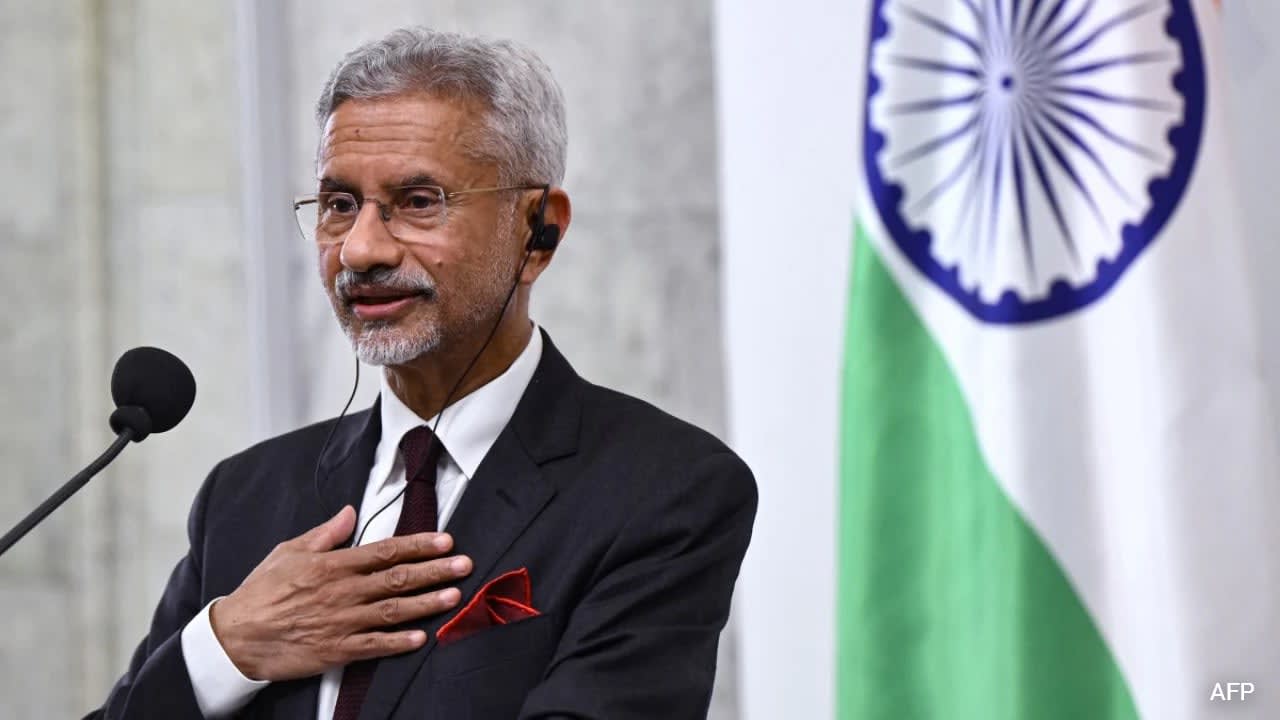
External Affairs Minister S. Jaishankar highlighted that while India-US trade negotiations face complexities and tariff uncertainties, India-China relations are showing signs of improvement. He emphasized that resolving border issues remains the key to normalizing ties with China, while noting that US-India relations require deeper mutual understanding regarding terrorism.
Navigating Complex Geopolitics: An Analysis of India's Foreign Policy
External Affairs Minister S. Jaishankar’s recent engagements at the 81st session of the UN General Assembly and the Asia Society in New York have offered a rare window into the strategic balancing act currently performed by New Delhi. As India navigates its relationships with the world's two largest powers, the narratives emerging from these discussions underscore the delicate interplay between economic pragmatism and national security imperatives.
Challenges in the India-US Trade Framework
Trade negotiations between India and the United States have encountered significant hurdles, with Minister Jaishankar citing the inherent complexity of India’s economic structure as a primary factor. Beyond domestic adjustments, the introduction of shifting tariff frameworks within the US has introduced an element of unpredictability that complicates long-term bilateral agreements. These 'bumps' in the relationship are not merely technical; they reflect the challenge of aligning two distinct economic philosophies within a rapidly evolving global market.
The Security Imperative in Bilateral Relations
Beyond trade, the dialogue in New York highlighted a critical friction point: the perception of security concerns. Jaishankar was explicit in noting that a lack of appreciation for India’s concerns regarding cross-border terrorism, particularly originating from Pakistan, could adversely impact the strategic partnership with the US. This underscores a persistent reality in Indian diplomacy—that security cooperation is not secondary to economic partnership but is a foundational pillar that, if ignored, threatens to stall wider diplomatic progress.
The Evolving India-China Dynamic
Contrasting the friction with the West, the relationship between India and China appears to be on a trajectory toward relative normalcy. Jaishankar noted that the current state of ties is improved compared to the volatility of 2024 and 2025. He emphasized that the resolution of border standoffs is the primary driver of this thaw. The recent visit by President Xi Jinping to India for the BRICS Leaders' Summit serves as a tangible indicator of this diplomatic stabilization, signaling a move away from the acute tensions that defined the preceding years.
Structural Stability vs. Tactical Improvements
While the improvement in India-China relations is notable, Jaishankar cautioned that this does not necessarily represent a deep, fundamental 'structural change' in the geopolitical orientation of the two nations. Instead, it is a pragmatic return to normalcy necessitated by the resolution of specific territorial disputes. This suggests that India is pursuing a calibrated approach, prioritizing the removal of immediate border threats to foster a more predictable regional environment.
Future Outlook: A Multi-Alignment Strategy
Looking forward, India's foreign policy is likely to remain characterized by this nuanced multi-alignment. By simultaneously managing trade complexities with the US and border-centric normalization with China, India is positioning itself as a pivotal stakeholder. The success of these dual strategies will depend on New Delhi’s ability to ensure that its security concerns are respected by democratic partners while maintaining a stable, albeit cautious, working relationship with its neighbors.
Multiple Citing Sources
Verification Required?