Punjab: Emergency patients shifted as Jalandhar hospital sees 30-hour outage
Source Entity
Latest News: Today's Latest News Headlines from India & World | Hindustan Times | Hindustan Times
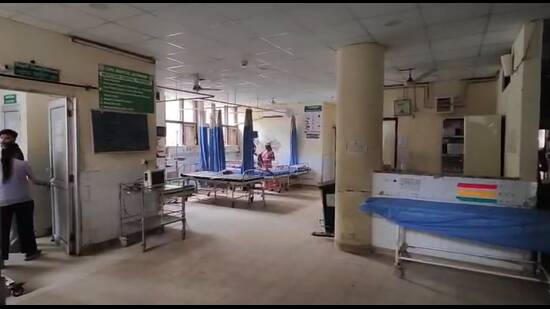
A hospital in Jalandhar, Punjab, faced a critical 30-hour power outage after sewage pipeline construction damaged an underground power line, necessitating the emergency relocation of patients.
Critical Infrastructure Failure: Analyzing the Jalandhar Hospital Power Crisis
In a distressing lapse of urban coordination and infrastructure management, a hospital in Jalandhar, Punjab, was plunged into a 30-hour power outage that compromised patient care and forced the emergency relocation of critical patients. The outage began at 6:00 AM on Monday and persisted until Tuesday evening. This incident highlights a dangerous intersection between essential utility maintenance and the operational stability of healthcare facilities, where a lack of synchronization between public works and hospital administration led to a high-risk environment for vulnerable patients.
The Catalyst: Infrastructure Mismanagement
The Cause of the Outage
The root cause of the crisis was an underground power line rupture caused by ongoing sewage pipeline laying work. This indicates a significant failure in the mapping of underground utilities. In many urban centers across India, the lack of accurate, updated digital maps for underground cabling often leads to "utility strikes" during construction. When a sewage project—intended to improve sanitation—ends up disabling the power supply to a medical facility, it reveals a systemic lack of communication between the municipal engineering departments and the healthcare providers.
Timeline of the Crisis
The duration of the outage—spanning from early Monday morning to Tuesday evening—is particularly alarming. For a healthcare institution, electricity is not merely a convenience but a life-sustaining requirement. The 30-hour window suggests that either the damage to the underground line was extensive or the response time for the power utility company was inadequate. The fact that patients remained displaced even after power was restored suggests a cautious, yet slow, recovery process, reflecting the fragility of the hospital's operational state following such a shock.
Impact on Patient Care and Safety
The Risks of Emergency Relocation
The most critical outcome of this outage was the shifting of emergency patients. Moving patients in critical condition is an inherently risky procedure, increasing the likelihood of complications and stressing both medical staff and patients. Emergency wards are designed for stability; the forced migration of patients to other wards or facilities disrupts the continuity of care and can lead to delays in urgent interventions. This event serves as a stark reminder that infrastructure failure in a hospital setting is a direct threat to patient mortality and morbidity.
The Question of Redundancy
A central question arising from this event is the failure of backup power systems. Standard medical protocols dictate that hospitals must have robust Uninterruptible Power Supplies (UPS) and diesel generators capable of sustaining critical loads for extended periods. A 30-hour outage leading to patient relocation suggests that the backup systems were either insufficient, failed to trigger, or were unable to handle the full load of the emergency ward. This reveals a potential gap in the disaster recovery planning of the facility.
Broader Implications and Future Preventatives
Urban Planning and Coordination
This incident underscores the urgent need for "Integrated Utility Management." To prevent such occurrences, city administrations must implement strict protocols where any excavation work near critical infrastructure (hospitals, fire stations, police headquarters) requires a joint site survey. The use of Ground Penetrating Radar (GPR) could have identified the power lines before the sewage work began, preventing the rupture entirely.
Conclusion and Systemic Outlook
The Jalandhar hospital incident is a cautionary tale regarding the fragility of essential services. While the power was eventually restored, the trauma and risk imposed on the patients were avoidable. Moving forward, there must be a dual focus: first, on the municipal level, to ensure construction does not jeopardize critical utilities; and second, at the institutional level, to ensure that hospital backup systems are not just present, but capable of sustaining operations during prolonged external grid failures. Only through such rigorous coordination can the safety of patients be guaranteed against the unpredictability of urban development.
Verification Required?