J&K: Security forces launch massive search op in Rajouri after CCTV spots two terrorists
Source Entity
TOI NEWS DESK
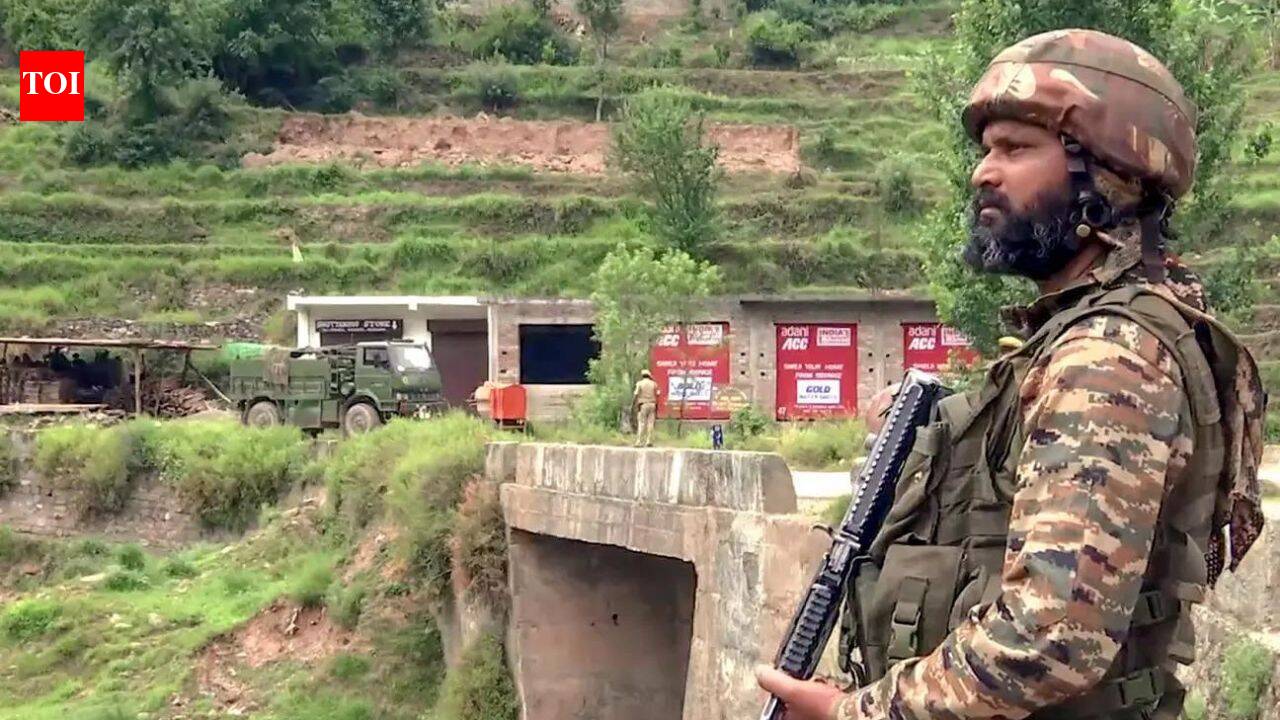
J&K: Security forces launch massive search op in Rajouri after CCTV spots two terrorists...
Security Mobilization in Rajouri: Analysis of Counter-Terrorism Operations
In a swift response to intelligence gathered via surveillance, security forces in Jammu and Kashmir have initiated a large-scale search operation in the Rajouri district. The operation was triggered after CCTV footage explicitly spotted two suspected terrorists, prompting an immediate mobilization of personnel to neutralize the threat and ensure the safety of the local population. This event underscores the high state of alert maintained by Indian security agencies in the Jammu division, where rugged terrain often provides cover for insurgent movements.
The Integration of Technical Intelligence (TECHINT)
One of the most critical aspects of this operation is the role of CCTV surveillance. The shift from relying solely on human intelligence (HUMINT) to integrating technical intelligence (TECHINT) has significantly enhanced the capabilities of the security forces. By utilizing a network of cameras, authorities can now track the movement of suspects in real-time or conduct retrospective analysis to pinpoint locations. In the context of Rajouri, where forests and mountains make manual patrolling difficult, the use of digital surveillance acts as a force multiplier, allowing for more targeted and efficient 'cordon and search operations' (CASO).
Strategic Significance of the Rajouri Sector
Rajouri, situated in the Pir Panjal range, is strategically sensitive due to its geography and proximity to the Line of Control (LoC). The dense foliage and difficult terrain have historically made it a challenging area for security forces to fully sanitize. The presence of terrorists in this region often suggests attempts to establish hideouts or facilitate infiltration into deeper parts of the Jammu region. By launching a 'massive' operation immediately upon detection, the security forces are aiming to disrupt any planned activities and prevent the establishment of a permanent foothold in the district.
Coordination and Tactical Execution
Such operations typically involve a multi-layered coordination between the Indian Army, the Central Reserve Police Force (CRPF), and the Jammu and Kashmir Police. The process begins with the 'cordoning' of the suspected area to prevent the escape of the targets, followed by a systematic 'search' of residential areas, forests, and outskirts. This tactical approach is designed to minimize civilian casualties while maximizing the pressure on the infiltrators. The speed of the response in this instance indicates a streamlined communication chain between the surveillance monitoring centers and the ground troops.
Shifting Trends in Regional Insurgency
Analyzing this event within a broader context reveals a noticeable trend of security activity shifting toward the Jammu division. While the Kashmir Valley has seen varying levels of intensity, the Rajouri-Poonch sector has recently witnessed an uptick in encounters and infiltrations. This shift suggests that militant groups may be attempting to exploit the difficult terrain of the Jammu hills to avoid the denser security grids present in the valley. The current operation in Rajouri is a direct counter-measure to this evolving strategy, signaling that the security apparatus is adapting its focus to cover these emerging hotspots.
Conclusion and Future Outlook
In summary, the search operation in Rajouri is a testament to the proactive stance of the Indian security forces. The successful identification of threats via CCTV and the subsequent rapid deployment demonstrate a sophisticated approach to counter-insurgency. Moving forward, it is expected that the government will further increase the density of surveillance technology in border districts to preempt such threats. The outcome of this specific operation will be crucial in determining the current strength of insurgent presence in the Pir Panjal region and will likely dictate the intensity of future security deployments in the area.