We are beggars, must bring Venkateswara temple to JNU to generate funds: JNU VC
Source Entity
ARVIND CHAUHAN
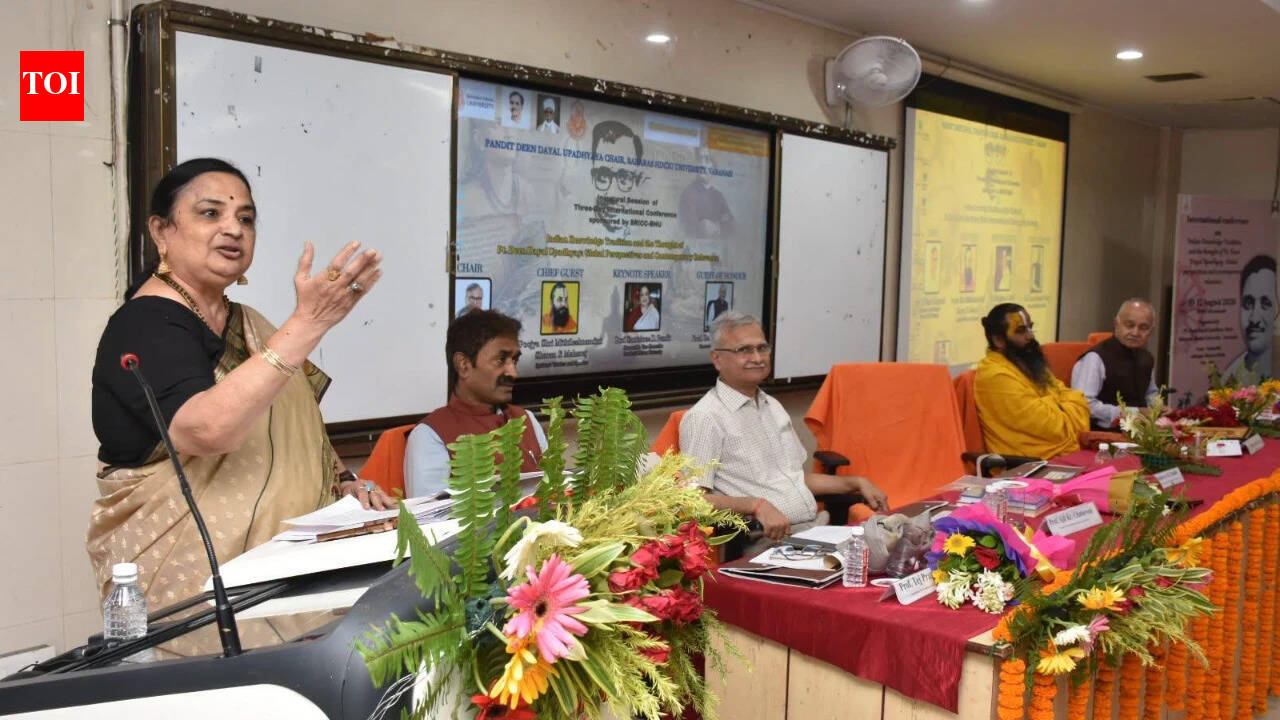
JNU Vice Chancellor Santishree Dhulipudi Pandit has sparked controversy by suggesting the university should replicate the Tirupati Venkateswara temple to generate funds. She further criticized JNU historians for allegedly distorting historical facts and interpretations.
The Intersection of Revenue and Ideology at JNU
Jawaharlal Nehru University (JNU) Vice Chancellor Santishree Dhulipudi Pandit has ignited a significant public debate with her recent remarks regarding the university's financial sustainability and academic legacy. By suggesting the replication of the Tirupati Venkateswara temple on campus to generate funds, the VC has highlighted the persistent fiscal challenges faced by premier public educational institutions in India. This proposal, while unconventional, underscores a growing narrative that public universities must explore non-traditional revenue streams to maintain infrastructure and research excellence in an era of tightening government grants.
The Financial Imperative vs. Institutional Identity
The suggestion to leverage religious tourism or replication as a fundraising model represents a radical shift in how academic institutions view their operational assets. Historically, JNU has been defined by its secular, research-oriented atmosphere, and the introduction of a religious site for economic purposes challenges the traditional boundaries of a university campus. The 'beggar' analogy used by the VC illustrates the depth of the frustration regarding current funding mechanisms, suggesting that the institution feels marginalized by existing fiscal policies.
Contested Narratives in Academic Historiography
Beyond fiscal policy, the VC’s sharp critique of JNU’s history department marks a deepening ideological divide. By accusing historians of turning the "order of facts and interpretations upside down," the administration is signaling a desire to re-evaluate the pedagogical foundations that have long characterized the university. This tension is not isolated but reflects a broader national discourse regarding the interpretation of Indian history and the role of academic institutions in shaping national identity.
Re-evaluating the 'First Feminist' Claim
In tandem with her critiques of historical methodology, the VC’s assertion that Draupadi is the "first feminist" provides insight into her own interpretive framework. This framing aims to bridge ancient Indian narratives with modern social movements, effectively challenging the conventional academic consensus often taught within the university's halls. By positioning such figures through a modern lens, the administration is attempting to reclaim historical narratives from what they perceive as a biased, institutionalized viewpoint.
Broader Implications for Higher Education
These developments signify a transformative period for JNU. When administrative leadership openly questions the academic integrity of its own faculty while simultaneously seeking radical economic solutions, the result is an environment of intense institutional friction. The discourse suggests that the university is entering a phase where administrative goals, financial necessity, and historical interpretation are increasingly intertwined, potentially leading to long-term shifts in both curriculum and campus culture.
Conclusion: A University at a Crossroads
The dual challenge of securing financial independence and rectifying what the administration views as historical malpractice places JNU at a critical juncture. Whether these proposals for revenue generation gain traction or remain symbolic gestures, they have successfully brought the university's internal struggles into the national spotlight, forcing a re-examination of what a modern Indian university should represent in the 21st century.