Joe Sacco traces anatomy of Muzaffarnagar riots with care, without closure
Source Entity
E P Unny
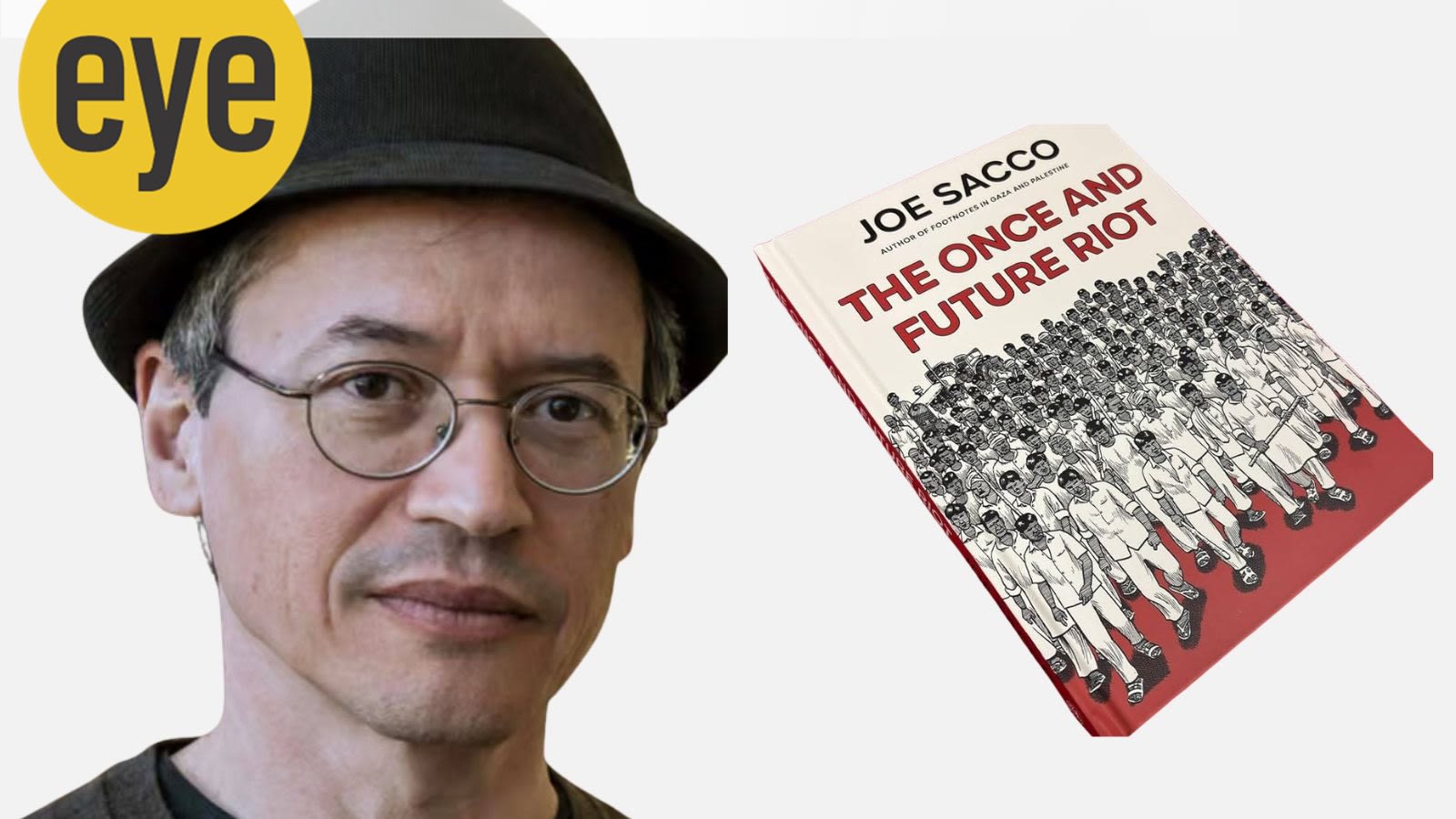
Even a prolific cartoonist like Rajinder Puri, not known to shy away from anything political, was wary of commenting on communal riots. The topical news cartoon has no space to reflect on the collecti...
The Visual Anatomy of Conflict: Joe Sacco and the Muzaffarnagar Riots
Joe Sacco, a renowned pioneer of graphic journalism, has turned his investigative lens toward the Muzaffarnagar riots, a period of intense communal unrest in India. His work does not merely report on the events but seeks to trace the "anatomy" of the violence—examining the structural, social, and psychological layers that contribute to such outbreaks. By utilizing the medium of sequential art, Sacco provides a visceral, human-centric perspective that traditional news reporting often lacks, capturing the nuances of fear and social fragmentation.
The Caution of the Political Cartoonist
The report highlights a critical distinction in the world of political commentary: the difference between satirical cartooning and the heavy responsibility of documenting communal trauma. Even seasoned political cartoonists like Rajinder Puri have historically approached the subject of communal riots with extreme wariness. This caution is not born of a lack of conviction, but rather an understanding of the volatility inherent in communal issues. In a landscape where a single image can be weaponized or misinterpreted, the line between insightful commentary and inflammatory rhetoric is razor-thin, making the task of the journalist uniquely perilous.
Graphic Journalism as Forensic Documentation
Sacco's approach is characterized by a sense of "care," which suggests a forensic level of detail. Unlike standard journalism that focuses on the immediate "who, what, and where," Sacco's graphic methodology allows for an exploration of the "how" and "why." Through detailed illustrations and long-form visual narratives, he can depict the atmospheric tension of a community on the brink of collapse. This method allows for a deeper immersion into the lived experiences of those affected, turning a news event into a profound study of human behavior under pressure.
The Significance of Unresolved Narratives
A defining feature of Sacco's work in this context is the absence of closure. In many mainstream media narratives, there is an implicit demand for a resolution—a sense that the conflict has been settled or that justice has been served. However, the Muzaffarnagar riots left behind deep-seated communal scars that remain unhealed. By refusing to provide a neat or comforting conclusion, Sacco honors the reality of the situation. He acknowledges that for many, the aftermath of violence is not a closed chapter but an ongoing state of existence marked by unresolved tension and lingering trauma.
Broader Implications for Conflict Reporting
The implications of Sacco’s work extend beyond the specific details of the Muzaffarnagar riots. It serves as a critique of the modern media's tendency toward rapid-fire, superficial coverage of complex social issues. By slowing down the narrative and focusing on the anatomy of the event, Sacco challenges the audience to engage with the complexity of communalism rather than seeking easy answers. This approach elevates journalism from simple information dissemination to a form of historical witnessing.
Future Trends in Visual Journalism
As global conflicts become increasingly polarized, we can expect to see a rise in the use of graphic and visual journalism to document social unrest. The ability to convey empathy and complex emotional landscapes through imagery is becoming an essential tool for journalists navigating hyper-partisan environments. Sacco's work sets a precedent for how high-stakes political and communal events can be documented with both rigor and sensitivity, potentially shaping how future generations perceive the history of communal violence.
Conclusion
In summary, Joe Sacco's investigation into the Muzaffarnagar riots represents a significant departure from conventional reporting. Through his meticulous tracing of the event's anatomy and his refusal to offer false closure, he provides a more honest, albeit uncomfortable, reflection of the realities of communal conflict. His work underscores the vital role of the journalist as a witness to the complexities that lie beneath the surface of political unrest.