Journalist tells SC that U.P. Police seeking digital footprint to dig out his Ram Temple donation case sources
Source Entity
India Latest News: Top National Headlines Today & Breaking News | The Hindu
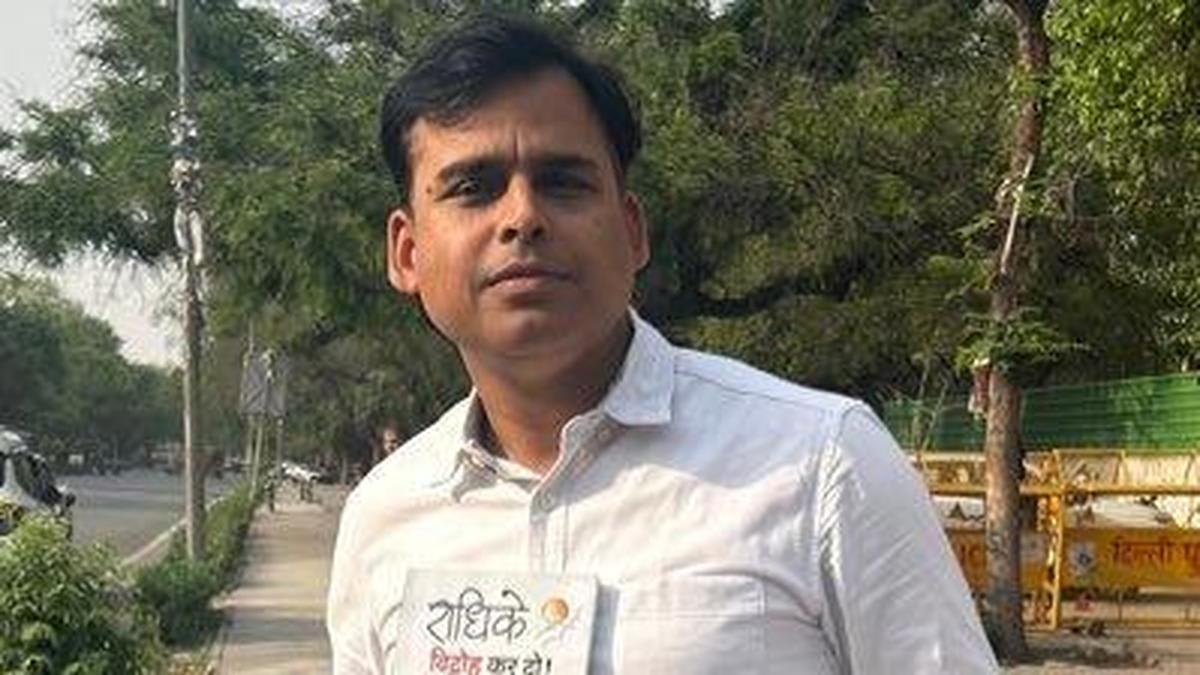
Journalist Abhishek Upadhyay has petitioned the Supreme Court, alleging that U.P. Police are misusing a road rage case to uncover his confidential sources regarding Ram Temple donation irregularities. The journalist claims the investigation into his digital footprint is an act of harassment aimed at silencing reporting on sensitive financial matters.
Legal Confrontation Over Journalistic Privilege
Independent journalist Abhishek Upadhyay has initiated an urgent plea before the Supreme Court of India, challenging the investigative tactics employed by the Uttar Pradesh Police. At the heart of this legal standoff is the allegation that state authorities are leveraging a criminal FIR—specifically a road rage case registered on August 18, 2026—as a pretext to gain access to the journalist’s private digital communications. This move, according to the petitioner, is a calculated effort to bypass standard protections for journalistic sources.
The Digital Footprint Controversy
Central to the petition is the request made by the investigating officer to the social media platform 'X' for a comprehensive digital footprint of Mr. Upadhyay dating back to June 1, 2026. The journalist argues that the temporal scope of this request, which aligns precisely with the period he began gathering evidence regarding alleged misappropriation of funds linked to the Ayodhya Ram Temple, is highly suspicious. By requesting data from a period preceding the alleged road rage incident, the police appear to be pursuing a secondary agenda unrelated to the specific crime cited in the FIR.
Implications for Press Freedom
This case raises profound questions regarding the intersection of criminal investigation and the protection of whistleblowers. In a democratic framework, the ability of journalists to shield their sources is essential for investigative reporting, particularly when scrutinizing high-profile institutions or religious trusts. If law enforcement agencies are permitted to use minor or unrelated criminal charges to conduct broad digital surveillance, it risks creating a chilling effect that could discourage investigative journalism in India.
Judicial Oversight and State Power
By approaching Chief Justice of India Surya Kant, Mr. Upadhyay is testing the limits of judicial intervention in state-led criminal investigations. The Supreme Court is now tasked with determining whether the police’s pursuit of digital metadata constitutes a legitimate investigative step or a form of state-sponsored harassment. This outcome will likely set a significant precedent for how Indian courts handle claims of 'investigative overreach' when the target is a member of the press.
Broader Context and Future Trends
As digital surveillance technologies become more sophisticated, the vulnerability of journalists to state-led data requests is increasing. The tension between the U.P. Police and the petitioner highlights a broader global trend where authorities are utilizing digital records to identify critical voices. Moving forward, the judiciary will need to establish clearer boundaries on how and when police can access digital footprints, ensuring that such powers are not weaponized to undermine transparency and accountability in public life.
Summary of the Dispute
The case serves as a critical litmus test for the independence of the media in India. As the Supreme Court reviews the arguments presented by advocate Anoop Prakash Awasthi, the core issue remains the integrity of the investigative process. Whether the court allows the data request to proceed or mandates safeguards to protect the journalist's sources will have lasting implications for the practice of investigative journalism in the country.
Verification Required?