Union minister JP Nadda admitted to AIIMS Delhi after uneasiness
Source Entity
TOI NEWS DESK
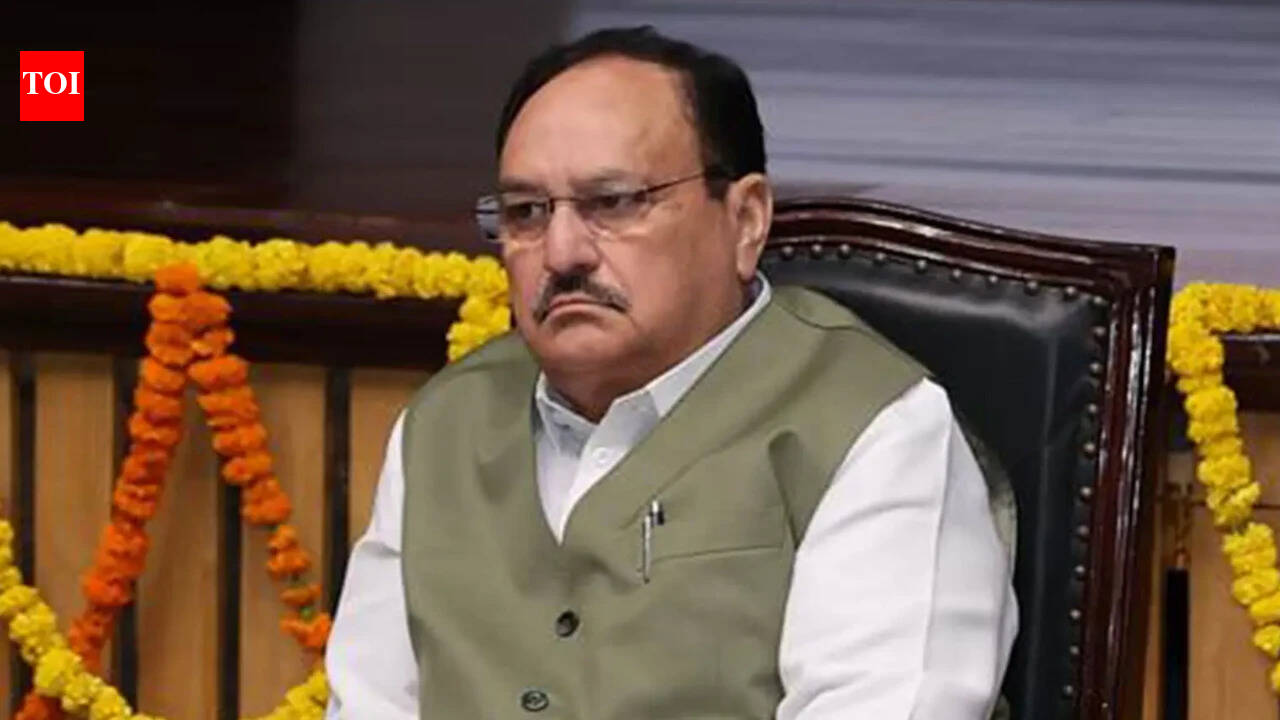
Union Health Minister JP Nadda has been admitted to AIIMS Delhi following reports of uneasiness. He is currently stable and under medical observation in the cardiology department.
Union Health Minister JP Nadda Hospitalized at AIIMS
Union Health Minister JP Nadda was recently admitted to the All India Institute of Medical Sciences (AIIMS) in New Delhi following reports of physical uneasiness. The medical team at AIIMS acted promptly to ensure he received necessary diagnostic care, confirming that he underwent an angiography as part of the evaluation process. Currently, the minister remains in the cardiology department, where his condition is reported as stable, and he continues to be under professional medical observation.
Context of Official Duties
Prior to his hospitalization, Minister Nadda was actively engaged in high-level governmental initiatives. Specifically, he had been interacting with Members of Parliament from Jharkhand and Odisha to bolster the national mission of achieving a 'TB Mukt Bharat' (Tuberculosis-free India). This demonstrates the high-pressure environment in which senior leadership operates, balancing rigorous policy advocacy with the demands of public office.
The Importance of Preventive Healthcare
For a public official responsible for the nation’s health sector, this incident highlights the universal necessity of monitoring cardiovascular health. Angiography is a standard diagnostic procedure used to visualize blood vessels and assess heart function. By undergoing this procedure, the minister is setting a precedent for prioritizing health checks, even when symptoms are characterized merely as 'uneasiness,' ensuring that potential issues are caught early.
Institutional Response and Stability
AIIMS Delhi remains one of the premier medical institutions in the country, equipped to handle high-profile cases with absolute confidentiality and precision. The fact that the minister is under observation in the cardiology department confirms that his medical team is taking a cautious, evidence-based approach to his recovery. His stable status provides reassurance to both his colleagues and the public, indicating that the situation is being managed effectively by top-tier medical professionals.
Broader Implications for Policy
Looking ahead, the health of senior cabinet members often prompts discussions regarding the workload and stress factors associated with ministerial duties. As the Minister of Health, Nadda’s focus on long-term national health goals like TB eradication remains a critical pillar of his tenure. His ability to resume these duties will be contingent upon his recovery, but the immediate focus remains on his stabilization and the successful completion of his medical observation period.
Conclusion
The hospitalization of JP Nadda serves as a reminder of the human element behind political leadership. While he continues to recover under the care of AIIMS specialists, the administrative focus on his health remains paramount. As he is currently stable, the expectation is that he will return to his official responsibilities once he has been cleared by his medical team, allowing him to continue his leadership in the ongoing efforts to improve public health outcomes across India.