Karnal toll fees revised for second time in three months
Source Entity
Latest News: Today's Latest News Headlines from India & World | Hindustan Times | Hindustan Times
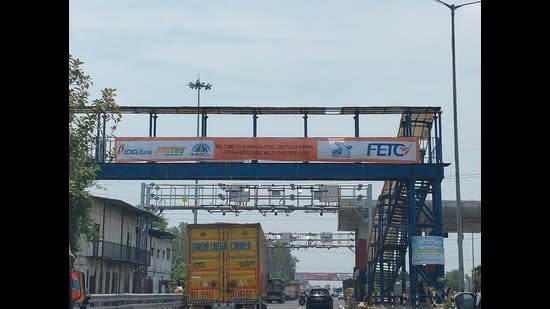
NHAI has revised toll fees in Karnal for the second time in three months, increasing LMV single journey charges to ₹200 and return journey charges to ₹295.
Analysis of Toll Fee Revisions in Karnal
Introduction
In a move that directly impacts thousands of daily commuters and commercial transporters, the National Highways Authority of India (NHAI) has announced a revision in toll fees for the Karnal region. This update is particularly noteworthy not just for the price increase itself, but for its frequency; this marks the second time in a mere three-month window that toll rates have been adjusted. Such rapid adjustments typically signal a shift in the operational cost structures or a specific mandate to accelerate revenue collection for highway maintenance and expansion projects in the Haryana sector.
Detailed Breakdown of Fee Adjustments
The revised tariff structure specifically targets Light Motor Vehicles (LMVs), which encompass cars, jeeps, and vans. Under the new guidelines, the cost for a single journey has been increased from ₹190 to ₹200. While a ₹10 increase may seem marginal on a per-trip basis, the cumulative effect on frequent travelers is significant. Furthermore, the return journey fee—designed to provide a slight discount for those traveling back within a single day—has been raised from ₹290 to ₹295. This indicates a precise, incremental approach to revenue scaling rather than a sweeping overhaul of the pricing model.
The Role of NHAI and Infrastructure Funding
To understand the context of these hikes, it is essential to examine the operational mandate of the NHAI. Toll collection is the primary mechanism for the 'user-pays' principle, where those utilizing the high-speed infrastructure contribute directly to its upkeep. The Karnal stretch is a critical artery for connectivity between Delhi and Chandigarh, experiencing heavy traffic volumes. The necessity for frequent revisions often stems from the need to keep pace with inflation, the rising cost of raw materials for road repair, and the implementation of advanced electronic tolling systems (FASTag) which require ongoing technological maintenance.
Economic Implications for Local Commuters
The frequency of these revisions—twice in ninety days—is likely to create friction among the local population and business operators. For daily commuters who travel from Karnal to nearby hubs, these incremental costs translate into a monthly increase in expenditure. Beyond individual commuters, the logistics sector, which relies heavily on LMV vans for last-mile delivery, may see a slight uptick in operational costs. Historically, when toll fees rise rapidly, there is often a ripple effect where transport services marginally increase their fares to offset the added expenditure.
Analyzing the Frequency of Revisions
The most striking element of this news is the short interval between hikes. Typically, toll revisions are annual or biennial. A three-month cycle suggests either a correction of previous under-pricing or an urgent requirement for funds to address specific infrastructural bottlenecks in the Karnal region. This trend could signal a new phase of aggressive revenue optimization by the NHAI to fund upcoming highway expansions or the integration of more sophisticated smart-highway features, such as automated traffic management systems.
Future Trends and Expectations
Looking ahead, it is probable that NHAI will continue to refine its pricing strategies based on real-time traffic data. As India pushes toward more integrated expressway networks, the Karnal toll plaza remains a strategic point of revenue. Commuters should expect a continued trend of digitalization in payment and potentially more frequent, smaller adjustments rather than infrequent, large jumps. The focus will likely shift toward optimizing flow to reduce congestion at the booths while ensuring that the revenue generated is sufficient to maintain world-class road standards.
Conclusion
In summary, the revision of toll fees in Karnal is a clear indication of the NHAI's effort to balance infrastructure costs with revenue generation. While the increase to ₹200 for single journeys and ₹295 for return trips is numerically small, the frequency of these updates highlights an evolving economic strategy for highway management. For the commuter, it represents an added cost of mobility; for the state, it is a necessary step toward sustaining one of the region's most vital transport corridors.
Verification Required?