One-stop industrial, employment hubs to come up across nine UP zones
Source Entity
Latest News: Today's Latest News Headlines from India & World | Hindustan Times | Hindustan Times
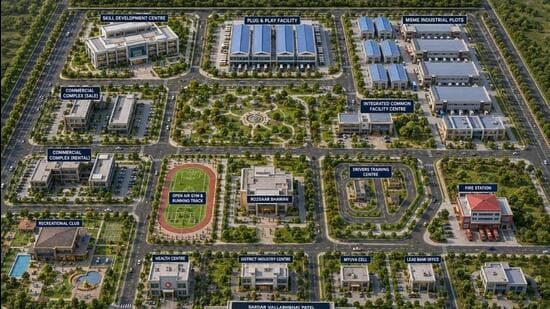
The Uttar Pradesh government is establishing one-stop industrial and employment hubs across nine zones using a hub-and-spoke model. This initiative aims to integrate skill training, entrepreneurship support, and industrial infrastructure to align the workforce with regional industrial needs and boost overall economic growth.
Decentralizing Prosperity: Analysis of Uttar Pradesh's Nine-Zone Industrial Strategy
In a strategic move to catalyze economic growth and modernize its labor market, the government of Uttar Pradesh has announced the creation of one-stop industrial and employment hubs across nine distinct zones. Announced on Uttar Pradesh Day, this initiative represents a shift toward a more structured, regional approach to industrialization. By integrating skill training, entrepreneurship support, and physical infrastructure into a single ecosystem, the state aims to bridge the gap between the available workforce and the specific needs of emerging industries.
The Hub-and-Spoke Model: A Strategic Framework
At the core of this initiative is the "hub-and-spoke" model. In this arrangement, the nine primary hubs will serve as central nodes of excellence, housing high-end administrative resources, advanced training facilities, and primary industrial anchors. The "spokes" will then extend these services to smaller, surrounding towns and rural clusters, ensuring that the benefits of industrialization are not confined to major urban centers like Lucknow or Noida. This model is critical for a state as geographically vast as Uttar Pradesh, as it prevents the over-concentration of wealth and infrastructure in a few cities while promoting balanced regional development.
Synergy Between Skill Development and Employment
One of the most significant aspects of these hubs is the convergence of skill training and employment services. Historically, a major hurdle in India's industrial growth has been the "skill gap," where graduates possess theoretical knowledge but lack the practical technical skills required by modern factories and tech firms. By placing training centers directly within industrial hubs, the state creates a real-time feedback loop: industries can inform training centers about the specific skills they need, and trainees can transition seamlessly into the workforce. This synergy is expected to reduce youth unemployment and lower the onboarding costs for private companies.
Fostering a Culture of Entrepreneurship
Beyond providing jobs, the initiative emphasizes entrepreneurship support. By offering a "one-stop" shop, the government aims to reduce the bureaucratic friction that often deters first-time entrepreneurs. These hubs will likely provide guidance on licensing, access to credit, and mentorship, effectively acting as state-sponsored incubators. By encouraging local entrepreneurship within these nine zones, the state is not just creating employees but is cultivating a new class of employers who can leverage regional raw materials and local labor to build sustainable businesses.
Infrastructure as a Catalyst for Investment
Industrial infrastructure remains the backbone of any economic surge. The commitment to providing dedicated industrial infrastructure within these zones suggests a plan to offer "plug-and-play" facilities for investors. When the state provides pre-cleared land, reliable power, and logistics connectivity, the risk for private investment decreases significantly. This approach is likely designed to attract both domestic and Foreign Direct Investment (FDI), positioning Uttar Pradesh as a competitive destination for manufacturing and logistics in South Asia.
Long-term Economic Implications and Outlook
Looking forward, the success of these nine zones will depend heavily on the efficiency of their execution and the agility of the administrative machinery. If implemented effectively, this project could transform Uttar Pradesh from an agrarian-heavy economy into a diversified industrial powerhouse. The focus on regional alignment ensures that each zone can specialize based on its inherent strengths—such as leather in Kanpur or textiles in other regions—thereby optimizing the state's comparative advantage on a global scale.
Summary
Uttar Pradesh's transition toward a hub-and-spoke industrial model is a comprehensive attempt to decentralize economic opportunity. By blending infrastructure, skill development, and entrepreneurial support into nine regional zones, the state is creating a scalable blueprint for employment generation that aligns workforce capabilities with industrial demand, potentially setting a precedent for other large Indian states.
Verification Required?