Latur coaching owner paid ₹5 lakh to procure NEET questions from NTA paper-setter, says CBI
Source Entity
India Latest News: Top National Headlines Today & Breaking News | The Hindu
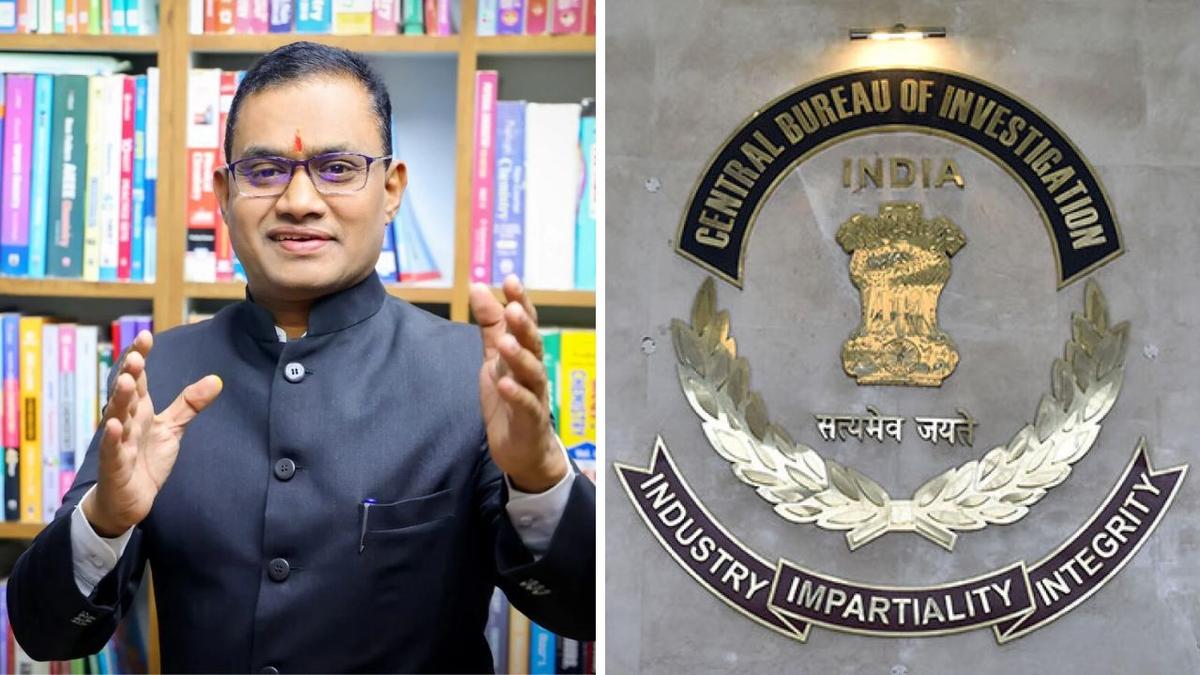
The CBI has revealed that a coaching center owner in Latur paid ₹5 lakh to a National Testing Agency (NTA) paper-setter to illegally obtain 111 questions from the master question set for the NEET (UG) 2026 exam.
Investigation Uncovers High-Stakes Paper Leak in Latur
In a startling revelation that underscores the vulnerabilities of India's high-stakes examination system, the Central Bureau of Investigation (CBI) has uncovered a sophisticated bribery scheme aimed at compromising the NEET (UG) 2026 entrance exam. According to the agency, a coaching center owner based in Latur, Maharashtra, allegedly paid ₹5 lakh to a paper-setter associated with the National Testing Agency (NTA) to procure confidential exam questions. This incident highlights a disturbing intersection between the commercial interests of private coaching institutes and the integrity of national-level academic assessments.
The Mechanics of the Breach
The core of the CBI's finding rests on a forensic comparison of materials. The investigation revealed that 111 questions obtained by the coaching owner match exactly with the questions contained in the NTA’s 'master question sets' prepared for the NEET (UG) 2026. The master set is the foundational repository from which final exam papers are derived; a leak of this magnitude suggests a deep systemic breach. By gaining access to these questions, the coaching center could provide its students with an unfair advantage, effectively coaching them on the actual exam content rather than the general syllabus, thereby manipulating the merit-based selection process.
Latur: The Pressure Cooker of Education
To understand the motivation behind this crime, one must look at the socio-economic landscape of Latur. Known as the 'Kota of Maharashtra,' Latur has evolved into a massive hub for competitive exam preparation. In this hyper-competitive environment, the reputation and financial viability of a coaching center are directly tied to the number of students who secure admissions into prestigious medical colleges. This immense pressure to produce 'toppers' creates a perverse incentive for center owners to seek illicit shortcuts, transforming education from a pedagogical pursuit into a high-stakes business where the end justifies the means.
Systemic Vulnerabilities within the NTA
This incident raises critical questions regarding the internal security protocols of the National Testing Agency. The fact that a paper-setter—an individual entrusted with the highest level of confidentiality—could be bribed for a relatively small sum of ₹5 lakh suggests a failure in the vetting and monitoring of external contributors. The leak of 111 questions indicates that the 'master set' was not sufficiently encrypted or siloed. This breach points to a need for a total overhaul of how questions are authored, stored, and distributed, moving away from reliance on individual integrity toward a system of rigorous digital auditing.
Historical Context of Exam Malpractice
India has long struggled with a recurring pattern of paper leaks and examination scams, often fueled by the scarcity of professional seats relative to the millions of aspirants. While previous scandals have often involved mid-level officials or local printing presses, the involvement of an NTA paper-setter in the NEET (UG) 2026 cycle demonstrates that the corruption has penetrated the very top of the academic hierarchy. This trend reflects a broader crisis in the 'shadow education' industry, where the commercialization of coaching has outpaced the regulatory frameworks intended to ensure fairness.
The Erosion of Meritocracy
Beyond the legal ramifications, the implications for student psychology and social equity are profound. For the millions of honest aspirants who spend years in rigorous study, the knowledge that a handful of students may have had access to the master question set erodes trust in the concept of meritocracy. When the 'playing field' is tilted by financial transactions between coaching owners and bureaucrats, the exam ceases to be a test of intelligence and hard work, becoming instead a test of who has the resources to buy access to the answers.
Future Outlook and Necessary Reforms
Moving forward, this case will likely accelerate the push for more stringent legislation, such as the Public Examinations (Prevention of Unfair Means) Act, to impose harsher penalties on both the facilitators and the beneficiaries of leaks. We can predict a shift toward more secure, AI-monitored question-generation processes and perhaps a move toward more frequent, modular testing to reduce the impact of a single leak. Until the NTA can guarantee the absolute sanctity of its master sets, the credibility of the NEET exam will remain under intense scrutiny, requiring a transparent, third-party audit of its operational security.
Verification Required?