Caught by J&K police after 27 years, ex-militant carried no mobile, Aadhaar
Source Entity
Arun Sharma
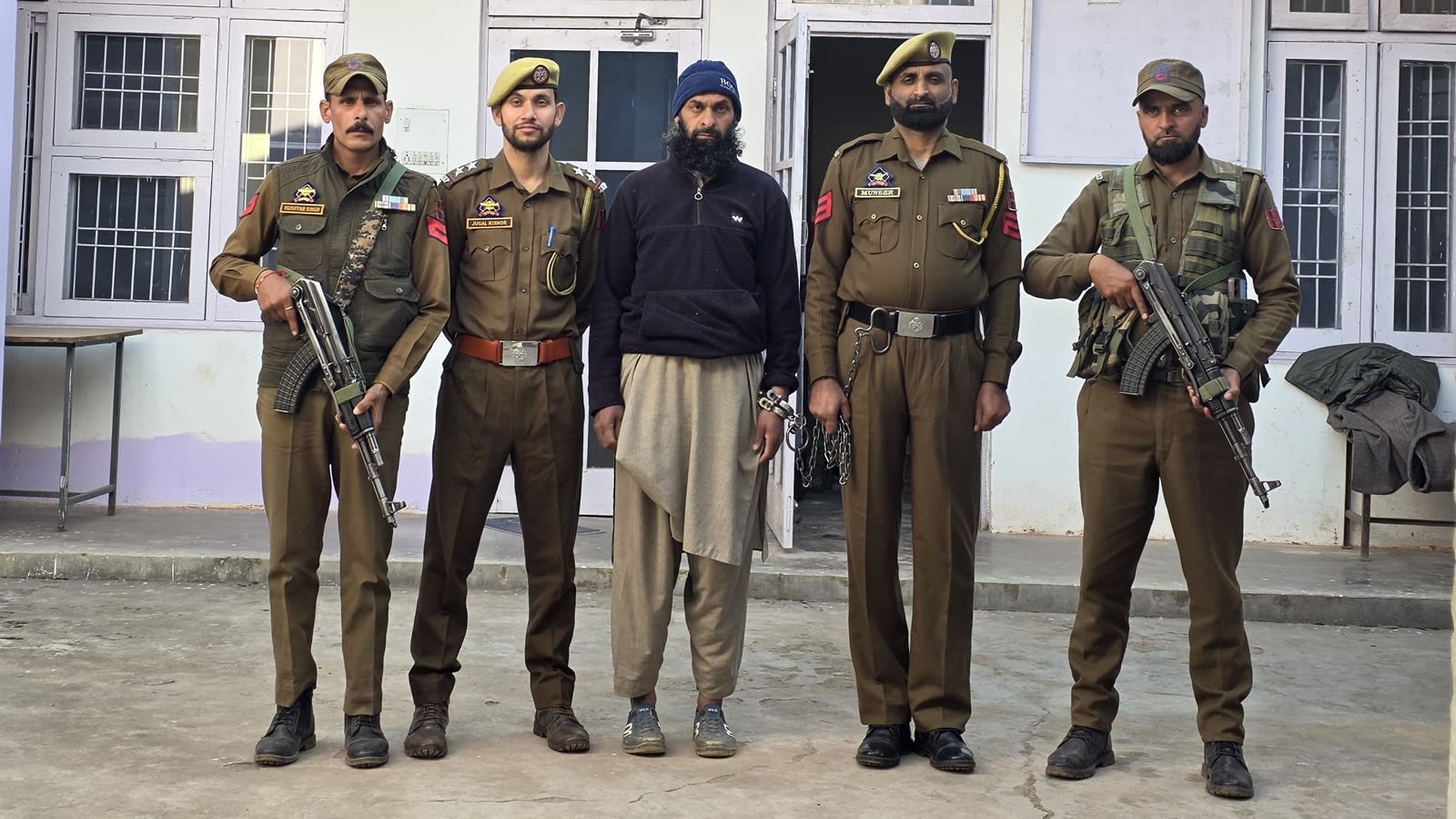
Security forces have eliminated the last known local militant in Kashmir, shifting the focus to hunting 65 foreign terrorists. Simultaneously, authorities are targeting individuals operating from PoK who aim to revive militant activities.
The Shifting Security Landscape in Jammu and Kashmir
The security architecture in Jammu and Kashmir has undergone a profound transformation, marked by the elimination of the last known local Lashkar-e-Taiba (LeT) recruit. This milestone signifies a major shift in the region's counter-insurgency dynamics, as the threat profile has moved away from indigenous militancy toward a concentrated focus on foreign-origin threats. With local recruitment effectively neutralized, security agencies are now directing their intelligence and operational resources toward tracking approximately 65 Pakistani terrorists believed to be active within the region.
The Foreign Terrorist Nexus
Recent intelligence reports confirm that the majority of active terrorists currently operating in the Valley are affiliated with established groups such as LeT and Jaish-e-Mohammed (JeM). These organizations are increasingly utilizing proxy terror outfits to circumvent heightened scrutiny. By attempting to revive dormant networks, these foreign entities seek to maintain a foothold in the region, relying on cross-border logistics to sustain their operational capacity despite the successful neutralization of local cadres.
Unrest and Militancy in PoK
Complicating the situation is the internal instability within Pakistan-occupied Kashmir (PoK). Masood Ilyas Kashmiri, a JeM commander, has publicly acknowledged the armed presence of his organization in Rawalakot. His criticisms of Pakistani authorities, coupled with the involvement of local communities in protests against the government, highlight a volatile intersection between domestic civil unrest and the presence of militant groups. The Joint Awami Action Committee’s warnings of a potential uprising further underscore the fragile socio-political environment in these areas.
Strategic Response: Legal and Territorial Measures
In response to these evolving threats, the Jammu and Kashmir Police have adopted a proactive strategy targeting the financiers and handlers operating from across the Line of Control. The recent attachment of 27 kanals of land in the Reasi district—belonging to individuals accused of financing terror—demonstrates a rigorous application of the Unlawful Activities (Prevention) Act (UAPA). By targeting the assets of those who crossed into Pakistan in the 1990s for training, authorities are effectively dismantling the financial and logistical pipelines that sustain long-distance militancy.
Future Trends and Security Outlook
Moving forward, the primary challenge for Indian security forces will be the containment of foreign infiltrators who operate with clandestine support from PoK. As the local support base for militancy continues to erode, the reliance of groups like JeM and LeT on foreign personnel will likely increase, necessitating sustained multi-agency coordination. The combination of targeted property attachments, rigorous border monitoring, and the exploitation of internal fissures within militant ranks—as evidenced by the public acknowledgments of commanders in Rawalakot—will remain critical to maintaining the current decline in active terrorist numbers and ensuring long-term regional stability.
Multiple Citing Sources