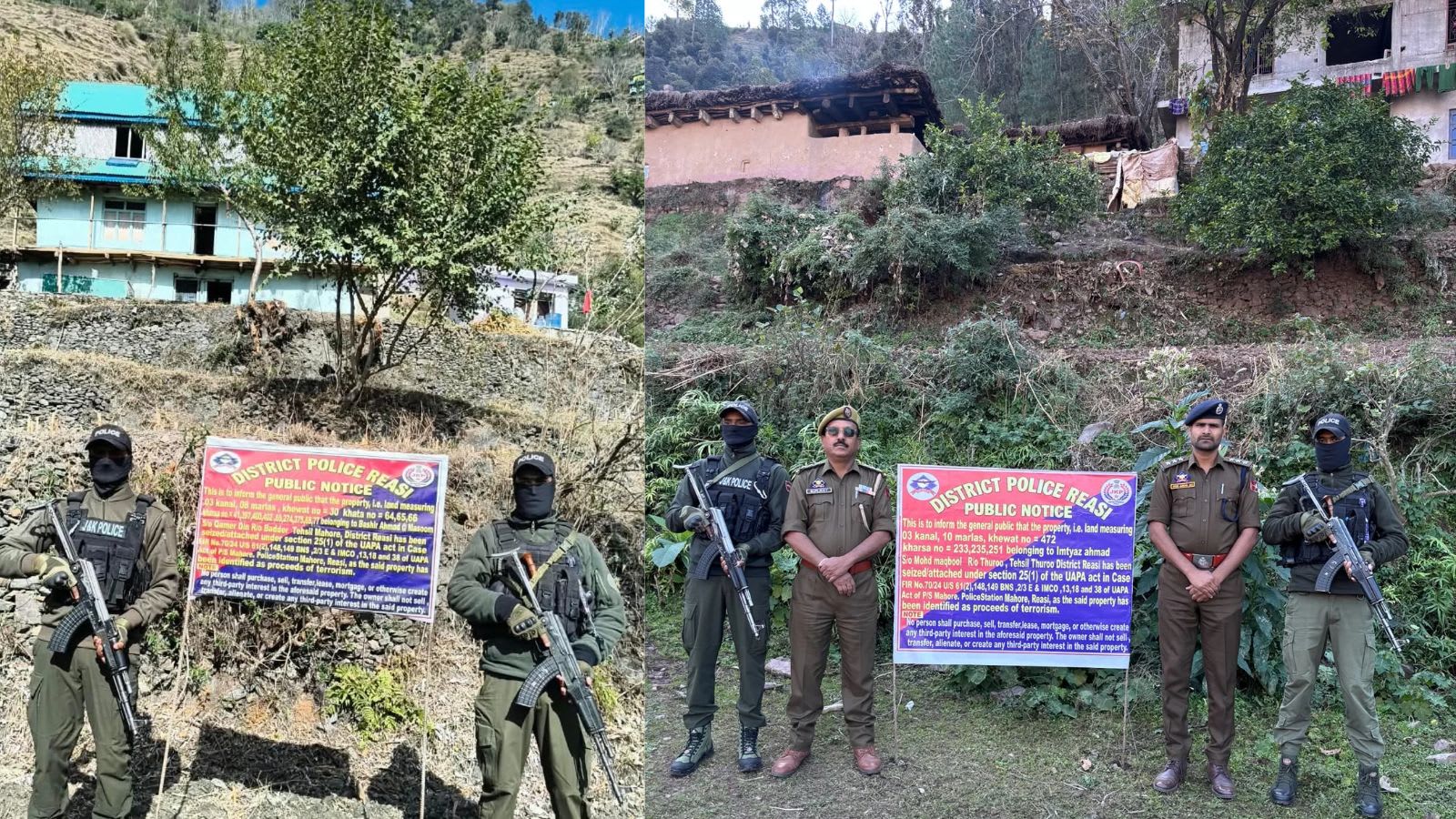
Missing for decades, 30 from Jammu joined Hizbul. Now, police move to attach their properties
Source Entity
Arun Sharma
Security forces have successfully neutralized the last active local militant in Kashmir, shifting their focus to tracking 65 foreign terrorists. Simultaneously, internal unrest in PoK has exposed the presence of JeM commanders who are now criticizing Pakistani authorities amidst rising local protests.
Strategic Shift in Kashmir’s Counter-Terrorism Landscape
Recent developments in Jammu and Kashmir mark a pivotal turning point in the region's security trajectory. Following the neutralization of the last known local Lashkar-e-Taiba (LeT) recruit, security forces have effectively dismantled the domestic base of active militancy. This achievement, confirmed by official reports, signifies a major transition in the operational environment, shifting the focus from internal insurgency management to the systematic tracking and neutralization of approximately 65 foreign terrorists primarily associated with the LeT and Jaish-e-Mohammed (JeM).
The External Threat: Foreign Operatives and PoK Dynamics
As the local recruitment pipeline has been largely severed, the security apparatus is now contending with a hardened core of foreign militants. These individuals, often trained in Pakistan-occupied Kashmir (PoK), represent a persistent threat to regional stability. The Jammu and Kashmir Police have intensified their efforts to target the supply chains and command structures of these groups. By attaching the properties of individuals who crossed the LoC in the 1990s to facilitate terror, authorities are dismantling the logistical backbone that sustains these cross-border operations.
Internal Dissent and JeM’s Changing Narrative
Compounding the pressure on militant organizations, internal fractures have surfaced within PoK. Masood Ilyas Kashmiri, a commander of the Jaish-e-Mohammed, has publicly acknowledged the presence of his organization in Rawalakot, while simultaneously criticizing Pakistani authorities. This rare admission highlights a volatile intersection between terror infrastructure and local civil unrest. As the Joint Awami Action Committee threatens uprisings against the government, the JeM finds itself in a precarious position, with commanders noting that some of their members originate from the very communities now protesting against the state.
Legal and Financial Counter-Measures
Under the Director General of Police Nalin Prabhat, the use of the Unlawful Activities (Prevention) Act (UAPA) has become a primary instrument in curbing terror financing. The recent attachment of 27 kanals of land in the Reasi district serves as a clear warning to those operating from abroad. By systematically seizing assets belonging to individuals accused of financing terror, the administration is making it increasingly difficult for proxy groups to maintain their operations within Indian territory.
Future Trends and Regional Implications
Looking ahead, the security landscape will likely be defined by a multi-agency effort to secure the Line of Control (LoC) against infiltration. With the local militant base effectively eliminated, the primary challenge remains the 'dormant' networks that foreign handlers are attempting to revive. The convergence of social unrest in PoK and the continued pressure from Indian security forces suggests that the operational space for groups like LeT and JeM is shrinking, forcing them to rely on increasingly desperate and high-risk strategies that are further alienating the local populations they claim to represent.
Multiple Citing Sources