'Make Wangchuk education minister': Kejriwal joins protest, seeks Pradhan's ouster
Source Entity
TOI NEWS DESK
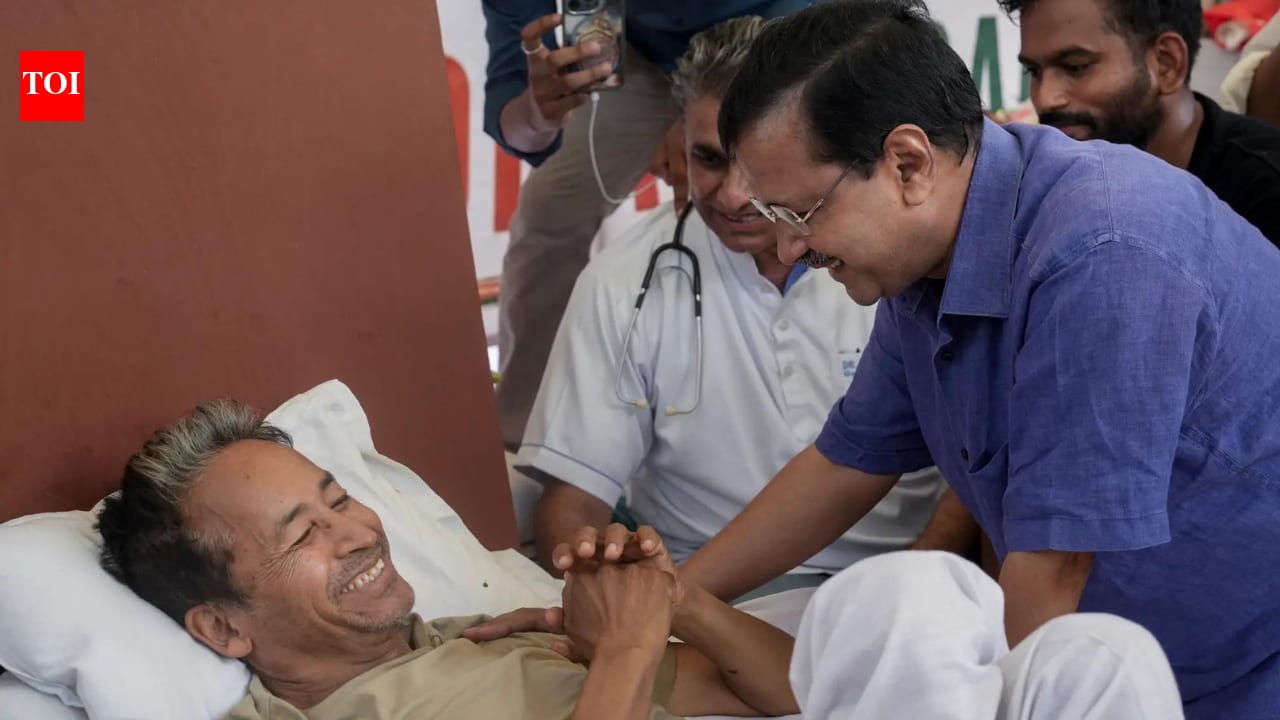
Arvind Kejriwal joined Sonam Wangchuk's hunger strike at Jantar Mantar, demanding the resignation of Union Education Minister Dharmendra Pradhan and proposing Wangchuk as a replacement to address systemic issues like exam leaks and student suicides.
Political Convergence at Jantar Mantar: Analyzing Kejriwal's Support for Sonam Wangchuk
In a significant political development, former Delhi Chief Minister Arvind Kejriwal has joined the hunger strike led by renowned educator and innovator Sonam Wangchuk at Jantar Mantar. This alliance brings together a prominent political leader and a respected grassroots activist, centering their demands on a complete overhaul of India's educational administration. The core of the protest is a direct challenge to the current leadership of the Ministry of Education, with Kejriwal explicitly calling for the removal of Union Education Minister Dharmendra Pradhan.
The Catalyst: Systemic Failures in the Examination Ecosystem
Kejriwal's decision to join the protest is anchored in the recurring crises plaguing India's competitive examination system. By highlighting the frequency of exam paper leaks and the tragic rise in student suicides, Kejriwal is tapping into a deep-seated frustration among the youth. In the Indian context, competitive exams are often the sole gateway to social mobility; therefore, when these processes are compromised by leaks or administrative incompetence, it leads to widespread disillusionment and mental health crises among students. The demand for a change in leadership is presented not just as a political move, but as a necessary step to restore integrity to the national testing framework.
The Symbolic Choice of Sonam Wangchuk
One of the most striking aspects of this protest is Kejriwal's endorsement of Sonam Wangchuk as a potential replacement for the Education Minister. Wangchuk is not a career politician but an educator known for his innovative approach to learning and his commitment to sustainable development in Ladakh. By proposing a practitioner and a reformer for a ministerial role, Kejriwal is advocating for a shift from 'political appointments' to 'expert-led governance.' This strategy aims to contrast the perceived failure of the current ministry with the visionary and student-centric approach that Wangchuk represents, suggesting that the education system requires a pedagogical expert rather than a political administrator.
Broader Political Implications and Youth Outreach
From a strategic standpoint, this move allows Kejriwal to align himself with a non-partisan, highly respected figure, thereby broadening his appeal across different demographics. The focus on 'youth concerns' is a critical political lever, as the student population represents a massive and volatile voting bloc. By framing the protest around student suicides and systemic unfairness, the opposition is positioning itself as the primary champion of the youth against a government they portray as indifferent. This convergence at Jantar Mantar serves as a potent visual and political signal that the education crisis has reached a boiling point that can no longer be ignored by the Union Government.
Predicting Future Trends in Educational Advocacy
Looking ahead, this event is likely to catalyze further protests and demands for transparency in national examinations. The pairing of a political heavyweight with a moral authority like Wangchuk creates a blueprint for future advocacy, where specific policy failures are linked to demands for specific personnel changes. If the government fails to address the concerns regarding paper leaks and student welfare, we can expect an escalation in student-led movements across the country, potentially merging with broader political protests. The pressure on the Union Education Ministry will likely intensify, forcing a discourse on whether the current administrative structure is capable of handling the complexities of modern Indian education.
Conclusion
Arvind Kejriwal's participation in Sonam Wangchuk's hunger strike is more than a symbolic gesture; it is a targeted critique of the Union Education Ministry's handling of national examinations. By demanding the ouster of Dharmendra Pradhan and proposing Wangchuk as a replacement, the protest highlights a desperate need for systemic reform and expert leadership to combat the epidemic of exam leaks and student distress. The outcome of this protest will likely determine the trajectory of educational policy debates in the coming months.