Kerala HC directs Defence Ministry to file report on hazardous cargo threat from MSC Elsa 3 shipwreck
Source Entity
India Latest News: Top National Headlines Today & Breaking News | The Hindu
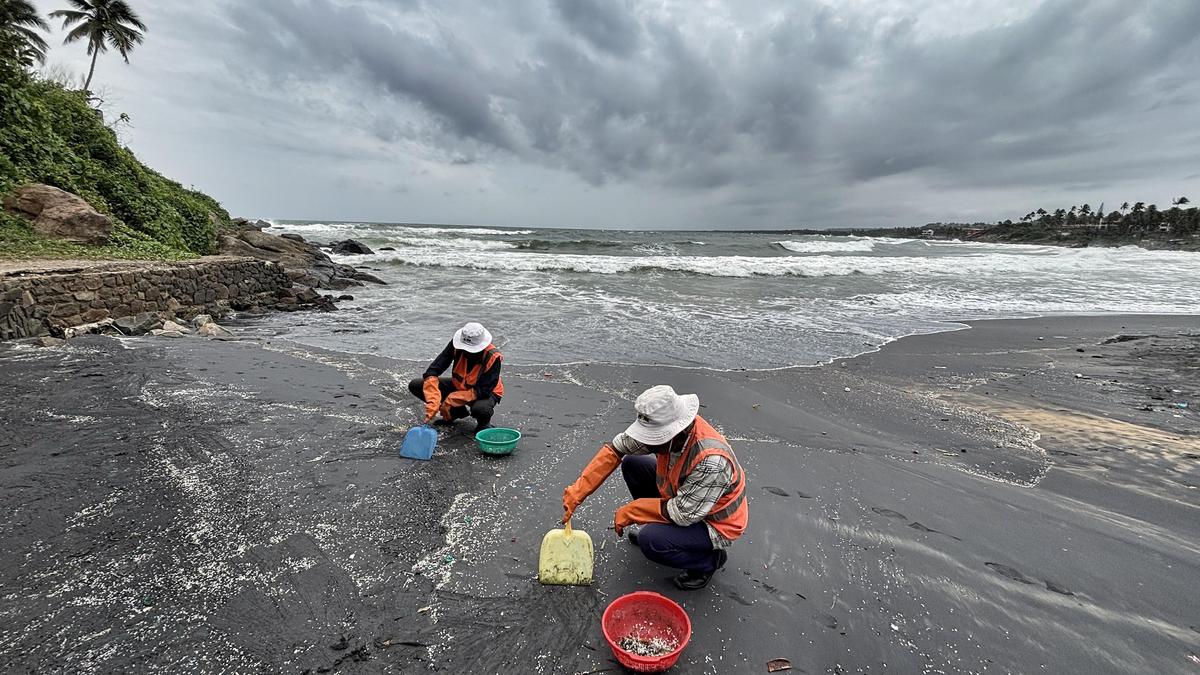
The Kerala High Court has ordered the Ministry of Defence to submit a report on the potential environmental and safety threats posed by the MSC Elsa 3 shipwreck, noting that 84 damaged containers remain embedded in the seabed.
Legal Intervention in the Wake of the MSC Elsa 3 Disaster
The Kerala High Court has stepped in to address a critical environmental and safety concern following the shipwreck of the MSC Elsa 3. By directing the Ministry of Defence to file a detailed report, the court is acknowledging the potential for a long-term ecological disaster. The core of the issue lies in the discovery that approximately 84 containers remain partially embedded in the seabed, many of which exhibit significant structural damage. This judicial intervention underscores the urgency of assessing whether these containers hold hazardous materials that could leak into the marine ecosystem, potentially devastating local fisheries and biodiversity.
The Ecological Risks of Seabed Contamination
The presence of structurally compromised containers on the ocean floor presents a ticking time bomb for the Arabian Sea's coastal environment. When containers are embedded in the seabed and suffer structural failure, the risk of chemical leakage becomes acute. Depending on the cargo—which could range from industrial chemicals to volatile organic compounds—the seepage can lead to oxygen depletion in the water (hypoxia) or the introduction of toxins into the food chain. For a state like Kerala, which relies heavily on its coastal economy and artisanal fishing, any contamination of the seabed could lead to a collapse in local fish populations and a subsequent economic crisis for coastal communities.
Administrative Accountability and the Role of the Defence Ministry
The court's decision to involve the Ministry of Defence is a strategic move, likely based on the specialized capabilities of the Indian Navy and the Indian Coast Guard. Salvaging heavy containers from the seabed requires advanced deep-sea diving equipment and precision engineering that typically fall under the purview of naval operations. By demanding a report from the Defence Ministry, the High Court is ensuring that the government cannot deflect responsibility between various maritime and environmental agencies. This move establishes a clear line of accountability, forcing the state to quantify the exact nature of the threat and provide a concrete timeline for mitigation.
Technical Challenges of Marine Salvage
Recovering 84 containers that are "partially embedded" is a far more complex operation than lifting debris from the surface. The structural damage noted by the court suggests that some containers may have collapsed or fused with the seabed, making them unstable for lifting. Attempting to move a damaged container containing hazardous waste could inadvertently trigger a massive leak. Therefore, the report requested by the court must not only identify the cargo but also propose a salvage methodology that minimizes further structural failure. This technical hurdle transforms a simple cleanup operation into a high-stakes engineering challenge.
Broader Implications for Maritime Safety in Indian Waters
This incident highlights a broader vulnerability in the management of shipping accidents within Indian territorial waters. The MSC Elsa 3 case serves as a catalyst for discussing the adequacy of current protocols regarding hazardous cargo manifests and the speed of emergency response. Historically, maritime salvage has often been left to the shipping companies, but the Kerala High Court's intervention suggests a shift toward greater state oversight and judicial scrutiny. This could set a legal precedent where the government is held responsible for ensuring that foreign-owned vessels do not leave behind an "environmental debt" in the form of sunken wreckage.
Summary of the Crisis
In conclusion, the MSC Elsa 3 shipwreck is no longer just a logistical failure but a potential environmental emergency. The Kerala High Court's directive to the Defence Ministry is a necessary step to prevent a catastrophic leak from the 84 damaged containers resting on the seabed. The outcome of the requested report will likely determine the scale of the salvage operation and the legal liabilities of the parties involved, ensuring that the ecological integrity of Kerala's coastline is prioritized over corporate or administrative inertia.
Verification Required?