Inside our months-long investigation into Kevin O’Leary’s Utah data center debacle
Source Entity
Nilay Patel
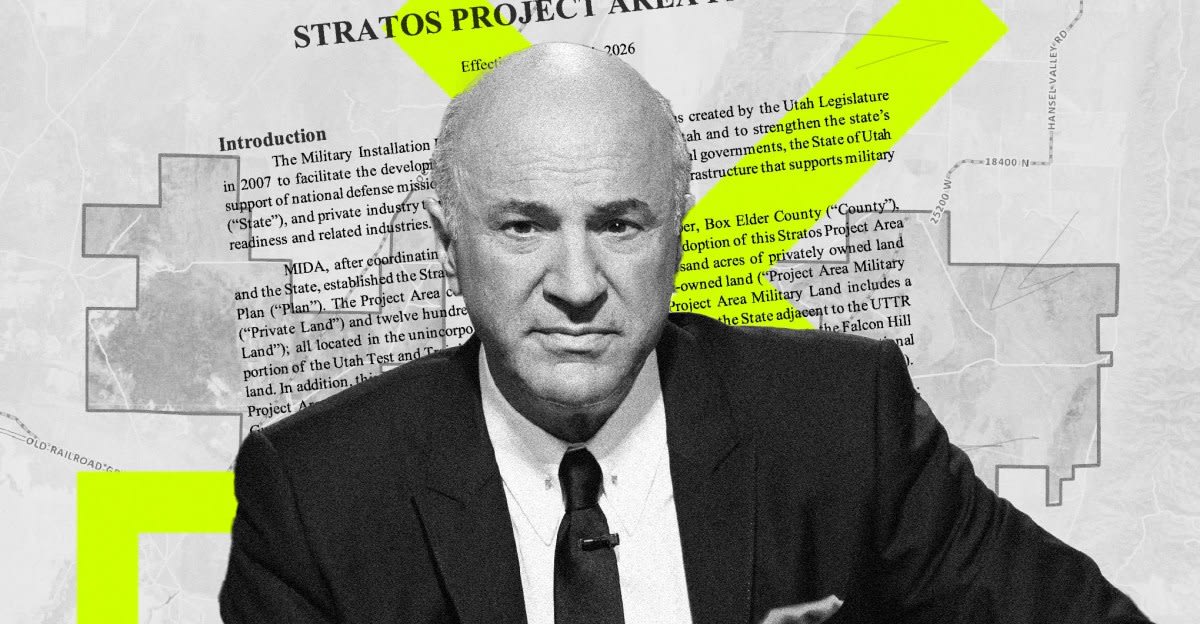
Celebrity investor Kevin O’Leary is facing significant backlash and scrutiny over his proposed 'Wonder Valley' AI data center in Utah. The massive project has sparked political controversy and concerns regarding transparency, energy demands, and national security.
The Ambition and Scope of Wonder Valley
Kevin O’Leary, widely recognized as 'Mr. Wonderful' from the reality television series Shark Tank, has recently been at the center of a contentious development proposal in Utah. Known as 'Wonder Valley' or 'Stratos,' the project was envisioned as the world’s largest data center, spanning a massive 40,000-acre AI campus located in rural Box Elder County, north of the Great Salt Lake. The sheer scale of the project is unprecedented, necessitating a dedicated gas power plant capable of generating 9 gigawatts of electricity—a figure that represents more than double the total average power consumption of the entire state of Utah.
Political Backing and Public Controversy
The project moved with remarkable speed due to the vocal support of Utah’s governor and legislative leadership. O’Leary positioned the development as a strategic geopolitical move, asserting on Fox Business that the facility would serve as a demonstration of American industrial strength against foreign adversaries, specifically claiming he was 'under attack by Chinese agents.' However, this narrative has been met with skepticism and intense scrutiny, as the project has effectively upended local political dynamics.
Transparency and Local Impact
A months-long investigation by The Verge has highlighted significant concerns regarding the lack of transparency throughout the planning, announcement, and approval phases of Wonder Valley. Residents of Box Elder County and the broader Utah community were largely kept in the dark as state officials fast-tracked the development. This lack of public engagement has led to a deepening divide between the project’s proponents and those concerned about the environmental, social, and economic impact of such a massive industrial undertaking.
The Intersection of AI and Energy Infrastructure
The Wonder Valley project highlights the burgeoning tension between the massive energy requirements of AI infrastructure and the capacity of local power grids. By attempting to tap into an interstate pipeline to fuel 9 gigawatts of power, O’Leary’s proposal underscores the extreme demands modern AI technology places on regional resources. This situation serves as a case study for the broader challenges states face when attempting to balance rapid technological growth with local infrastructure limitations and public oversight.
Future Implications and Conclusion
As the situation continues to unfold, the 'Wonder Valley' debacle serves as a cautionary tale for both developers and government officials regarding the necessity of vetting large-scale infrastructure projects. The controversy surrounding O’Leary’s claims of foreign interference versus the reality of local opposition suggests that the project will remain a focal point of Utah politics for the foreseeable future. Moving forward, the project's ability to proceed will likely hinge on whether its proponents can address the valid questions regarding transparency and the massive, perhaps unsustainable, energy demands it imposes on the state of Utah.