Warsh promises inflation will be a 'thing of the past,' cites benefits of AI investment boom
Source Entity
US Top News and Analysis
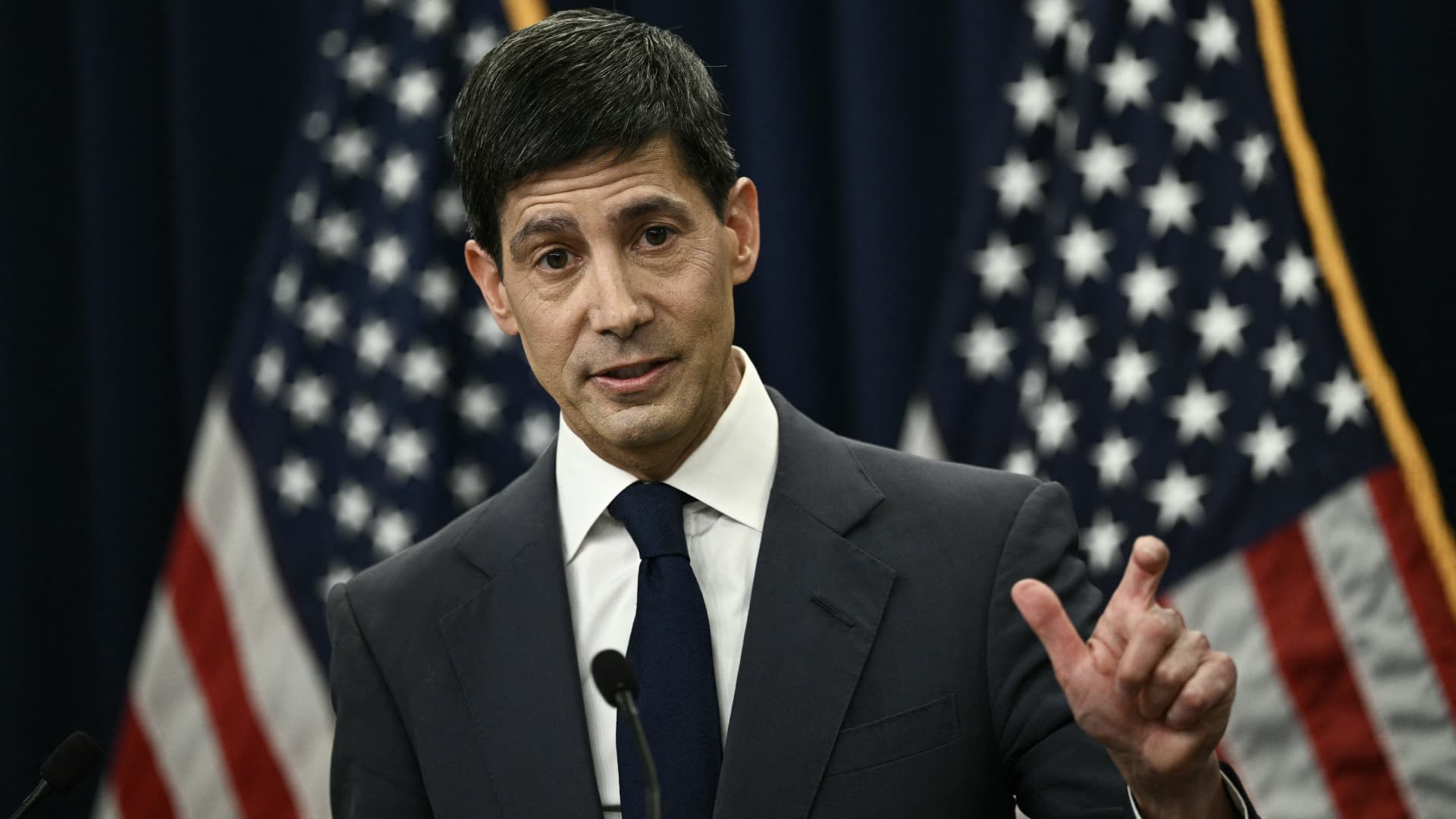
Warsh pledged Tuesday to "get monetary policy right" and defeat the inflation that has bedeviled the central bank for the past five years.
The Intersection of Monetary Policy and Technological Evolution
In a bold assertion regarding the future of the global economy, Kevin Warsh has pledged to "get monetary policy right," promising that the persistent inflation that has plagued central banks over the last five years will become a "thing of the past." Warsh's perspective is not merely rooted in traditional interest rate adjustments but is heavily predicated on the transformative power of the current artificial intelligence (AI) investment boom. This approach suggests a strategic shift in how economic stability is viewed—moving from a purely reactive monetary stance to one that recognizes the supply-side benefits of technological disruption.
The Context of a Five-Year Inflationary Struggle
To understand the weight of Warsh's promise, one must analyze the "bedeviling" inflation of the past half-decade. Since 2019, the global economy has weathered a perfect storm of inflationary pressures: the initial shocks of the COVID-19 pandemic, massive fiscal stimulus packages, and severe supply chain dislocations. Central banks, including the Federal Reserve, initially misdiagnosed these pressures as "transitory," leading to a delayed response in raising interest rates. This historical context is critical because it explains Warsh's emphasis on "getting monetary policy right"; he is implicitly critiquing the hesitation of the past and advocating for a more disciplined, proactive framework to ensure price stability.
AI Investment as a Disinflationary Catalyst
Warsh's most provocative claim is the link between the AI investment boom and the eradication of inflation. From an economic standpoint, inflation occurs when demand outstrips supply. AI serves as a potent supply-side catalyst by exponentially increasing productivity across diverse sectors—from logistics and manufacturing to white-collar services.
- Productivity Gains: By automating complex tasks and optimizing resource allocation, AI reduces the cost of production.
- Cost Reduction: As businesses integrate AI, the lower overhead costs can be passed on to consumers, naturally exerting downward pressure on prices.
- Efficiency Leap: Much like the steam engine or the internet, AI is viewed as a general-purpose technology that can shift the aggregate supply curve to the right, allowing for economic growth without triggering price spikes.
The Strategy of "Getting Monetary Policy Right"
Beyond the technological optimism, Warsh's commitment to correcting monetary policy suggests a focus on credibility and predictability. For inflation to truly become a "thing of the past," the market must believe that the central bank is committed to its inflation targets without wavering. This likely involves a more rigorous adherence to data-driven decision-making and a avoidance of the political pressures that often influence monetary easing. By aligning a disciplined monetary regime with the productivity gains of the AI era, Warsh envisions a "goldilocks" economy: one that grows rapidly due to innovation while remaining price-stable due to prudent policy.
Historical Parallels and Future Trends
Historically, major technological leaps have often been followed by periods of disinflation. The electrification of factories in the early 20th century, for example, dramatically lowered the cost of consumer goods. Warsh is betting that AI will mirror this trend on a much larger and faster scale. Looking forward, the trend will likely move toward "intelligent automation," where the initial capital expenditure in AI (the "boom") transitions into operational efficiency. However, the transition period may be volatile, as labor markets adjust to AI integration, potentially creating short-term wage pressures even as long-term costs fall.
Conclusion: A Vision of Tech-Driven Stability
In summary, Kevin Warsh's outlook represents a synthesis of orthodox monetary discipline and futuristic technological optimism. By framing AI investment not just as a business trend but as a macroeconomic tool to fight inflation, he proposes a path where innovation does the heavy lifting that high interest rates alone cannot achieve. If his thesis holds, the synergy between corrected monetary policy and AI-driven productivity could indeed usher in a new era of price stability, effectively ending the inflationary volatility that has defined the early 2020s.