‘Adjectives keep changing’: Kharge attacks PM Modi over ‘Naraz Fufa’ jibe at Cong
Source Entity
ROHITASHWA RANJAN
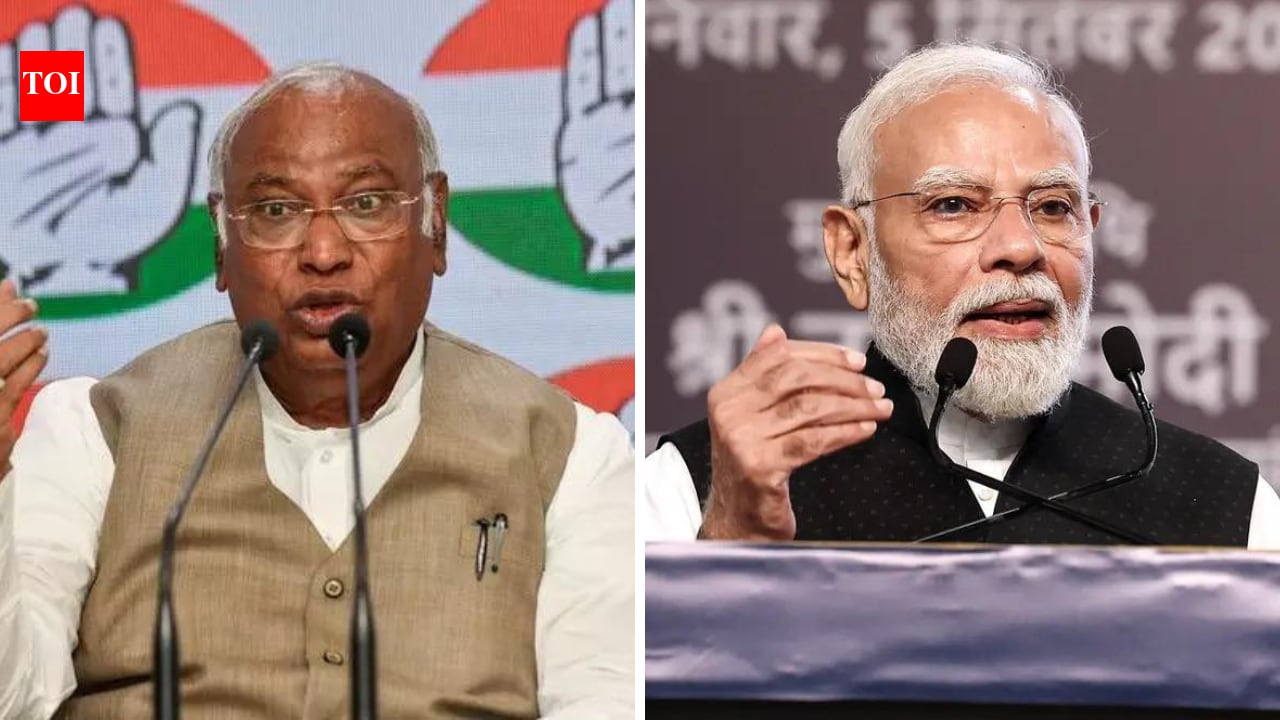
Congress President Mallikarjun Kharge has hit back at Prime Minister Narendra Modi following the latter's 'Naraz Fufa' (upset uncle) remark directed at the Congress party. This exchange underscores the intensifying rhetorical battle between the ruling BJP and the opposition ahead of critical electoral cycles.
The Rhetorical Escalation in Indian Politics
The recent exchange between Congress President Mallikarjun Kharge and Prime Minister Narendra Modi highlights a growing trend of personalized political discourse in India. By labeling the Congress party as a 'Naraz Fufa'—a colloquial Hindi term referring to an uncle who remains perpetually disgruntled or offended at family functions—the Prime Minister sought to characterize the opposition's legislative and public protests as performative rather than substantive. This metaphor is indicative of the broader strategy employed by the ruling party to frame opposition dissent as mere obstructionism.
Kharge’s Rebuttal: A Critique of Shifting Narratives
In response, Mallikarjun Kharge pointedly remarked that the 'adjectives keep changing,' suggesting that the government constantly invents new labels to delegitimize the Congress party's political stance. From an analytical perspective, this response serves as a tactical pivot; Kharge is attempting to shift the public perception of the discourse from the Prime Minister’s colorful metaphors to a discussion regarding the consistency and sincerity of the government’s rhetoric. By highlighting the frequency of these verbal attacks, the Congress leadership aims to portray the BJP’s messaging as a distraction from core governance issues.
The Impact of Informal Language in Parliamentary Discourse
This incident is reflective of a larger shift toward the use of colloquial, often informal, language in the high-stakes environment of Indian parliamentary politics. The use of terms like 'Naraz Fufa' serves to simplify complex political disagreements into relatable, domestic tropes. While this strategy is highly effective for mass communication and social media virality, it often risks trivializing the underlying policy debates that are essential for a healthy democracy. The debate has moved away from legislative scrutiny and toward a contest of soundbites.
Historical Context and Political Polarization
Political name-calling is not a new phenomenon in Indian democracy; however, the current climate is marked by an unprecedented level of intensity. Historical precedents show that while leaders have frequently engaged in sharp verbal sparring, the current reliance on constant, rapid-fire social media commentary has accelerated the shelf-life of these insults. Both the BJP and the Congress are trapped in a feedback loop where every remark necessitates an immediate retort, ensuring that the news cycle remains dominated by personality-driven conflicts rather than programmatic manifestos.
Future Trends in Political Communication
Looking forward, it is likely that this trend of 'metaphor-driven' politics will continue to dominate the discourse as the nation approaches upcoming electoral cycles. As parties seek to capture the attention of a digital-first electorate, the use of provocative language will remain a primary tool for mobilization. The challenge for the Indian electorate will be to discern between political theater and substantive policy critique, as the gap between the two continues to widen through these rhetorical skirmishes.
Conclusion: Assessing the Core Conflict
The clash between the Prime Minister’s characterization of the opposition and Kharge’s rebuttal serves as a microcosm of the current state of Indian politics. The core issue remains a fundamental disconnect between the government’s narrative of progress and the opposition’s narrative of democratic erosion. As long as these rhetorical volleys continue to overshadow substantive debate, the political landscape will remain defined by high-decibel confrontations and deeply entrenched polarization.